
The Intelligence Network
for Humanoid Robotics
Track companies, robots, research, investors, and market developments across the global robotics ecosystem.




Company Rankings
Leading companies in humanoid robotics, ranked by market capitalization.| # | Company | Valuation | 30D Trend | Sector | Market |
|---|---|---|---|---|---|
| 1 | TeslaNASDAQ: TSLA | $1.10T | N/A | Humanoids | PUBLIC |
| 5 | XiaomiHKEX: 1810 | $95.00B | N/A | Humanoids | PUBLIC |
| 7 | Hyundai MotorKRX: 005380.KS | $48.00B | N/A | Humanoids | PUBLIC |
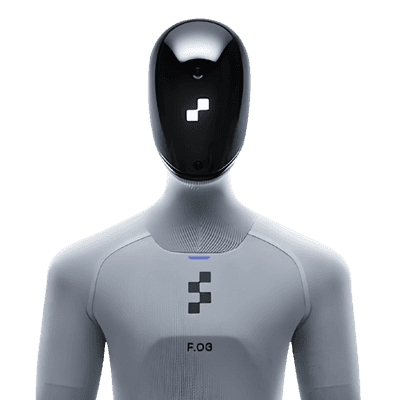
| 8 | Figure AIPrivate | $39.00B | N/A | Humanoids | PRIVATE |
| 11 | XPengNYSE: XPEV | $14.00B | N/A | Humanoids | PUBLIC |
| 12 | 1X TechnologiesPrivate | $10.00B | N/A | Humanoids | PRIVATE |
| 13 | Neura RoboticsPrivate | $9.70B | N/A | Humanoids | PRIVATE |
| 14 | UBTECHHKEX: 9880 | $9.50B | N/A | Humanoids | PUBLIC |
| 15 | Unitree RoboticsPrivate | $7.00B | N/A | Humanoids | PUBLIC |
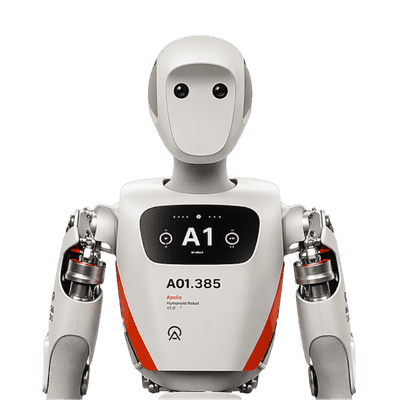
| 19 | ApptronikPrivate | $5.50B | N/A | Humanoids | PRIVATE |
Featured Companies
The top companies building the future of humanoid robotics.Unitree Robotics
Founded in 2016 in Hangzhou by Wang Xingxing, Unitree produces affordable humanoid and quadruped robots. The G1 humanoid, mass produced at $16,000 since August 2024, is one of the most affordable platforms available. Unitree is exploring a Hong Kong IPO as of 2025.
LimX Dynamics
LimX Dynamics develops reinforcement learning-powered humanoid robots for embodied AI.
EngineAI
EngineAI is a Shenzhen-based humanoid robotics company founded in October 2023, developing full-size and compact humanoid robots with a focus on human-like locomotion.
AgiBot
One of the world’s highest-volume humanoid manufacturers, combining embodied AI models with large-scale robot production.
Figure AI
Figure AI is an American robotics company developing autonomous general-purpose humanoid robots for industrial and commercial applications.
Apptronik
Developing industrial humanoids for large-scale manufacturing, logistics, and AI-powered automation.
News & Analysis
Insights, research, and market intelligence from industry contributors.
Does Australia’s Humanoid Robotics Industry Actually Exist?
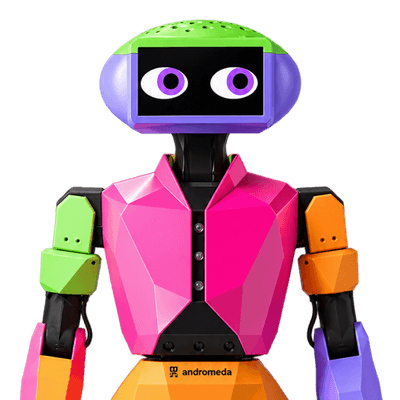
Australia is largely absent from the global race to build general-purpose humanoid robots. But Andromeda Robotics, Contactile and Alloy Robotics suggest a small ecosystem may be beginning to form around the technology.

UBTECH Humanoid Revenue Surges 1,445% in H1 2026
UBTECH Robotics reported a sharp acceleration in its humanoid robotics business during the first half of 2026, with full-size humanoids emerging as the company’s largest growth engine.

Why Investors Bet $165 Million on Sunday's Memo
Inside the data advantage, technical moat, and market timing behind Sunday’s most closely watched home robot.

Galbot Previews ET1, Its First Bipedal Humanoid
Beijing-based Galbot has previewed the ET1, its first bipedal humanoid robot, ahead of WRC 2026, marking a significant expansion beyond the company’s existing wheeled robotic platforms.

FieldAI: The Universal Robot Brain That Doesn't Build Robots
Born in the trenches of DARPA's hardest autonomy challenges and NASA JPL's Mars programs, FieldAI has crossed the $2B mark in 18 months without shipping a single robot. It wants to be the operating intelligence for every machine in motion.

Generalist Raises Nearly $200M at $3B Valuation
Generalist has raised nearly $200 million in additional funding, lifting the robotics AI startup’s valuation to $3 billion just months after its previous financing.

SoftBank in Talks to Acquire Majority Stake in 1X
SoftBank is reportedly in talks to acquire a majority stake in 1X Technologies at a $6 billion valuation, a deal that could give the Japanese investment group control of one of the most prominent companies developing humanoid robots for the home.

Lightberry Opens Reservations for $39,990 Lumi Humanoid
San Francisco-based Lightberry has opened reservations for Lumi, a new interactive humanoid built for entertainment, hospitality, marketing and developer applications.

Asimov 1 Begins Shipping Its First Production Batch
Asimov is preparing to ship the first production batch of its Asimov 1, an open-source humanoid kit designed to give developers and researchers access to a full-scale robotics platform at a significantly lower cost.

Pollen Robotics Opens Pre-Orders for $399 Microduck
Pollen Robotics has opened pre-orders for Microduck, a 25cm bipedal robot designed as an accessible platform for reinforcement learning and sim-to-real robotics development.

How Humanoid Robots Will Transform The Global Workforce
Why demographic decline, industrial policy and capital flows are turning humanoids into the next layer of economic infrastructure.

Is NEURA Robotics Europe’s Top Humanoid Company?
What Neura’s 4NE‑1, Neuraverse and fresh capital reveal about Europe’s bid to lead humanoid robotics.

Sohu And The End Of General‑Purpose AI Chips
A look at Etched’s transformer‑only ASIC and what it means for data centers, humanoid robots, and the next phase of AI infrastructure.

Who Owns The Brains And Minds Of Humanoid Robotics
How next generation chips and foundation models will quietly decide which humanoids win.

Sanctuary AI and the Robotic Touch
How a Canadian humanoid company turned dexterity and patents into real leverage in physical AI.

How 1X Is Training NEO For Everyday Homes
A look at how 1X uses NEO to learn from domestic work, refine world models, and push humanoid robots toward practical, safe deployment in real homes.

Private Leaders Behind the Humanoid Robotics Boom
Inside the dominant humanoid platforms and what they are actually doing this year.

Top Humanoid Robotics Companies To Watch In 2026
The companies defining the control stack and the humanoid hardware that will anchor the next decade of automation.

How Digit Is Raising The Bar For Warehouse Automation
Digit is emerging as one of the first humanoid robots that warehouse operators can plug into live logistics workflows with predictable performance.

Humanoid Robots As The Execution Layer For Software
Humanoid robots are becoming the standard endpoint that lets software act directly in the physical world, turning warehouses, factories and hospitals into programmable environments.

Skild AI and the Rise of the Shared Robotic Mind
How a data-rich, omni-bodied foundation model is quietly becoming the default intelligence layer for humanoids, logistics fleets, and construction robots worldwide.

Why Home Robots Won't Scale Until Physical Data Does
Home robots will not reach mass adoption until embodied AI can learn from enough real world data to work reliably in everyday homes.

War Robots In Plain Sight Phantom MK1 And The Future Of Defense Humanoids
Why a nightclub DJ set from Phantom MK1 is more than a stunt and what it reveals about the next phase of humanoid robots in industrial and military settings.

Apptronik’s Apollo And The Shape Of Industrial Humanoids
Inside Apollo, the NASA‑inspired humanoid that aims to turn humanoid robots into standard equipment for logistics and production lines.

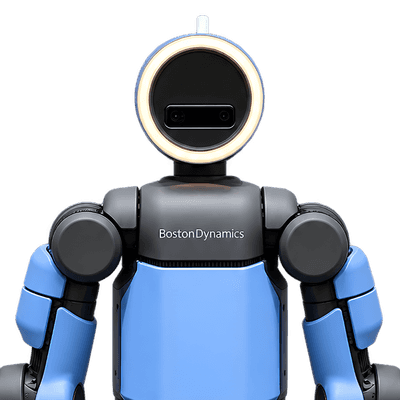
Boston Dynamics Connects FieldAI to Spot and Atlas
Boston Dynamics has owned every layer of its stack for twenty years. On March 12, 2026, it quietly admitted the autonomy race is moving faster than any vertical integrator can keep up, and handed FieldAI the keys to Spot's brain.

Physics First: Why FieldAI's Foundation Models Break the VLA Playbook
Physical Intelligence retrofits vision-language models. Skild AI scales imitation learning. FieldAI took a third road, one that starts from the physics of being wrong, and treats risk as a first-class citizen of the model.

$405M in Two Rounds: The Investment Thesis Behind FieldAI's $2B Unicorn Status
In eighteen months, FieldAI went from stealth to unicorn without shipping a robot. The cap table reads like a conviction vote on a very specific thesis: in robotics, the brain is worth more than the body.
Humanoid Robots
A catalog of the industry's most advanced humanoid robots.


Community
Articles and perspectives from contributors across the Robotico community.
Humanoid Robotics Is Moving From Demonstrations to Deployment — But How Should We Measure Readiness?
The next leader in humanoid robotics may not be the company with the most impressive demo. It may be the company with the strongest evidence. For years, humanoid robotics has been defined by demonstrations. Robots have walked, danced, carried boxes, manipulated objects and navigated increasingly complex environments. These demonstrations have been important. They showed what the technology might eventually achieve. But the industry is beginning to enter a different phase. The question is no longer simply: What can this robot do? A more useful question is emerging: What evidence shows that it can do it reliably, repeatedly and in a real operating environment? That distinction matters because technical capability and commercial readiness are not the same thing. The Evidence Is Starting to Change A small but growing number of humanoid companies are beginning to produce evidence that goes beyond controlled demonstrations. Figure provides one of the clearest examples. During its deployment at BMW Group Plant Spartanburg, Figure reported that Figure 02 accumulated more than 1,250 hours of runtime, loaded more than 90,000 parts and contributed to the production of more than 30,000 BMW X3 vehicles. Figure has since returned to the plant with Figure 03. The task has also changed: from sheet-metal loading toward a more complex sequencing workflow requiring manipulation, locomotion and whole-body coordination. That progression matters. It gives us something more useful than a demonstration of capability. It gives us a sequence of operational evidence: deployment, accumulated runtime, measurable output, lessons from failures, hardware iteration and a more complex second deployment. Agility Robotics provides another example. Digit has been operating within GXO's logistics environment, where Agility says the robot has passed the milestone of moving more than 100,000 totes in commercial deployment. The company has also progressed from testing to a commercial Robots-as-a-Service agreement with Toyota Motor Manufacturing Canada following a pilot. Again, the important part is not simply that Digit can move a tote. It is that the same task can be performed across thousands of cycles inside an operating logistics environment. UBTECH is pursuing a different route with its Walker family. The company says Walker S2 entered mass production and delivery in November 2025, while Walker-series robots have been introduced into industrial environments spanning automotive manufacturing, logistics and other sectors. Apptronik is building another piece of the readiness puzzle. Its Robot Park network uses fleets of Apollo 2 robots to collect real-world data across tasks and environments, with the goal of training more capable humanoid systems. These companies are taking different approaches, but collectively they reveal an important transition. The humanoid race is beginning to move from proving that something is possible to proving that it can work repeatedly. Specifications Are Not Readiness This creates a problem for anyone trying to compare humanoid robots. Most comparisons begin with specifications: Height. Weight. Payload. Degrees of freedom. Walking speed. Battery life. Computing power. These numbers are useful. But they can also create a misleading picture of maturity. A robot with extraordinary specifications may still be a research prototype with little operational history. Another robot with less spectacular specifications may already be accumulating thousands of cycles inside a customer's facility. So how should readiness actually be measured? I believe we need to look beyond a single specification — or even a single score — and examine several dimensions together. 1. Real-World Deployment The first question should be simple: Where is the robot actually working? There is a meaningful difference between a robot operating inside its manufacturer's laboratory and one operating inside a customer's factory or warehouse. There is another difference between a demonstration at a customer site and a sustained pilot. And another between a pilot and a paid commercial deployment. As the industry matures, these distinctions should become increasingly important. The word deployment alone is no longer enough. We need to understand what kind of deployment it actually is. 2. Operational Proof The second question is: What measurable evidence exists? Runtime hours, completed cycles, objects handled, task-success rates, distance travelled, intervention rates and deployment duration can tell us far more than a short video. This is why metrics such as Figure's reported BMW runtime and Agility's 100,000-tote milestone are particularly interesting. They are not proof that humanoids are ready for every environment. But they move the conversation toward something the industry needs more of: measurable operational evidence. Over time, I expect this kind of evidence to become much more important when comparing robotics companies. 3. Commercial Availability Then comes an often overlooked question: Can someone actually obtain the robot? Across the humanoid market, the answer varies dramatically. Some robots remain research platforms. Some are available through pilot programs. Others are deployed through commercial agreements or Robots-as-a-Service models. A smaller group has transparent public pricing. Unitree, for example, currently lists the G1 at $13,500 before shipping, duties and taxes. Public pricing does not make a robot more technologically advanced, and it certainly does not prove industrial readiness. But it tells us something important about productization and accessibility. Price transparency itself is a market signal. 4. Task Complexity Not every successful deployment represents the same level of capability. Moving standardized containers between predictable locations is different from identifying irregular objects, manipulating them and adapting to changes in the environment. The question therefore should not only be: Is the robot deployed? It should also be: What is the robot actually being trusted to do? This is where Physical AI becomes particularly important. The long-term ambition is not merely to automate one carefully engineered motion. It is to create machines capable of connecting perception, reasoning, manipulation and locomotion while adapting to environments originally designed for humans. A robot's ability to generalize beyond a narrowly engineered workflow may eventually become one of the industry's most important indicators. 5. Evidence Quality There is one more dimension that deserves considerably more attention. How trustworthy is the information itself? Robotics is moving extraordinarily quickly. Specifications change. Prices change. Prototypes evolve. Partnerships are announced. Pilots begin. Some expand into commercial deployments; others may not. A claim from a manufacturer, a confirmation from a customer, a research paper, a demonstration video and an anonymous third-party report should not all carry the same evidentiary weight. We should be asking: Who made the claim? Can the customer confirm it? Is there measurable operational data? Is the information still current? And when was it last verified? As more capital and more companies enter humanoid robotics, provenance may become almost as important as the data itself. A Better Way to Think About Humanoid Readiness Rather than asking which humanoid is "best," I think it is more useful to build a readiness profile across several dimensions: Technical Capability — What can the robot physically and intelligently perform? Deployment Evidence — Has it operated in real customer environments? Operational Proof — Is there measurable evidence from sustained operation? Commercial Availability — Can customers actually purchase, lease or deploy it? Task Generalization — Can it adapt beyond a narrowly engineered workflow? Evidence Confidence — How well are the underlying claims supported, and how recently were they verified? No single dimension tells the whole story. A commercially available robot may have limited autonomy. A highly autonomous prototype may not yet be commercially available. A robot operating inside a factory may still require substantial human supervision. That is why readiness is better understood as a profile rather than a binary label. From Capability to Evidence The humanoid robotics race is often presented as a competition to build the most advanced machine. I suspect the more consequential competition will be different. It will be the race to transform impressive machines into reliable systems that create measurable value in real environments. That transition requires better hardware and more capable AI. But it also requires manufacturing capacity, safety, integration, service infrastructure, customer support and sustainable economics. Above all, it requires evidence. The companies that can show not only what their robots can do, but what they can reliably do, repeatedly, for real customers, will give us a much clearer picture of where humanoid robotics actually stands. The industry's defining question may therefore be changing. From: “What can this robot do?” To: “What evidence shows that it is ready?” Author bio Özkan Sancar is the founder of RoboLogAI, a source-backed robotics intelligence platform. He researches humanoid robotics, Physical AI, emerging robot platforms, companies and market developments shaping the future of robotics.

The Next Phase of Humanoid Robotics
Humanoid robotics is moving from impressive demonstrations toward real-world applications, with AI, training data and better hardware driving the next phase.

IEEE Humanoids 2026 Opens Today — And the "Deployed vs. Deployed" Problem Hasn't Gone Away
People
Founders, executives, researchers, and operators shaping humanoid robotics.Robert Katzschmann
Co-Founder
Sankaet Pathak
Founder & CEO
Abhinav Gupta
Co-Founder
Adam Winter
Interim CEO
Adnan Esmail
Co-Founder
Adrien Gaidon
Co-Founder & CSO, Walden Robotics
Investors
Track the investors funding the next generation of robotics companies.SoftBank Group
Corporate
HongShan
VC Fund
Coatue Management
Asset Manager
Bezos Expeditions
Individual
LG Technology Ventures
VC FundNVentures
VC Fund