
Humanoid robotics has passed the novelty phase and is now colliding with capital markets and enterprise infrastructure. More than 140 companies worldwide are building humanoid platforms, yet a small group of private leaders already commands disproportionate attention from investors, partners and policymakers.
1X Technologies – household physical AI
1X Technologies has taken the contrarian path of building humanoids for homes rather than factories first. Its NEO line, and the newer Neo Gamma variants, translate humanoid capability into a domestic context, with robots designed for cleaning, tidying, basic care support and low risk interaction in lived in environments.
In 2026, 1X is executing on three interlocking fronts. It is ramping production capacity in California, with management targeting output that can ultimately reach tens of thousands of units per year and early runs reportedly reserved within days of opening. It is preparing a large scale home trial programme, moving from hundreds to potentially thousands of in home deployments so that Neo units can learn under real, messy conditions. It is also deepening partnerships with infrastructure providers such as NVIDIA, using simulation and edge compute to accelerate training and deployment cycles.

Agility Robotics – the warehouse workhorse
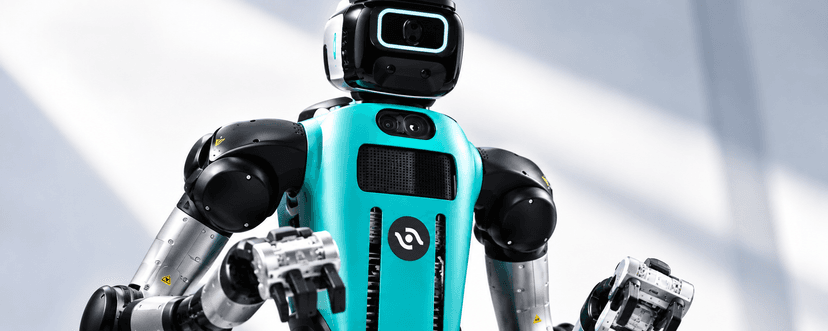
Agility Robotics has become synonymous with humanoids in logistics. Its Digit humanoid does not chase every possible use case. It is tuned to a specific and enormous problem: moving material efficiently through warehouses and fulfillment centers that were originally designed for people and forklifts.
By 2026, fleets of Digit are already working in Amazon facilities, handling tote recycling and other repetitive tasks alongside humans and conveyor systems. Reports from pilot sites describe high uptime and the ability to integrate without forcing an expensive redesign of existing infrastructure. It means customers can treat humanoids as incremental capacity, not an entire capex reset.
Agility has been building the capital and industrial backbone required for this. A dedicated “RoboFab” plant is being scaled for production volumes in the order of 10,000 Digit units per year.

Apptronik – industrial specialist with disciplined scope
Apptronik is the industrialist’s humanoid company. It emerged from the Human Centered Robotics Lab at the University of Texas and spent years on what most investors ignore, namely actuators, controls and human safe interaction in high duty cycle environments. The result is Apollo, a humanoid platform explicitly designed for manufacturing, logistics and eventually healthcare.
In 2026 Apollo is not positioning itself as a universal solution. Instead, Apptronik is working through a narrow but important set of workflows: tote movement, line side kitting, inspection, and other tasks that sit between fixed automation and human labour. Pilots with automotive OEMs and contract manufacturers are steadily expanding in complexity and scope, moving from isolated cells to more integrated roles across production lines.
On the capital side, an oversubscribed Series A in the low hundreds of millions has given the company room to execute without chasing every trendy partnership. Key relationships with manufacturing specialist Jabil, automotive groups such as Mercedes and logistics players like GXO give Apptronik both validation and access to large deployment footprints.

Figure AI – mega valuation, general purpose ambition
Figure AI is the most aggressively capitalised private humanoid company in the market. Over a period of roughly 18 months it moved from a valuation around 2.6 billion dollars at Series B to approximately 39.5 billion dollars at Series C, backed by more than 2 billion dollars in equity from major technology and strategic investors. That trajectory places Figure in a category usually reserved for late stage public companies, not pre revenue hardware platforms.
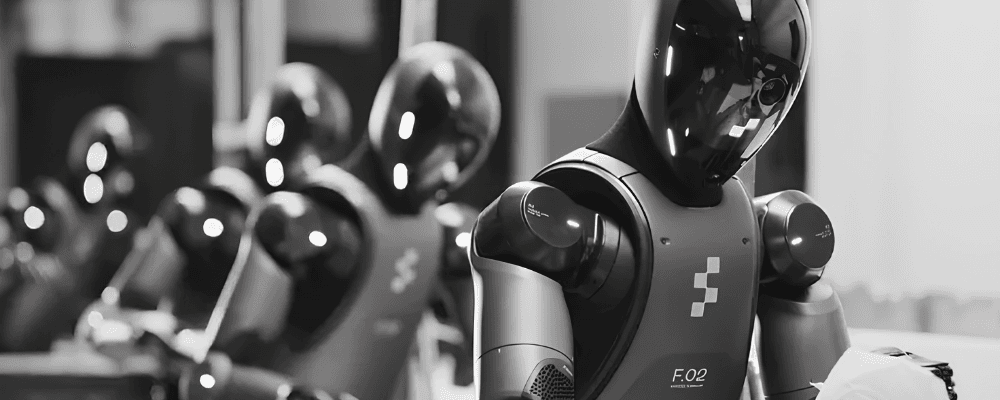
The company aims to build a general purpose humanoid capable of performing a broad range of tasks across manufacturing, logistics and services, powered by an in house Helix AI model. Its Figure 02 robot is already working inside BMW’s Spartanburg plant under a multi year collaboration agreement, with robots taking on repetitive logistics and assembly tasks alongside human workers. Additional pilots in logistics and parcel handling have been signalled, expanding Figure’s field of view beyond automotive alone. Neura Robotics – cognitive platform and European scale up
Neura Robotics is building a cognitive robotics platform with distinctly European industrial roots. It first gained traction with MAiRA, a collaborative robot endowed with perception, reasoning and safety capabilities that allowed close human collaboration. That same cognitive and control stack now underpins 4NE‑1, Neura’s humanoid designed for factories, logistics centres and eventually service environments.
The company’s scale up has accelerated sharply. A 120 million euro Series B marked the transition from pure R&D to early commercialisation. This was followed by a reported 1 billion euro strategic funding package led by Tether in early 2026, lifting Neura’s valuation to around 4 billion euros and providing the capital needed for large scale production. Alongside this, the company has signalled an order book in the region of 1 billion dollars, which is unusually strong demand visibility for a humanoid platform at this stage.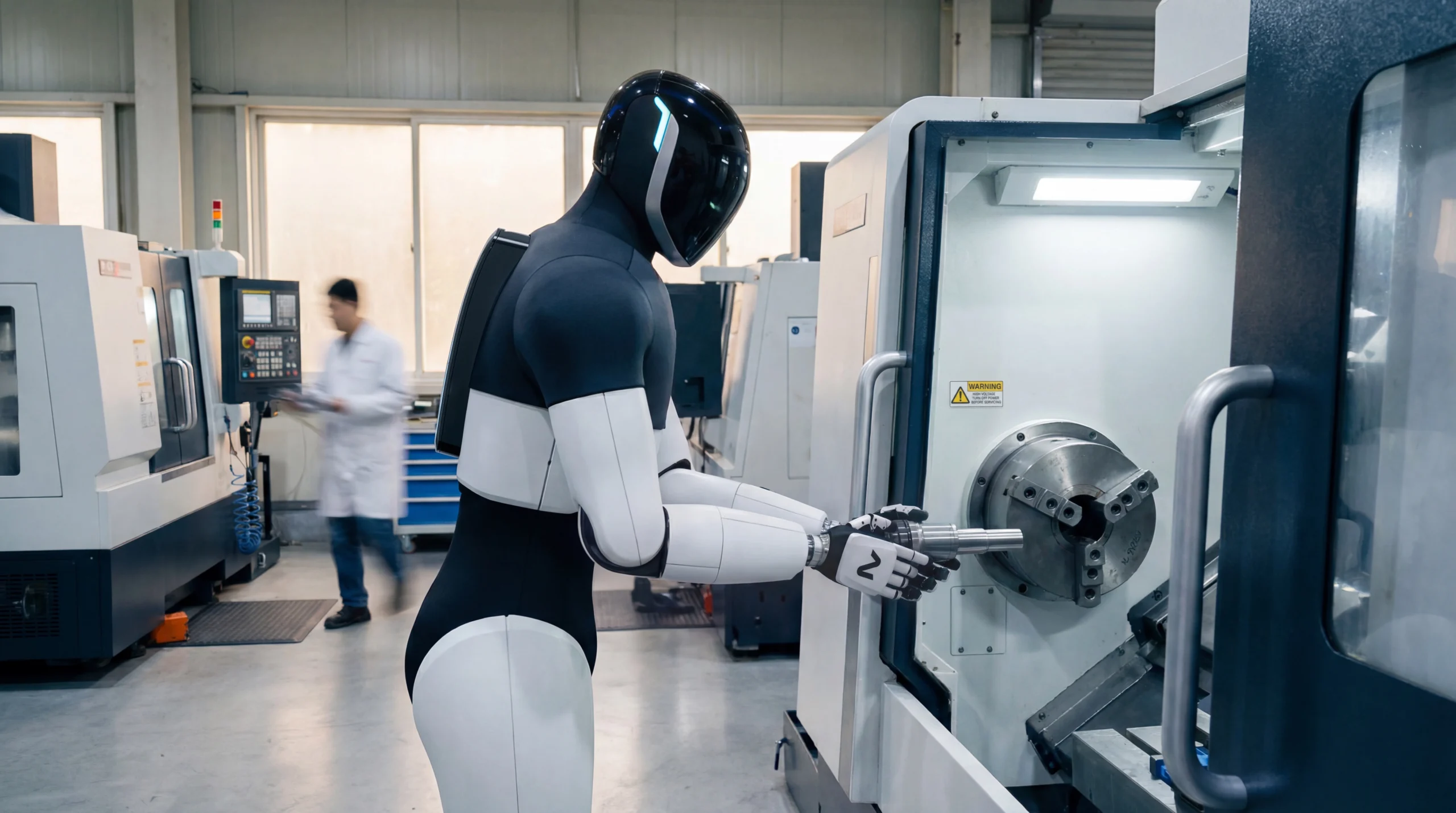
Sanctuary AI – dexterity, patents and embodied intelligence
Sanctuary AI has always framed the problem in terms of intelligence and hands rather than body and gait. Its Phoenix humanoid is defined by dexterous hydraulic hands and dual arm coordination, and its Carbon AI platform is designed to learn, encode and transfer complex task sequences across environments.
By 2025 Sanctuary had raised more than 140 million dollars, supported by Canadian institutional capital and targeted government funding to accelerate Phoenix development. In 2026 it is pushing further into pilots in retail, logistics and light manufacturing, with robots performing dozens of real tasks such as shelf stocking, kitting and small part assembly. Reports from earlier pilots indicate that Phoenix can learn new tasks in less than 24 hours of guided training, which is a meaningful step towards economically viable embodied learning.

Unitree Robotics – cost gravity and volume
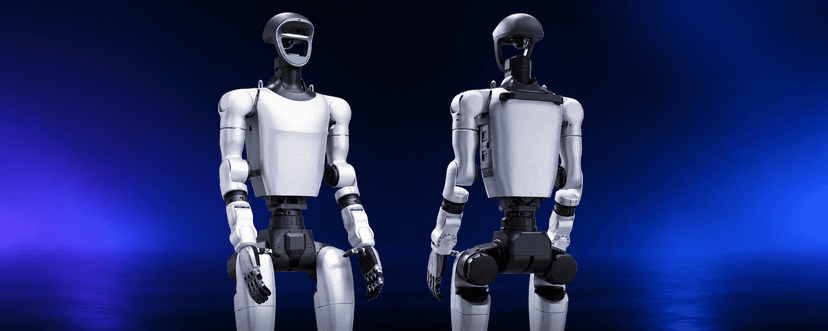
Unitree Roboticshas spent years building a real business around quadruped robots before expanding into humanoids. That history matters, because it means the company already understands how to design, manufacture and ship high performance robots at relatively low cost. Its humanoid line, including the G1, H1 and the more recent R1, imports that discipline into a form factor that the broader market has been primed to understand.
Unitree’s strategy in 2026 is to bend the cost curve. The R1 platform has been introduced with entry configurations reportedly priced under 6,000 dollars, while research oriented G1 variants sit around 16,000 dollars. Those numbers are orders of magnitude below early generation humanoids and bring serious platforms within reach of universities, labs and startups that would never have considered a 6 figure robot.
Physical AI as an infrastructure thesis
The next phase of humanoid robotics will be less about viral videos and more about three questions. Who controls the deployment data that trains embodied models. Who owns the factories and supply chains capable of producing tens of thousands of units per year. And who establishes the operating systems and marketplaces that everyone else must build on. The private leaders profiled here are already moving on all three fronts.