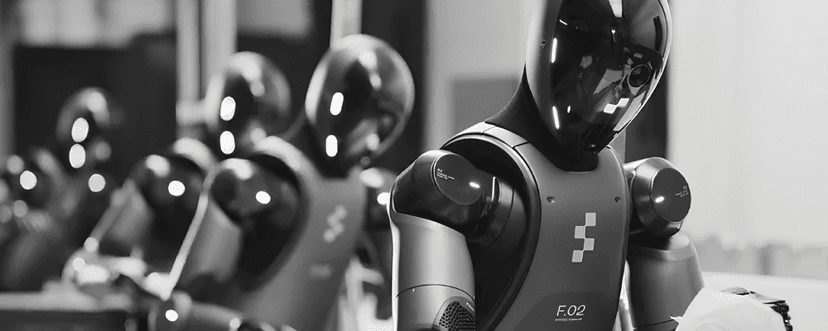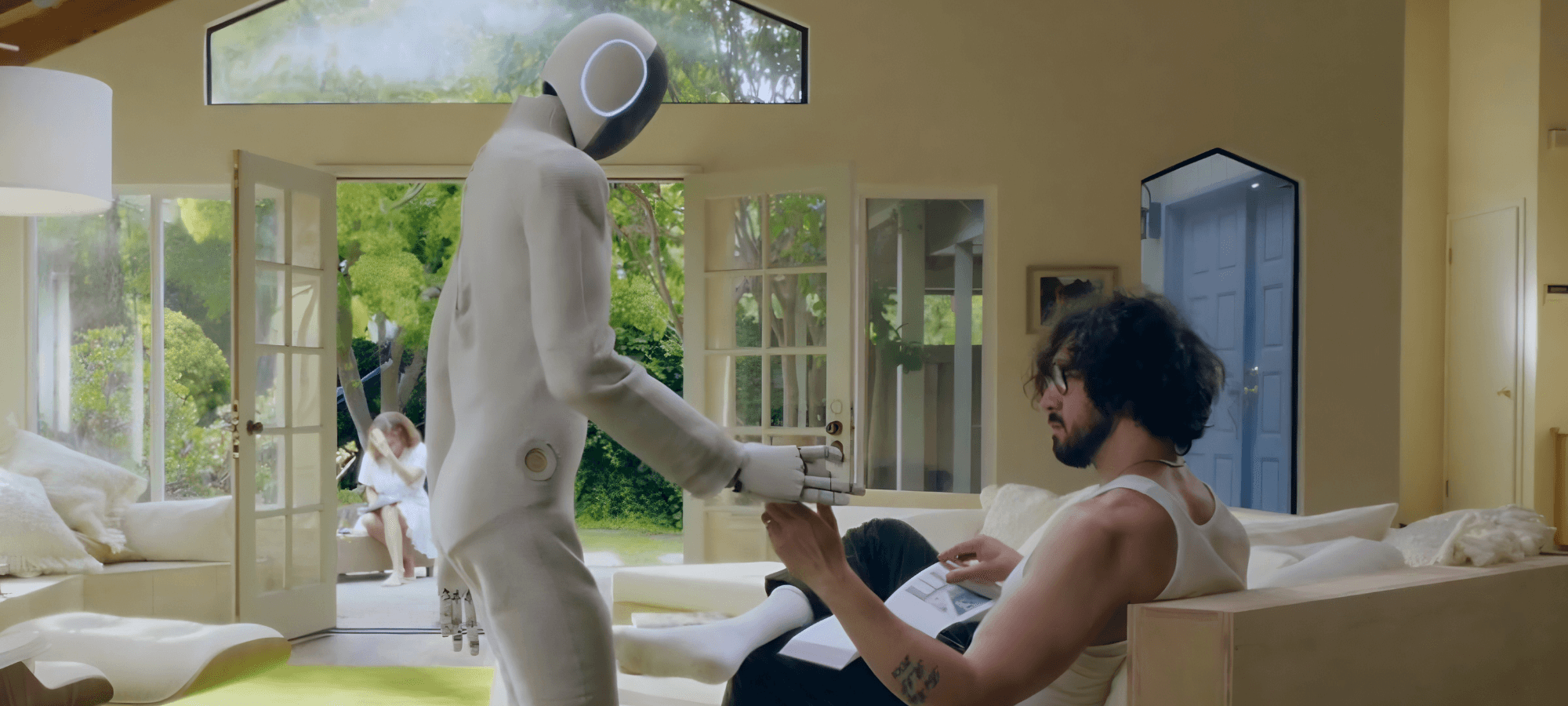

1X Technologies started over a decade ago with a narrow focus on safe, human‑compatible actuation and whole‑body control. That foundation now shows up in NEO’s soft, tendon‑driven design and its emphasis on intrinsic safety around people, pets, and clutter.
Instead of chasing industrial proof‑of‑concepts, 1X is positioning NEO as a robot that belongs in living rooms and kitchens, where the environment is unpredictable and the expectations are closer to an appliance or a companion than a machine on a factory line.
NEO in 2026
By 2026, NEO has evolved into a humanoid built specifically for real home pilots. It walks with a natural, humanlike gait, can squat and sit in standard furniture, and is quiet enough to run in an apartment without dominating the soundscape. A multi‑microphone audio system and a conversational model onboard allow people to speak to NEO in natural language and see those instructions translate into whole‑body actions rather than rigid scripts.
Hardware reliability has steadily improved across each generation, with more robust joints, better thermal management, and refined motion planning that lets NEO recover smoothly from bumps and slips. These incremental changes are not as flashy as viral clips, but they are exactly what determine whether a robot survives months of continuous use in homes.
Homes as a training distribution
Homes are some of the most complex environments humans inhabit, filled with deformable objects, tight spaces, improvised storage, and constantly changing layouts. If a robot can reliably handle laundry, kitchens, children’s toys on the floor, and late‑night lighting, it is learning skills that transfer outward into hospitality, retail, and eldercare.
Each NEO unit deployed into a real household becomes a sensor, continuously turning everyday work into data. Folding towels on a soft bed, wiping a wet countertop, unloading a dishwasher, navigating around a dog in a hallway: every one of these interactions helps refine manipulation, navigation, and safety policies. Over time, that data becomes more valuable than any single unit of hardware.
World models and the data flywheel
Underneath the hardware, 1X is building a stack of models that treat the home as a first‑class environment. Vision‑language‑action models map what the robot sees and hears to complete, coordinated movements, while dedicated world models simulate domestic scenarios with cloth, liquids, and human co‑presence instead of just rigid boxes on flat floors.
The loop works like this. NEO acts in the real world, the system logs both success and failure, and those traces feed back into updated models that are pushed out to the fleet. Each upgrade unlocks slightly more capable behaviors, which in turn create more diverse data. It is the same compounding effect that accelerated web‑scale language models, now routed through physical chores and real rooms instead of text corpora.
Why humanoids for the home?
The most overlooked labor market is the one that is not priced: unpaid household and care work. As populations age and dual‑income households become the norm, the gap between what families can absorb and what actually needs doing is widening. Humanoid robots that can safely take on even a thin slice of that workload change not just convenience but participation in the broader economy.
1X’s bet is that the path to robust, general‑purpose AI runs straight through this kind of work. A robot that can reliably handle the chaos of a lived‑in home is learning a rich, grounded form of intelligence that is difficult to replicate in any other context.