Commercial
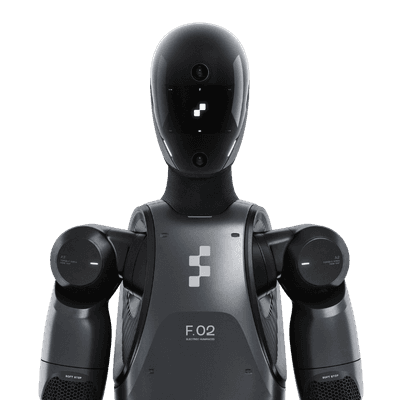
Figure 02



Figure AI is an American robotics company developing autonomous general-purpose humanoid robots for industrial and commercial applications.
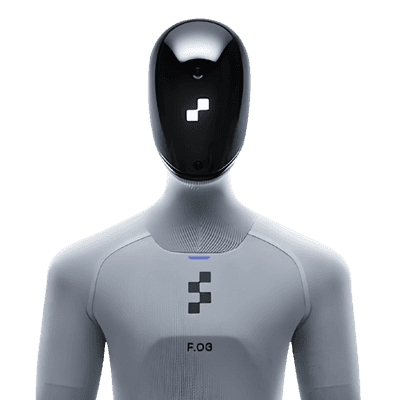
Figure AI is an American robotics company based in Sunnyvale, California, founded in 2022 by Brett Adcock. The company develops general-purpose humanoid robots designed for commercial deployment across manufacturing, logistics, warehousing, and other labor-intensive industries. By combining proprietary humanoid hardware with vertically integrated AI, Figure aims to build autonomous robots capable of performing a wide range of physical tasks in human environments. Its humanoid platforms, including Figure 02 and Figure 03, integrate the company’s proprietary Helix vision-language-action model, advanced dexterous hands, tactile sensing, and autonomous whole-body control. Figure has partnered with leading manufacturers including BMW and has attracted backing from investors such as Jeff Bezos, Microsoft, NVIDIA, and OpenAI. With one of the largest funding rounds in the industry, Figure has become one of the most prominent companies driving the commercialization of humanoid robotics.
Platform maturity, autonomy stack, and flagship-system specifications in one view.
A concise view of platform maturity and deployment footprint.
Capabilities and model layers highlighted by the company.
Published operating specifications for the lead system.
Standards and certifications recorded for this company.
Figure AI announced a commercial agreement with Catalyst Brands to deploy Figure humanoids into Catalyst's distribution and logistics network, starting at the Reno, Nevada Distribution Logistics Center.
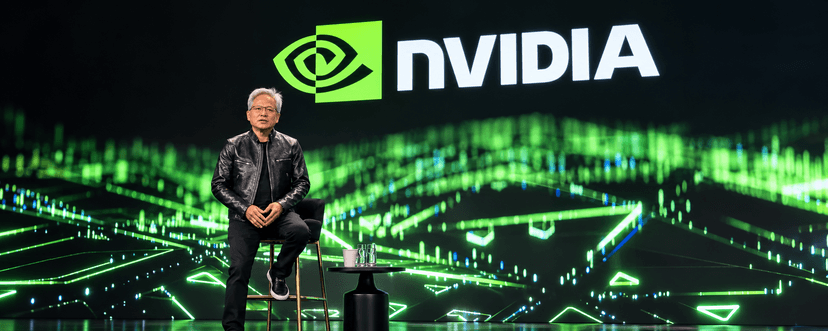
NVIDIA Launches Open Agent Safety Platform With Figure and Skild AI
NVIDIA has launched the Open Agent Safety Platform, a new software and hardware architecture designed to enforce safety and security controls around autonomous AI agents, including agents operating physical robotic systems.
 Robotico
Humanoid Robotics Is Entering Its “Prove It” Era
 Dhruv Atkins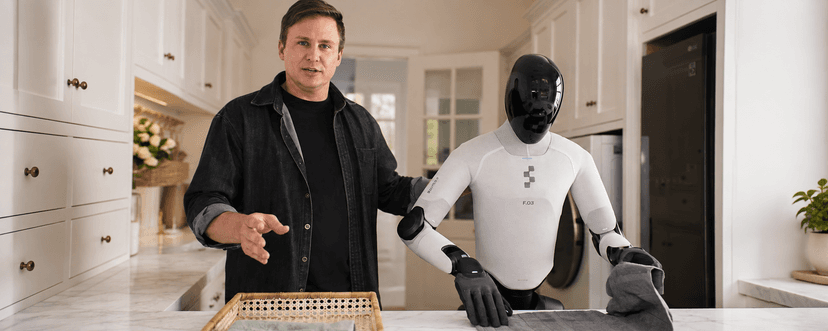
Figure Releases Helix 2.5 With Zero-Shot Autonomy Across 30 Unseen Homes
Figure has released Helix 2.5, its latest humanoid foundation model, demonstrating whole-body autonomous operation across 30 homes in which the robots had received no environment-specific training.
Robotico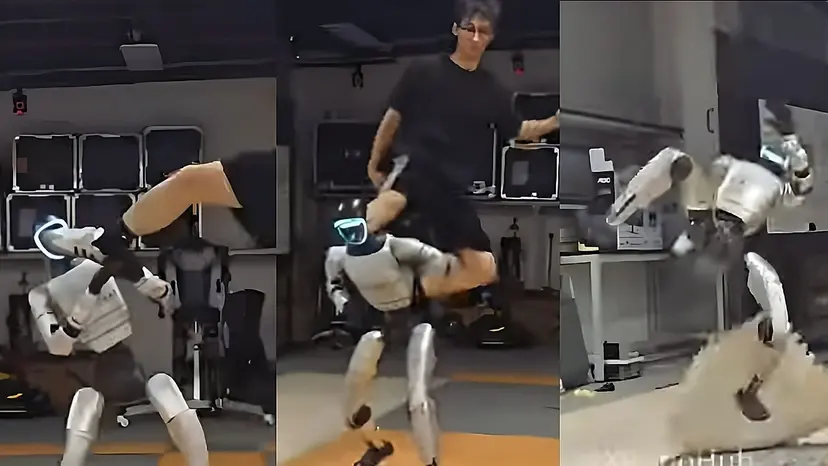
A Robot Kicked Its Engineer This Week. The Industry Also Just Forecast Itself to $554 Billion. Both Stories Are True.
Dhruv Atkins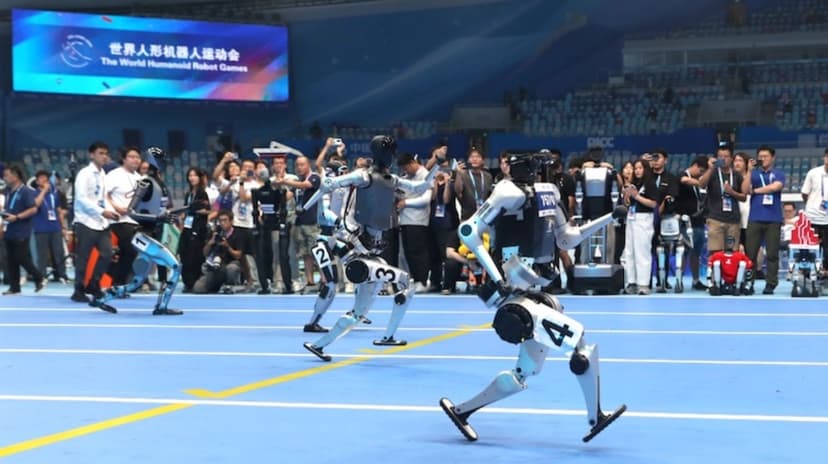
China's Humanoid Robots Just Had Their Biggest Week Ever — And Also Their Most Embarrassing One
Dhruv Atkins
Figure and Nscale Partner to Scale Humanoid Robotics With Up to 100,000 GPUs
Figure and Nscale are partnering to deploy up to 100,000 NVIDIA Vera Rubin GPUs, providing the massive computing power needed to train Figure’s Helix AI models and accelerate the development of advanced humanoid robots.
 klay
klay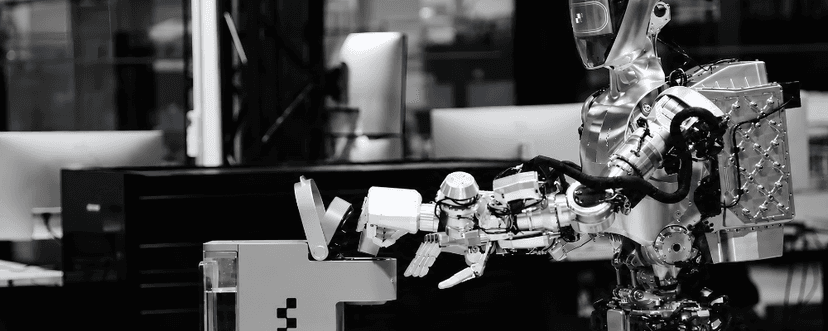
Figure Commits $3.5B to AI Compute in Nscale Partnership
Figure has signed a multi-year partnership with Nscale that could deploy up to 100,000 NVIDIA GPUs to support the development of its Helix AI models and humanoid robots.
Robotico
OpenAI Will Build Its Own Humanoid Robot
OpenAI plans to build its own humanoid robot, with CEO Sam Altman confirming the company’s hardware ambitions now extend to both humanoids and other robotic form factors.
Robotico
Does Australia’s Humanoid Robotics Industry Actually Exist?
Australia is largely absent from the global race to build general-purpose humanoid robots. But Andromeda Robotics, Contactile and Alloy Robotics suggest a small ecosystem may be beginning to form around the technology.
 Anthony A
Humanoid Robotics Is Moving From Demonstrations to Deployment — But How Should We Measure Readiness?
The next leader in humanoid robotics may not be the company with the most impressive demo. It may be the company with the strongest evidence. For years, humanoid robotics has been defined by demonstrations. Robots have walked, danced, carried boxes, manipulated objects and navigated increasingly complex environments. These demonstrations have been important. They showed what the technology might eventually achieve. But the industry is beginning to enter a different phase. The question is no longer simply: What can this robot do? A more useful question is emerging: What evidence shows that it can do it reliably, repeatedly and in a real operating environment? That distinction matters because technical capability and commercial readiness are not the same thing. The Evidence Is Starting to Change A small but growing number of humanoid companies are beginning to produce evidence that goes beyond controlled demonstrations. Figure provides one of the clearest examples. During its deployment at BMW Group Plant Spartanburg, Figure reported that Figure 02 accumulated more than 1,250 hours of runtime, loaded more than 90,000 parts and contributed to the production of more than 30,000 BMW X3 vehicles. Figure has since returned to the plant with Figure 03. The task has also changed: from sheet-metal loading toward a more complex sequencing workflow requiring manipulation, locomotion and whole-body coordination. That progression matters. It gives us something more useful than a demonstration of capability. It gives us a sequence of operational evidence: deployment, accumulated runtime, measurable output, lessons from failures, hardware iteration and a more complex second deployment. Agility Robotics provides another example. Digit has been operating within GXO's logistics environment, where Agility says the robot has passed the milestone of moving more than 100,000 totes in commercial deployment. The company has also progressed from testing to a commercial Robots-as-a-Service agreement with Toyota Motor Manufacturing Canada following a pilot. Again, the important part is not simply that Digit can move a tote. It is that the same task can be performed across thousands of cycles inside an operating logistics environment. UBTECH is pursuing a different route with its Walker family. The company says Walker S2 entered mass production and delivery in November 2025, while Walker-series robots have been introduced into industrial environments spanning automotive manufacturing, logistics and other sectors. Apptronik is building another piece of the readiness puzzle. Its Robot Park network uses fleets of Apollo 2 robots to collect real-world data across tasks and environments, with the goal of training more capable humanoid systems. These companies are taking different approaches, but collectively they reveal an important transition. The humanoid race is beginning to move from proving that something is possible to proving that it can work repeatedly. Specifications Are Not Readiness This creates a problem for anyone trying to compare humanoid robots. Most comparisons begin with specifications: Height. Weight. Payload. Degrees of freedom. Walking speed. Battery life. Computing power. These numbers are useful. But they can also create a misleading picture of maturity. A robot with extraordinary specifications may still be a research prototype with little operational history. Another robot with less spectacular specifications may already be accumulating thousands of cycles inside a customer's facility. So how should readiness actually be measured? I believe we need to look beyond a single specification — or even a single score — and examine several dimensions together. 1. Real-World Deployment The first question should be simple: Where is the robot actually working? There is a meaningful difference between a robot operating inside its manufacturer's laboratory and one operating inside a customer's factory or warehouse. There is another difference between a demonstration at a customer site and a sustained pilot. And another between a pilot and a paid commercial deployment. As the industry matures, these distinctions should become increasingly important. The word deployment alone is no longer enough. We need to understand what kind of deployment it actually is. 2. Operational Proof The second question is: What measurable evidence exists? Runtime hours, completed cycles, objects handled, task-success rates, distance travelled, intervention rates and deployment duration can tell us far more than a short video. This is why metrics such as Figure's reported BMW runtime and Agility's 100,000-tote milestone are particularly interesting. They are not proof that humanoids are ready for every environment. But they move the conversation toward something the industry needs more of: measurable operational evidence. Over time, I expect this kind of evidence to become much more important when comparing robotics companies. 3. Commercial Availability Then comes an often overlooked question: Can someone actually obtain the robot? Across the humanoid market, the answer varies dramatically. Some robots remain research platforms. Some are available through pilot programs. Others are deployed through commercial agreements or Robots-as-a-Service models. A smaller group has transparent public pricing. Unitree, for example, currently lists the G1 at $13,500 before shipping, duties and taxes. Public pricing does not make a robot more technologically advanced, and it certainly does not prove industrial readiness. But it tells us something important about productization and accessibility. Price transparency itself is a market signal. 4. Task Complexity Not every successful deployment represents the same level of capability. Moving standardized containers between predictable locations is different from identifying irregular objects, manipulating them and adapting to changes in the environment. The question therefore should not only be: Is the robot deployed? It should also be: What is the robot actually being trusted to do? This is where Physical AI becomes particularly important. The long-term ambition is not merely to automate one carefully engineered motion. It is to create machines capable of connecting perception, reasoning, manipulation and locomotion while adapting to environments originally designed for humans. A robot's ability to generalize beyond a narrowly engineered workflow may eventually become one of the industry's most important indicators. 5. Evidence Quality There is one more dimension that deserves considerably more attention. How trustworthy is the information itself? Robotics is moving extraordinarily quickly. Specifications change. Prices change. Prototypes evolve. Partnerships are announced. Pilots begin. Some expand into commercial deployments; others may not. A claim from a manufacturer, a confirmation from a customer, a research paper, a demonstration video and an anonymous third-party report should not all carry the same evidentiary weight. We should be asking: Who made the claim? Can the customer confirm it? Is there measurable operational data? Is the information still current? And when was it last verified? As more capital and more companies enter humanoid robotics, provenance may become almost as important as the data itself. A Better Way to Think About Humanoid Readiness Rather than asking which humanoid is "best," I think it is more useful to build a readiness profile across several dimensions: Technical Capability — What can the robot physically and intelligently perform? Deployment Evidence — Has it operated in real customer environments? Operational Proof — Is there measurable evidence from sustained operation? Commercial Availability — Can customers actually purchase, lease or deploy it? Task Generalization — Can it adapt beyond a narrowly engineered workflow? Evidence Confidence — How well are the underlying claims supported, and how recently were they verified? No single dimension tells the whole story. A commercially available robot may have limited autonomy. A highly autonomous prototype may not yet be commercially available. A robot operating inside a factory may still require substantial human supervision. That is why readiness is better understood as a profile rather than a binary label. From Capability to Evidence The humanoid robotics race is often presented as a competition to build the most advanced machine. I suspect the more consequential competition will be different. It will be the race to transform impressive machines into reliable systems that create measurable value in real environments. That transition requires better hardware and more capable AI. But it also requires manufacturing capacity, safety, integration, service infrastructure, customer support and sustainable economics. Above all, it requires evidence. The companies that can show not only what their robots can do, but what they can reliably do, repeatedly, for real customers, will give us a much clearer picture of where humanoid robotics actually stands. The industry's defining question may therefore be changing. From: “What can this robot do?” To: “What evidence shows that it is ready?” Author bio Özkan Sancar is the founder of RoboLogAI, a source-backed robotics intelligence platform. He researches humanoid robotics, Physical AI, emerging robot platforms, companies and market developments shaping the future of robotics.
 RobologAI
Track Figure AI's valuation over time.
Figure AI was founded in May 2022 by Brett Adcock, who personally bootstrapped the company with $100 million. Operating largely in stealth, the team built its first prototype, Figure 01, with a full-scale design complete by late 2022. In March 2023, Figure emerged publicly, positioning Figure 01 as "the world's first commercially viable general purpose humanoid robot."
Funding accelerated rapidly. A $70 million Series A round in May 2023 was led by Parkway Venture Capital. In February 2024, Figure AI secured $675 million from a consortium including Jeff Bezos, Microsoft, Nvidia, Intel, Amazon, and OpenAI, valuing the company at $2.6 billion.
In January 2024, BMW announced testing of Figure 01 at an automotive plant. By August 2024, an updated Figure 02 was on the factory floor. The company also partnered with OpenAI to build specialized AI models for its robots, though Figure ended this collaboration in 2025 as LLMs became more commoditized.
In February 2025, Figure announced Helix, its next-generation robot, followed by BotQ, a manufacturing facility targeting 12,000 humanoids per year. In October 2025, Figure 03 debuted as a complete hardware and software redesign. A $1 billion Series C in September 2025 from Intel, Nvidia, Qualcomm, T-Mobile, Salesforce, and Brookfield brought the valuation to $39 billion.