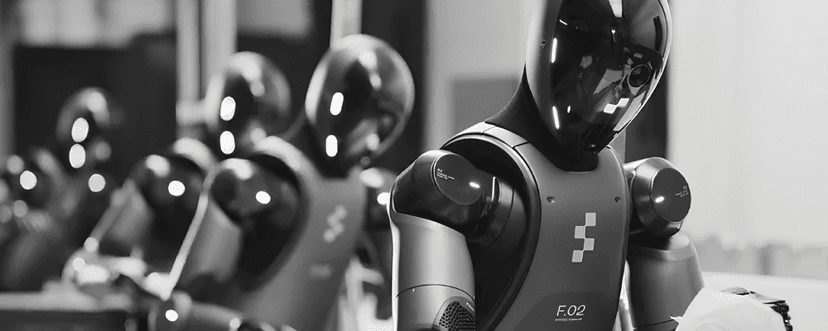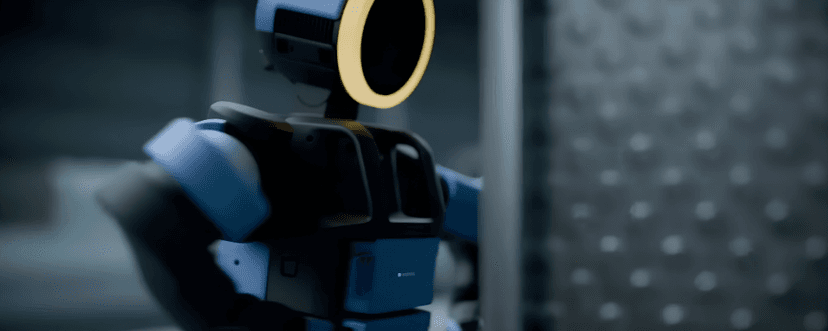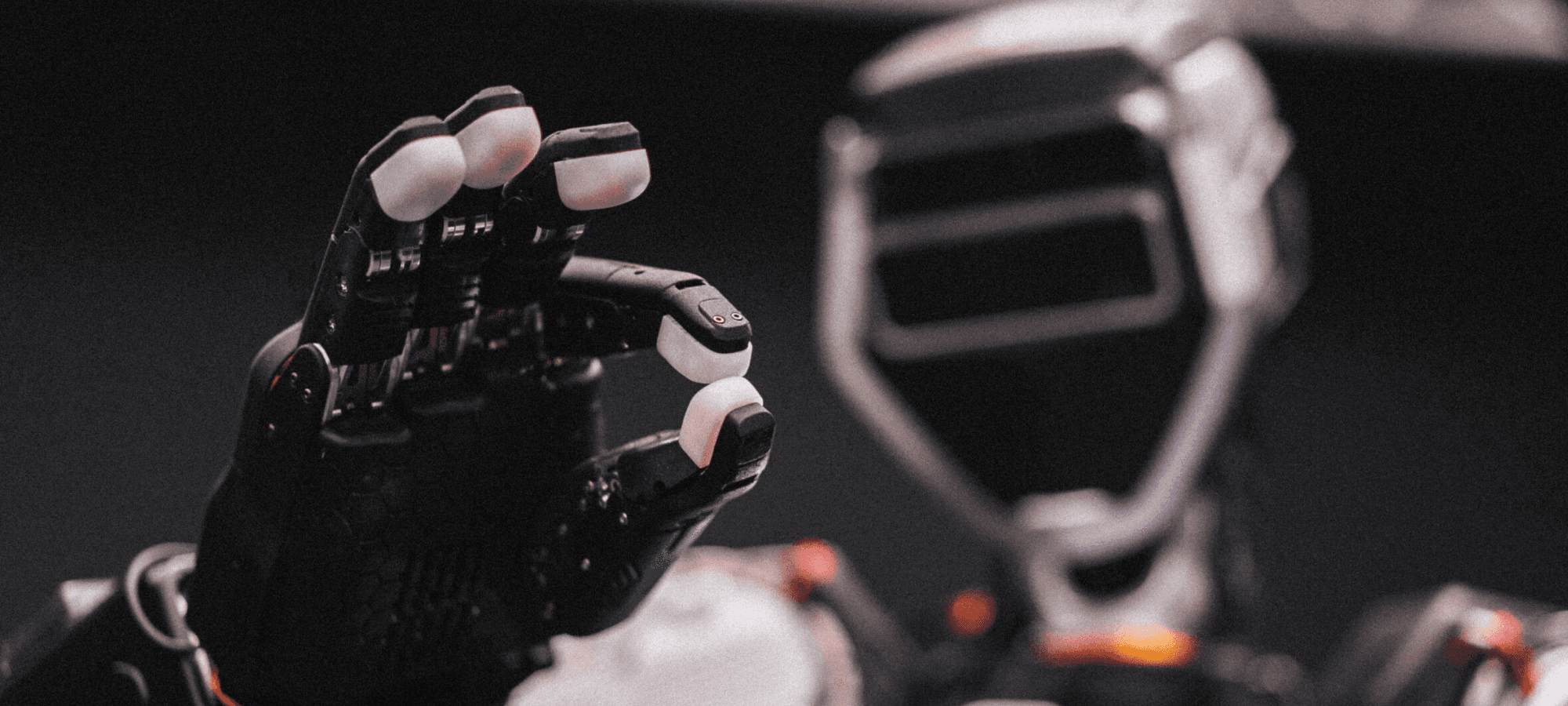

Sanctuary AI built its humanoid story around touch, not walking. While most peers optimised gaits and demo videos, the Vancouver team spent years on hands, tactile sensing and patents, quietly assembling one of the strongest intellectual property positions in humanoid robotics. In a field where more than 2.1 billion dollars of venture capital has flowed into startups with relatively light IP, that choice now looks deliberate rather than eccentric.
Where Sanctuary AI is now
Sanctuary wants millions of industrial grade humanoid robots working alongside people to address structural labour gaps. That ambition is now anchored in three concrete pillars.
- Phoenix, now in its 8th generation, is a humanoid designed to perform useful work, not stage tricks.
- Carbon is the AI control system built on Microsoft Azure that turns sensor streams into behaviour.
- A focused ecosystem of industrial partners, from Magna to Canadian Tire, provides real environments and real tasks instead of synthetic benchmarks.
In other words, Sanctuary in 2026 is not asking “can we make a robot move.” It is asking “how much real work can one robot do, and how quickly can we teach it the next task.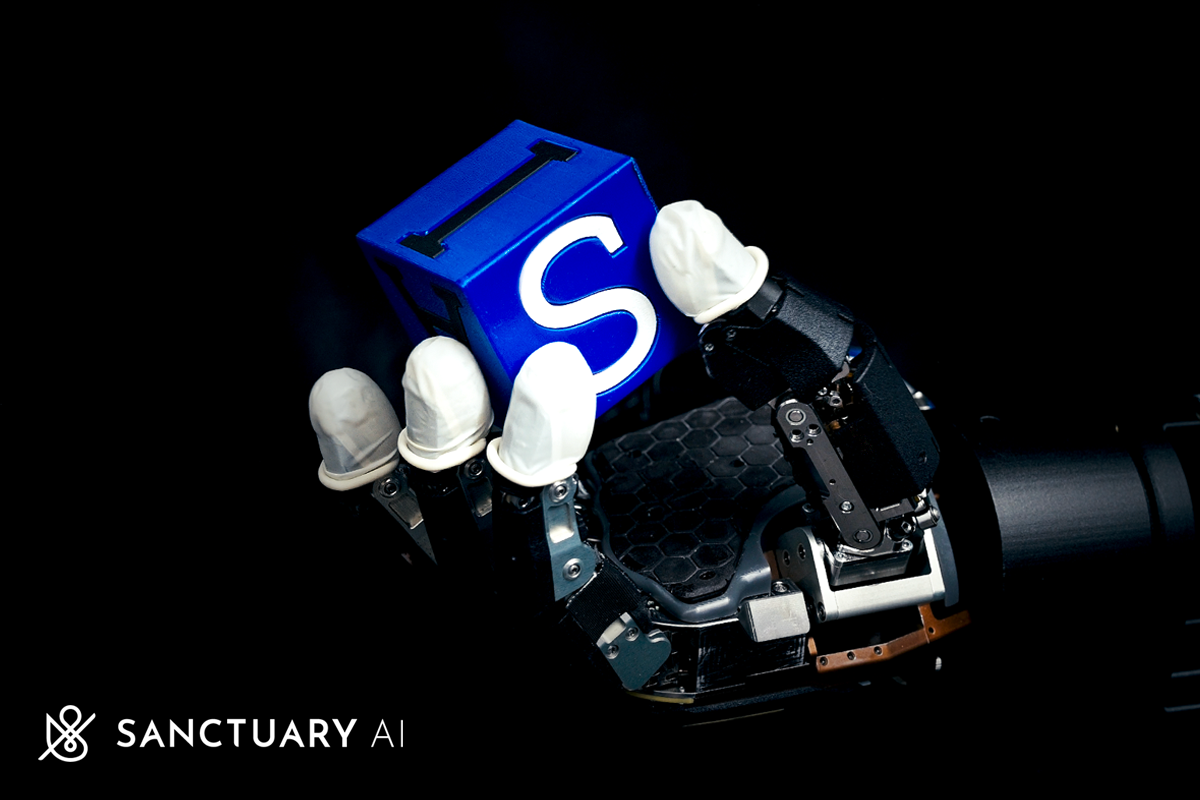
Phoenix Gen 8
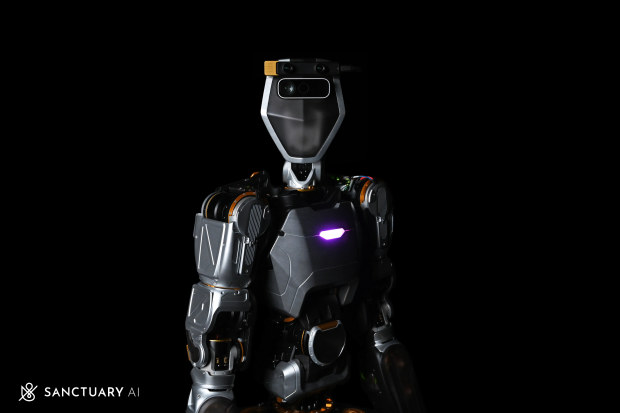
Phoenix Generation 8 is the current expression of that question. The robot stands around 170 centimetres tall, weighs roughly 70 kilograms and rides on a wheeled base, a choice informed by customer feedback that early bipedal legs are still too fragile to carry a strong, industrial upper body. Sanctuary made a deliberate trade. It prioritised stability, payload and safety over photogenic gaits.
Gen 8 improves three things that matter. It increases the range of motion in wrists, hands and elbows, which widens the set of tasks Phoenix can reach and execute. It upgrades cameras and depth sensors to capture richer visual data for Carbon’s training loop. And it reworks the telemetry system so that every joint position, force reading and sensor value is logged with high fidelity. Sanctuary describes this as a “data‑first” design. Every minute Phoenix runs, the AI learns.
Over 8 generations since 2022, Phoenix has moved from early “humanoid form factor” to first commercial deployments to a data‑optimised workhorse. Generation 7 cut task learning times to under 24 hours and reduced cost. Generation 8 pushes further into data quality and manufacturability, which is exactly what you want if your goal is hundreds or thousands of units, not a handful of prototypes.
What Phoenix is actually doing
Sanctuary is careful to frame Phoenix as a system for work. At Hannover Messe 2025, the company joined Microsoft to show Phoenix performing frontline tasks in a live industrial hall rather than on a sealed stage. It handled picking, packing and repetitive workflows designed to illustrate how physical AI can relieve “red work” that causes injuries and attrition.
By 2025, Sanctuary reported that Phoenix had completed around 450 distinct tasks, primarily in picking and packing, across pilots with customers such as Canadian Tire and large automotive suppliers. These are not abstract benchmarks. They are the kinds of workflows that make or break warehouse and retail operations.
Touch, Carbon and the training loop
Underneath the hardware, the real story in 2026 is Sanctuary’s focus on touch and data. Phoenix Gen 8 carries improved tactile sensors in its finger pads, using micro‑barometers that can detect extremely small forces. That sensitivity, combined with Carbon’s ability to fuse touch and vision, allows the robot to feel slips, adjust grip strength and handle fragile or irregular objects with much more nuance than vision alone can provide.
Sanctuary has shown that it can train these behaviours in simulation and then transfer them to real hardware, including in‑hand object reorientation tasks that are notoriously difficult for robots. Each deployment contributes more data to Carbon, which in turn reduces the time it takes to teach the next task.
Capital and partners, without the hype
None of this would matter if the company did not have money and partners to keep going. By mid 2024 Sanctuary had raised more than 140 million dollars, including a 30 million dollar contribution from Canada’s Strategic Innovation Fund and a strategic round from BDC Capital and InBC. Investors such as Accenture, Magna, Microsoft, Verizon and Workday Ventures are not just capital providers. They are early customers and distribution channels.
The partnership with Microsoft places Carbon on Azure and gives Sanctuary access to cloud, edge and enterprise integration at global scale. The partnership with Magna anchors Phoenix in one of the world’s largest automotive supply chains, with real plants and real throughput to optimise.
In 2026 Sanctuary still feels smaller and quieter than some of the humanoid brands dominating headlines. Yet it is shipping 8th‑generation robots, running them in demanding environments and grounding its AI in touch, time series data and real work.