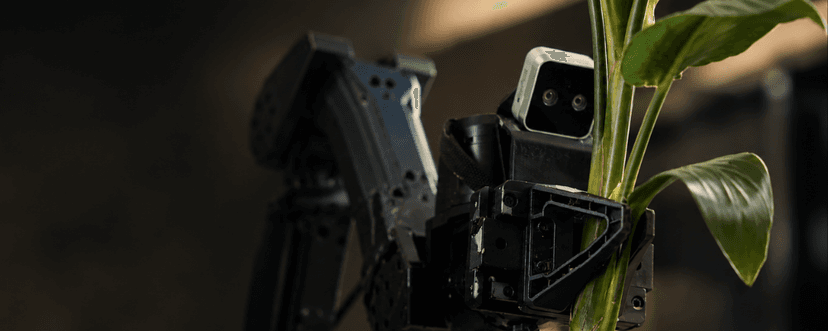

Skild AI was founded in 2023 in Pittsburgh by Deepak Pathakand Abhinav Gupta, both long-time Carnegie Mellon researchers focused on self-supervised learning, large-scale simulation and curiosity-driven exploration for embodied agents. Their core observation was that robotics hit an architectural challenge, with hardware progressing quickly while each new robot still demanded years of bespoke software and integration before it could perform useful work.
Rather than building another humanoid platform, the team set out to build a transferable intelligence layer that could sit above almost any morphology, from humanoids and quadrupeds to mobile manipulators and industrial arms. The result is the Skild Brain, a general-purpose robotics foundation model designed to be licensed as shared cognition, not sold as a single machine. That architecture positions Skild less as a robot manufacturer and more as a horizontal operating system for physical AI.
Inside the Skild Brain
At its core, the Skild Brain is an omni-bodied foundation model that unifies perception, planning and low-level control across a wide range of robot hardware. It uses a hierarchical structure in which a slower high-level policy handles navigation and manipulation intent, while a fast low-level controller translates those decisions into joint angles, torques and other fine-grained motor commands. This separation mirrors how humans decide “pick up that box” at a conceptual level, while muscle control operates at high frequency beneath conscious awareness.
The model is trained on several overlapping data streams:
- Large-scale simulation that lets robots experience diverse terrains, contacts and failure modes at a pace impossible in the real world.
- Internet-scale human video that gives the system statistical exposure to how people move, manipulate objects and navigate cluttered environments.
- Real-world telemetry from deployed robots, so that each task in the field becomes another gradient step for the shared model.
Skild claims that its model trains on roughly one thousand times more data points than competing approaches, a gap that matters in robotics because physically grounded action data has historically been scarce compared with text or images. In demonstrations, Skild-powered robots have climbed stairs, withstood physical impacts without catastrophic failure and handled cluttered manipulation tasks with human-like adaptability rather than brittle, pre-scripted routines.
A continuously learning physical network
Every Skild-enabled robot is both an operator and a data source. Skild’s infrastructure streams performance and environment data back into its training loop, creating a flywheel where each deployment incrementally improves the shared brain. Experience learned from a quadruped stabilizing on ice can inform how a humanoid handles a wet loading dock, or how a mobile manipulator negotiates low-friction factory flooring.
This model of continuous learning relies on serious backend infrastructure. Skild has aligned with large compute providers, including NVIDIA’s ecosystem, to build what is effectively a private AI factory for robotics foundation models, enabling ongoing pre-training, large-scale simulation and low-latency inference for robots operating in the field. That architecture gives the company a path to upgrade capabilities in place so that installed fleets improve over time rather than becoming static legacy systems.
Capital formation at software multiples
The capital markets are now treating Skild as a software and infrastructure story rather than a cyclical hardware play. In early 2026 the company announced close to 1.4 billion dollars in new funding led by SoftBank, with participation from NVIDIA’s venture arm, Macquarie Capital, Jeff Bezos and others, bringing total capital raised above 1.8 billion dollars and valuing the company at more than 14 billion dollars. That valuation more than triples the roughly 4.5 to 4.7 billion dollar mark attached to its 2025 round within a span of about seven months.
This is one of the largest single injections of capital into a robotics AI startup to date and it reflects a belief that foundation models for physical systems could underpin a multi-decade automation wave. The company reports going from zero to around 30 million dollars in revenue in a matter of months during 2025 and describes its trajectory as exponential as deployments expand across inspection, logistics, manufacturing and construction contexts. For investors, the appeal lies in the prospect of a high-margin licensing model that scales across many robot OEMs and categories.
The structural squeeze behind skild’s moment
Skild’s timing is aligned with real structural pressure in the physical economy. By 2025 roughly half of large warehouses were expected to operate with some form of robotics, and the global warehouse robotics market is forecast to grow at a compound annual rate of about 18 percent through 2032 toward roughly 41.7 billion dollars. Studies in 2024 and 2026 report that more than three quarters of supply chain and logistics operations are contending with significant labor shortages, with well over half of warehouse operators directly affected.
One recent analysis found that 43 percent of companies with warehouse and distribution facilities lost revenue in the prior year due to staffing gaps. At the same time, warehouse automation deployments are delivering step-change improvements, with operators seeing 25 to 30 percent reductions in labor costs, up to triple the throughput and accuracy rates approaching 99 percent as robotics and AI systems are scaled.
Against this backdrop, Skild’s model of a shared robotic brain offers a way for operators to tap advanced capabilities without building their own AI stack from scratch. For smaller manufacturers, logistics providers or construction firms, access to a continuously improving foundation model can compress deployment time and reduce the integration overhead that previously made robotics feel out of reach.
Strategic position in the humanoid wave
Humanoid platforms are moving quickly, yet the field still lacks a dominant software layer that can generalize across form factors and tasks. Skild’s omni-bodied design is explicitly intended to bridge that gap so that the same foundation model can coordinate a humanoid performing facility inspection, a quadruped securing a perimeter and an articulated arm kitting parts in a cell. That gives robot OEMs a credible alternative to vertically integrated players that insist on shipping hardware and software as a single stack.
The more robots that run a shared brain, the stronger the network effects. Each additional deployment widens the model’s experience base and makes marginal environments less exotic, whether that means dusty construction sites, high-velocity e-commerce hubs or thermally constrained data centers. For enterprise buyers, the strategic question becomes whether to commit to proprietary, vendor-specific control or align with an ecosystem whose incentives are to abstract hardware and treat intelligence as a liquid resource that flows to wherever it generates the highest return.