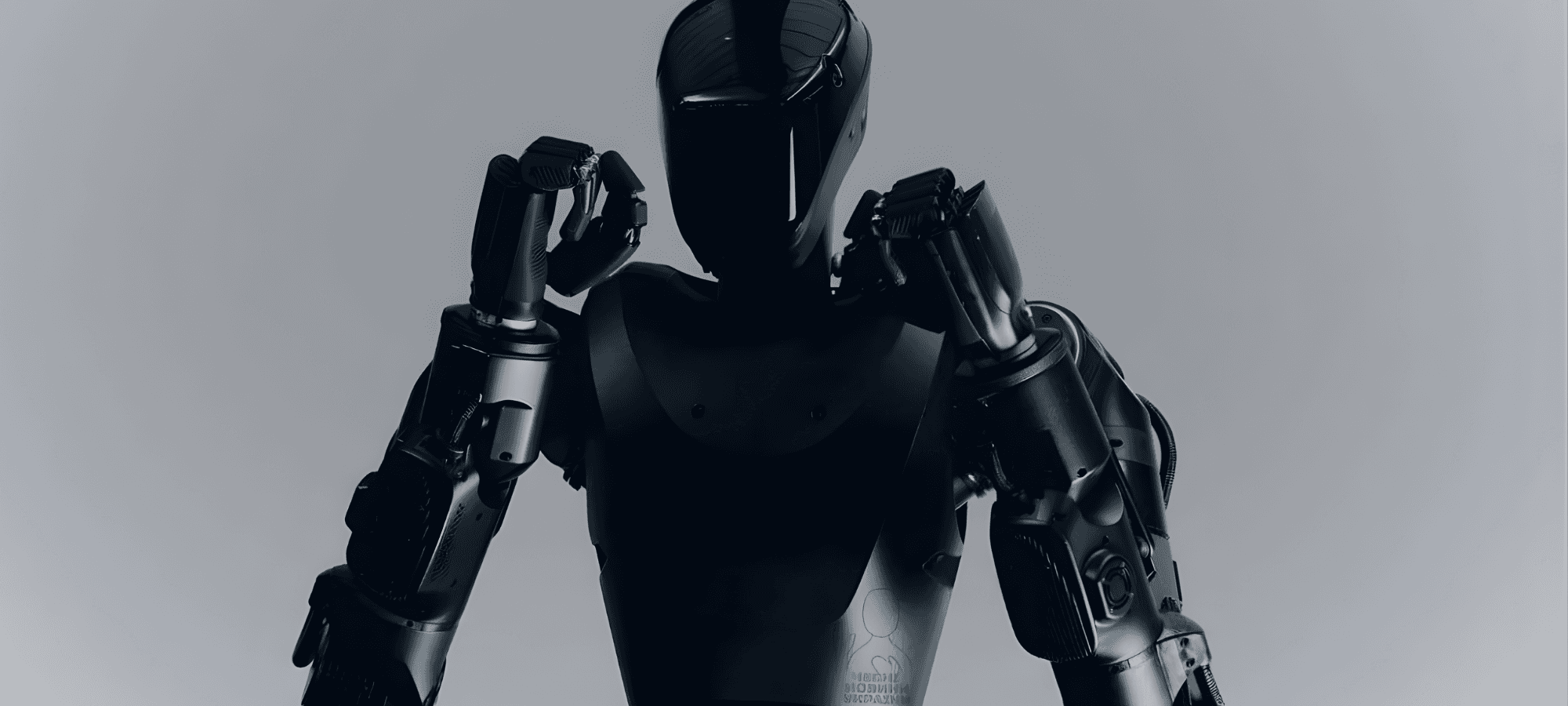

Phantom MK1 is a 175 centimetre, 80 kilogram humanoid built to work in human environments, with a payload around 20 kilograms and a camera‑first perception stack. Public specs highlight cycloidal, back‑drivable actuators designed for high torque and durability, signalling hardware that is meant to tolerate rough conditions rather than only polished warehouse floors. Media demos show Phantom performing early industrial tasks such as pick and place, packaging and basic manipulation, broadly similar to other first‑wave humanoid pilots.
In CNET’s hands‑on session the reporter controlled Phantom through a VR headset, encountered calibration glitches and still confirmed that teleoperation is central to the system today. The robot walks, balances and stabilises itself autonomously, but fine manipulation runs through human judgment.
Origin story and deliberate positioning
Foundation Robotics is led by Sankaet Pathak previously CEO of collapsed fintech Synapse, and by Mike LeBlanc, a former U.S. Marine and co‑founder of security robotics firm Cobalt. The company later acquired Boardwalk Robotics, a team with IHMC roots and experience on platforms such as Nadia and NASA’s Valkyrie, which gives Phantom a credible engineering lineage rather than a pure marketing shell.
Where Foundation diverges from most Western humanoid vendors is on defense. In 2022 Boston Dynamics, Agility, ANYbotics, Clearpath, Open Robotics and Unitree signed a public pledge not to weaponise their general‑purpose robots or support others in doing so. Figure AI’s founder has reiterated a similar stance. Foundation takes the opposite approach. In interviews the founders speak explicitly about “near‑peer military environments” and confirm that arming robots is treated as a real future option, not an unthinkable line. Reporting across SFGate, VICE and others describes Phantom’s intended roles as including logistics in conflict zones, hazardous maintenance under fire and eventually more direct battlefield tasks.
Software stack today teleoperation first autonomy later
Phantom is framed as a three‑layer system. Cameras and onboard compute handle perception. VR‑based teleoperation provides the primary control channel and lets operators mirror their movements in real time. Onboard AI stabilises gait and balance and handles low‑level control. Over time Foundation plans to expand autonomy through imitation learning and state‑based models that encode physics and kinematics, with high‑level reasoning handled by large language models that translate natural language intent into full‑body motion plans.
This hierarchy mirrors an emerging default in defense robotics. Put humans firmly in the loop for high‑risk missions today, use telepresence where lives are on the line and layer autonomy as data, validation and regulation mature. It is less cinematic than fully independent war machines, yet much closer to how militaries actually test and field new systems.
The nightclub moment as strategy
Phantom’s DJ set at Temple Nightclub in San Francisco was a carefully engineered moment rather than a side show. A humanoid marketed as a future battlefield asset performing a 30‑minute set under strobe lights guarantees cultural attention. Coverage described it as “a literal war machine” on stage and the video clips reframed Phantom from obscure defense hardware into a recognisable character in the broader humanoid conversation.
Foundation wants Phantom present in both defence planning rooms and everyday cultural feeds. The company is not just selling a platform to procurement teams. It is actively shaping how the public imagines humanoid robots in civilian and military roles, which in turn influences talent, policy and capital.
Phantom’s role in the humanoid stack
For the humanoid ecosystem, Phantom MK1 crystallises several fault lines.
- The defense lane is now explicit. While some vendors maintain strict no‑weaponisation positions, others are moving directly toward defence budgets and near‑peer planning. That divergence will influence where capital flows and which ecosystems can access government programmes and export markets.
- Cultural narrative has become part of the competitive toolkit. A single nightclub appearance generated more mainstream exposure for a defense‑tuned humanoid than years of cautious messaging from rivals. Expect more experiments that blend industrial capability with spectacle.
- Ethics and governance can no longer stay abstract. As teleoperated war‑capable humanoids emerge, export controls, use‑case restrictions and dual‑use scrutiny will move from policy papers into due diligence and board discussions. Investors and operators will have to decide whether they back fully civilian stacks, defence‑aligned stacks or both.
Phantom MK1 is not yet an autonomous war robot. It is an early, teleoperated humanoid with serious hardware, a clear defence thesis and a willingness to stage its own controversy. That combination is enough to make it a useful case study for anyone thinking about where humanoids, physical AI and national security intersect over the next cycle.