

Australia has a strong history in robotics research and autonomous systems, but it has yet to produce the concentration of humanoid manufacturers that we’re seeing emerging across the US and China.
There are, however, signs of activity. Andromedais building and deploying its Abi companion robot, Contactileis developing tactile sensing technology relevant to humanoid manipulation, and Australian founded Alloy Roboticsis building software for engineers managing increasingly complex robot fleets.
Three companies do not make a humanoid robotics industry, but they provide an early picture of how Australia could participate in the sector.
Andromeda Robotics is the clearest Australian humanoid company
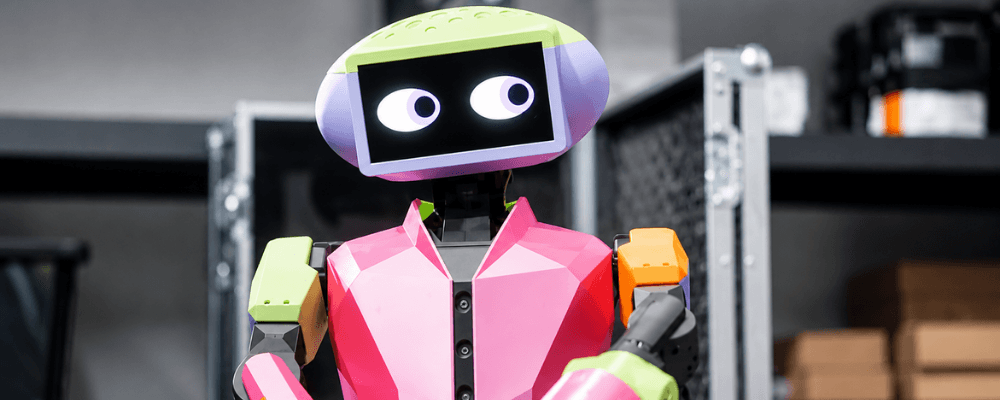
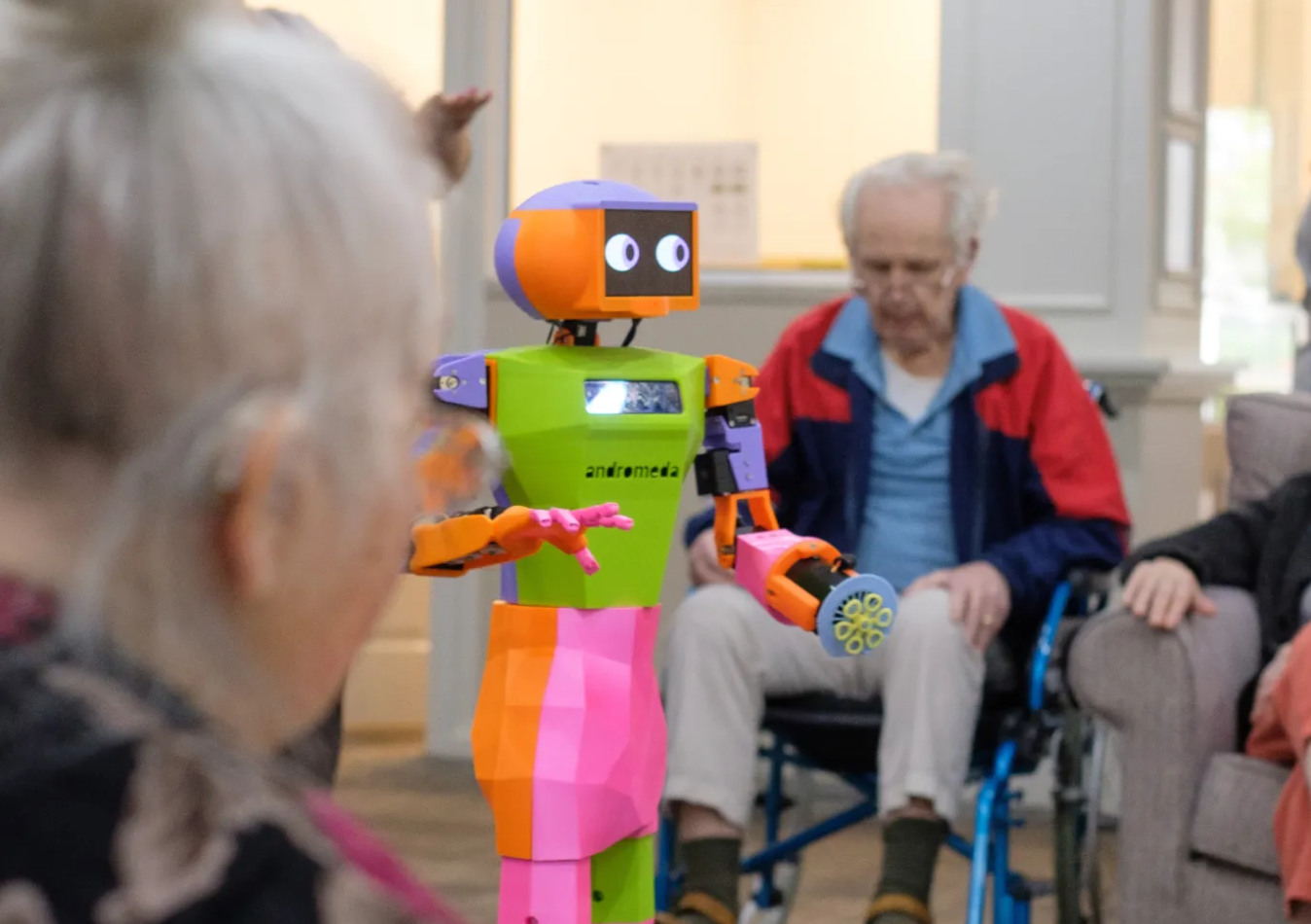
Melbourne based Andromeda Robotics, founded by Grace Brown, is developing Abi, a roughly four foot tall humanoid companion designed primarily for aged care.
Its approach differs considerably from Figure AI, Apptronik and 1X. Those companies are developing robots intended to perform physical tasks across factories, logistics operations and eventually homes. Abi is focused on social interaction. The robot can recognise and remember people, hold conversations in multiple languages, participate in activities and move through care environments.
Andromeda also has evidence of robots operating in customer environments. In April 2026, Australian aged care provider mecwacare announced the deployment of 22 Abi robots across its residential homes in Victoria, serving facilities with more than 1,500 residents.
The company is now expanding internationally. In May, Eskaton Village Carmichael in California introduced Abi into a memory care community alongside research from UC Davis examining its impact on residents and care environments.
Andromeda raised A$23 million in a Series A led by Forerunner Ventures in 2025, following approximately A$4 million in earlier funding. It has since established a presence in San Francisco as it targets the larger US care market.
Abi is not Australia’s answer to Figure or Apollo. It represents a different approach to humanoids, starting with a defined commercial problem and building a robot specifically around it.
Contactile is working on robotic touch
Sydney based Contactile approaches the market from another direction. The company emerged from research at the University of New South Wales and develops tactile sensors designed to give robots richer information about physical contact.
Its technology can measure forces, torque, friction and slip, allowing a robot to understand what is happening while it grips and manipulates an object.
This has obvious relevance to humanoids. Vision can help a robot identify an object and determine where it is, but reliable manipulation requires considerably more information. Robots need to recognise when objects begin slipping and continuously adjust how much force they apply.
UNSW identifies humanoid robots as one application for Contactile’s technology. The company has been selling sensors since 2019 and raised US$2.5 million in seed funding in 2022. In August 2026, Contactile also won the Propel AIR programme, giving it a residency at robotics hub MassRobotics in Boston.
Alloy Robotics is building the infrastructure layer
Australian founded Alloy Robotics sits further from the robot itself. The company develops software that helps robotics engineers understand why robots fail.
Alloy emerged from stealth in 2025 with A$4.5 million from Blackbird, AirTree, Skip Capital and Xtal Ventures. In August 2026 it raised another US$8 million in a round led by Square Peg, reportedly valuing the company at around US$80 million.
Modern robots generate large quantities of telemetry, logs, video and sensor information. When something goes wrong, engineers can spend considerable time tracing the problem across different systems. Alloy uses AI agents to analyse this information and identify likely causes of failures.
The company works across several robotics categories rather than focusing specifically on humanoids. The relevance becomes clearer as humanoid companies move from prototypes toward fleets of deployed machines. Operating hundreds or thousands of robots creates a very different engineering problem from maintaining a handful of prototypes.
So does an Australian humanoid industry exist?
Not yet.
Australia does not have anything comparable to the clusters forming in the United States and China, and Andromeda remains one of the country’s few companies actually developing a humanoid robot.
What is beginning to appear is a small ecosystem around the sector. For now, Australia has the beginnings of a humanoid robotics ecosystem rather than a humanoid robotics industry. The more interesting question is whether it stays that way.