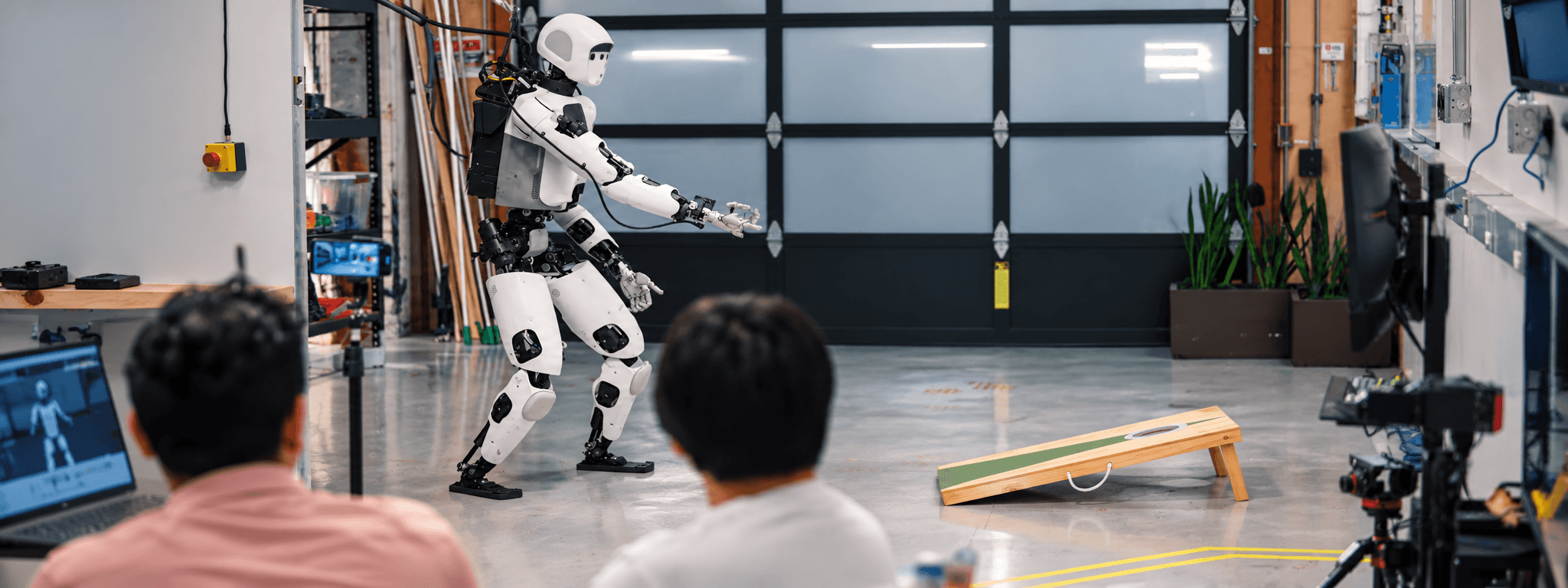


In a demonstration published on October 13, the company used Apptronik’s Apollo humanoid to test a process that converts ordinary video into robotic actions.
The experiment began with a video of a person playing cornhole, a game involving throwing beanbags toward a raised board.
Gemini 4 Argon analysed the footage, identified the spatial relationships between objects and calculated the movements required to reproduce the task.
The model then generated simulation code to test the movements before transferring them to Apollo.
According to Google, the humanoid successfully landed seven consecutive shots during a real-world trial.
The demonstration forms part of Google’s broader work on using AI models to accelerate robotics development through physical reasoning, simulation and robot control.
Google refers to the process as Video-to-Sim-to-Real, allowing developers to generate simulated environments from visual demonstrations and use them to prepare robots for physical tasks.
The company says the approach can reduce the time required to develop simulations from weeks to hours.
In another demonstration, Gemini 4 Argon controlled a Boston Dynamics Spot robot equipped with a manipulator arm. The robot created a simulation of a foot-operated rubbish bin, practised stepping on its pedal and subsequently disposed of soda cans using the physical robot.
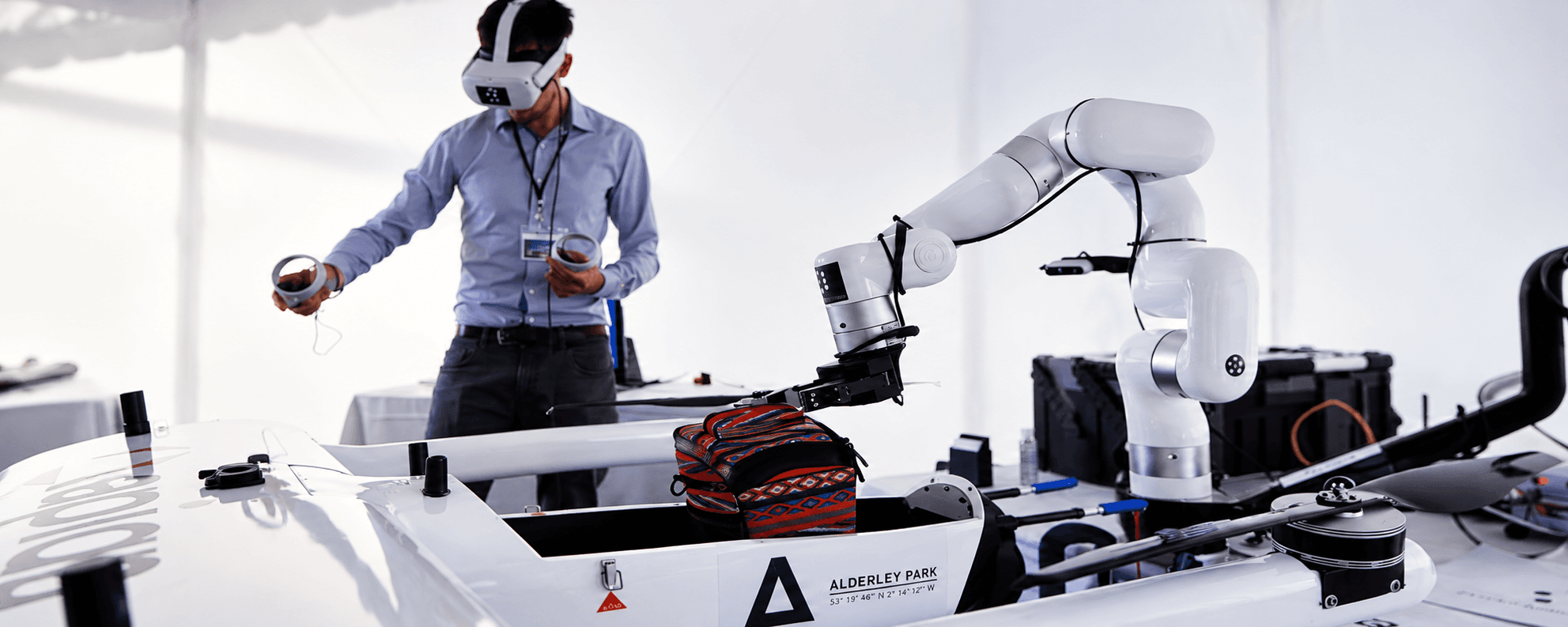
Google also demonstrated how the model could control a robotic arm to reposition a fallen mug and place a napkin inside.
On the Embodied Reasoning Question Answering benchmark, which evaluates physical and spatial reasoning, Gemini 4 Argon achieved a reported score of 87%.
The demonstrations illustrate how general-purpose AI models can support robot training by connecting visual observations, physical simulations and executable movements.