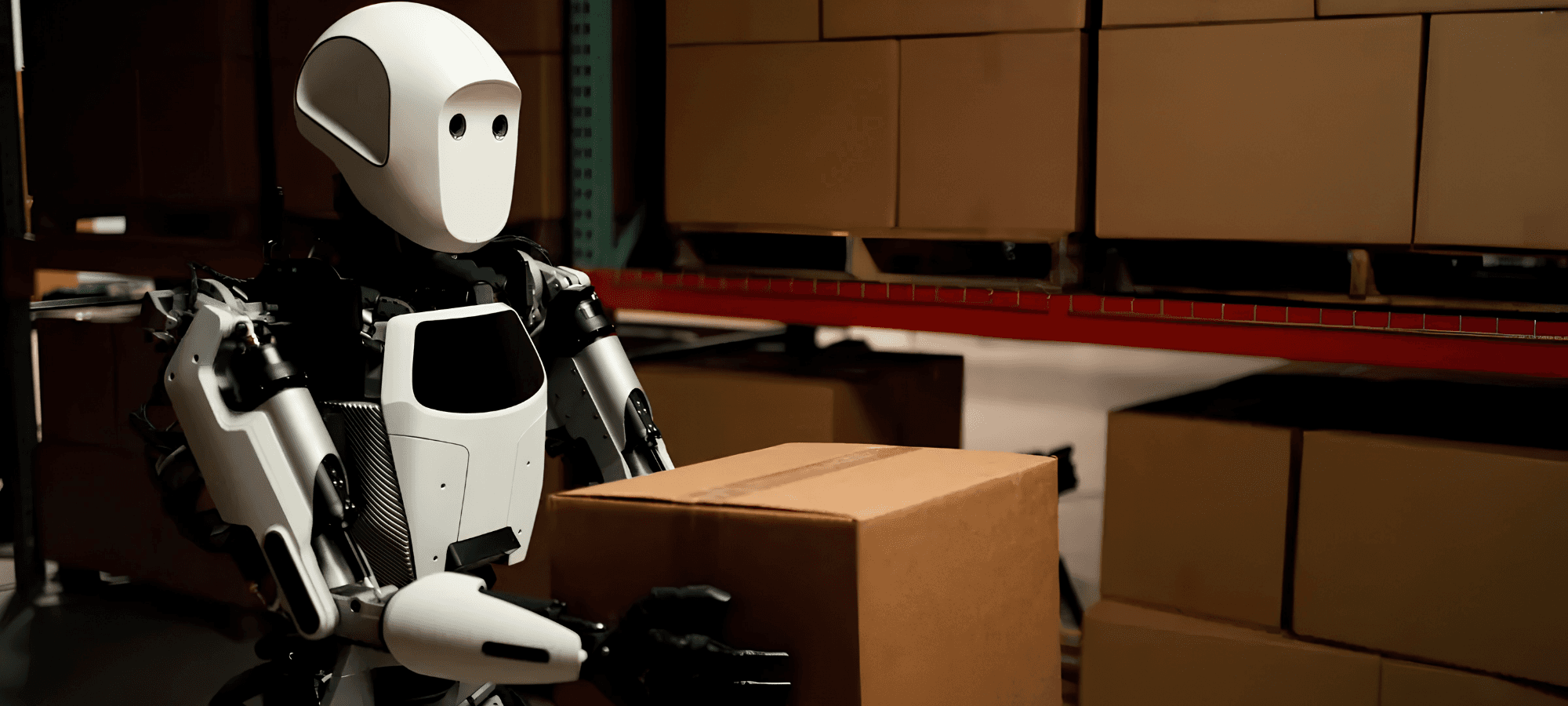

Among the early platforms vying to become a standard in warehouses and factories is Apollo, the general-purpose humanoid developed by Apptronik out of a long collaboration with NASA and the University of Texas at Austin. With a substantial Series A round backed by DeepMind, Mercedes Benz and NVIDIA, Apollo is positioned as a practical test of whether humanoids can deliver reliable capacity in the real industrial economy.
A NASA‑rooted approach to humanoid design
Apptronik’s story traces back to UT Austin’s Human Centered Robotics Lab, where researchers worked with NASA on Valkyrie, a 300‑pound electric humanoid built to navigate human-centric environments for exploration missions. That program sharpened a focus on safety, robustness and operation in spaces designed for people rather than for machines. Valkyrie’s participation in the DARPA Robotics Challenge helped prove that bipedal systems could walk, manipulate and withstand difficult conditions without being trapped in rigid industrial cages.
Apptronik spun out of this environment in 2016 with an explicit goal. Take the lessons from space-grade humanoids and apply them to commercial use cases. Over roughly a decade the team iterated through more than a dozen systems, from bipedal platforms to upper‑body robots and actuators, before converging on Apollo as the flagship design. For readers who want to explore the technical background, the company’s early work is summarised in public material from UT Austin’s Human Centered Robotics Lab.
Apollo’s industrial design choices
Apollo stands around 5 feet 8 inches tall and weighs roughly 160 pounds. It is built for human-scale workspaces. Its white exterior and “iMac‑like” head unit are not just aesthetic decisions. The overall appearance deliberately echoes NASA spacesuits and friendly consumer devices rather than the darker, more intimidating silhouettes common in many humanoid prototypes. That matters for operators and regulators who must decide whether these systems can share space with human workers.
On the technical side, Apollo targets a four‑hour duty cycle per battery and a payload capacity of around 25 kilograms. Swappable batteries allow near‑continuous operation with the right charging infrastructure in place. The lower body can be replaced by a wheeled base for environments where speed and stability on flat floors are more important than navigating stairs. This modularity hints at how the platform might evolve into a family of embodiments that share a common control stack. Apptronik has also emphasised actuator efficiency, arguing that its in‑house drive technology supports longer operation at lower energy cost.
From scrappy revenue to strategic capital
For years Apptronik built robots and components largely on revenue from research contracts and bespoke systems. Early customers included NASA and other institutional buyers interested in specialised actuators and prototypes rather than fleet deployments. That posture kept the company alive during a period when many investors were sceptical about general-purpose robotics and preferred narrow, single‑application solutions.
The funding environment shifted as embodied AI and large models drew more attention. In 2021 Apptronik closed a seed round of about 14.6 million dollars to accelerate humanoid development. In early 2025 it announced an oversubscribed Series A of roughly 403 million dollars, co‑led by B Capital and Capital Factory, with strategic participation from Google, Mercedes Benz and NVIDIA. For context, that puts Apptronik into the same order of magnitude as several high‑profile humanoid peers in terms of capital raised, although still below the largest rounds in the category.
This capital is earmarked for scaling Apollo’s production, expanding the team beyond 150 employees and moving from pilot projects to repeatable commercial deployments. The RaaS model that Apptronik is pursuing also benefits from this balance sheet. It requires the company to finance fleets on its own books and recoup the investment over time through subscription revenues, maintenance and software updates.
Strategic partners and early use cases
Apptronik’s partner list gives a good indication of where it expects early traction. Mercedes Benz has committed a low double‑digit million euro sum and is piloting Apollo in facilities such as its Digital Factory Campus in Berlin Marienfelde and in Kecskemét, Hungary. The focus is on low‑skill but physically demanding tasks including moving components, staging materials and performing repetitive quality checks on the line.
Logistics specialist GXO is running trials in distribution centres, exploring whether humanoids can reliably handle pallet breakdown, case handling and other warehouse tasks that are difficult to cover with fixed automation alone. At the manufacturing end, Jabil has been selected as a contract partner to scale Apollo’s production, leveraging its experience in high‑volume electronics and hardware manufacturing to help Apptronik move from dozens of units to potentially hundreds or thousands.
In parallel, a collaboration with Google DeepMind aims to integrate more advanced perception and reasoning into Apollo’s control stack. Public announcements reference natural language understanding and spatial reasoning, suggesting a path where Apollo can eventually accept higher‑level instructions and manage more of its own planning inside dynamic environments.
Commercial model and adoption path
Apptronik plans to go to market primarily through a Robots‑as‑a‑Service structure rather than direct hardware sales. In practical terms, that means customers subscribe to humanoid capacity on a monthly or annual basis. The fee likely bundles hardware use, maintenance, software upgrades and potentially some level of on‑site support. For operators used to leasing equipment or consuming cloud resources on an operational expenditure basis, this model reduces upfront risk and aligns cost with realised value.
The roadmap presented in 2025 points to broader commercial deployment from 2026 onward, with a progressive shift from tightly supervised pilots to more standardised packages for warehouse and manufacturing environments. Industry analysts forecasting the humanoid segment see total market value for industrial humanoids growing from a low single‑digit billion dollar base in the mid‑2020s toward tens of billions over the coming decade, with warehouse and manufacturing use cases leading the way. The pace at which companies like Apptronik can convert pilots into scaled contracts will determine how quickly those projections materialise.
Where Apollo fits in the humanoid landscape
Apptronik is not alone. Tesla, Figure, Agility and others are competing to place their own humanoids in industrial settings. The resulting landscape is diverse in form factors, control architectures and business models. Tesla leans on vertical integration and automotive scale. Figure has positioned itself as a pure‑play humanoid platform with an emphasis on software. Agility’s Digit illustrates a different set of design choices focused on simple, robust locomotion and bin handling.
Apollo distinguishes itself in several ways. It carries a clear NASA‑inspired design language and heritage. It is built explicitly for close human collaboration in industrial environments rather than for lab demos or speculative consumer scenarios. Its RaaS model and partnerships suggest a pragmatic, operator‑centric path to adoption. For Robotico’s audience, the most interesting question is not whether Apollo is the most agile humanoid in a test video. It is whether this combination of design choices, capital structure and partner ecosystem can make humanoids feel like a credible, financeable tool for line managers and CFOs rather than an experiment.
As more platforms move from staged launches to multi‑site deployments, the way Apptronik executes this transition will offer a useful signal. It will tell us not only whether Apollo can become a staple in warehouses and plants, but also how quickly humanoid capacity can become just another variable an enterprise tunes in its operating model.