

(this article is not a financial advice)
Key takeaways -
- Chinese actuators are in very high demand, lead times have doubled in the last year.
- Unitree procures some generic parts from third parties. Their supplier concentration is low
- Chinese auto makers are jumping in on the robotics waves. Companies like Tuopu,meihu and Sanhua have all made significant investments in increasing the production of actuators.
- Tuopu, Sanhua and other robot companies have invested a combined $280M in setting up plants in Thailand
- Reducer margins are falling as a result of increased production.
- Value is moving towards actuator/joint module as opposed to its reducer parts despite many humanoid companies choosing to manufacture their in-house actuators.
The field of robotics is heating up. Unitree’s IPO was massively oversubscribed by more than 8000x by retail investors. Unitree priced its IPO at about 22$ at 9B valuation. It started trading on 19 August and it had a jump of 629% in its price and its market cap is currently sitting around $37B making it one of the highest valued humanoid robotics companies.
For comparison - CXMT, the leading DRAM producer of china, was oversubscribed by 200x and had a 466% jump in its stock price on debut day.
Semianalysis published an excellent article on Unitree’s growth. The Central piece of discussion in that article was the in-house design of Unitree’s actuator. I read the free version of the article but I was so fascinated by these actuators that i decided dig deeper to understand their supply chain better.
No single article can completely cover the entire supply chain of these actuators so i will try to make this a series. In this article, I will briefly look at the overall actuator situation and then i will look at a few actuator companies that i found interesting and what conclusions can we draw from them.
What are Actuators and why Focus on Actuators?
Actuators are essentially the muscles of robots. I really recommend reading the Semianalysis newsletter to further understand actuators.
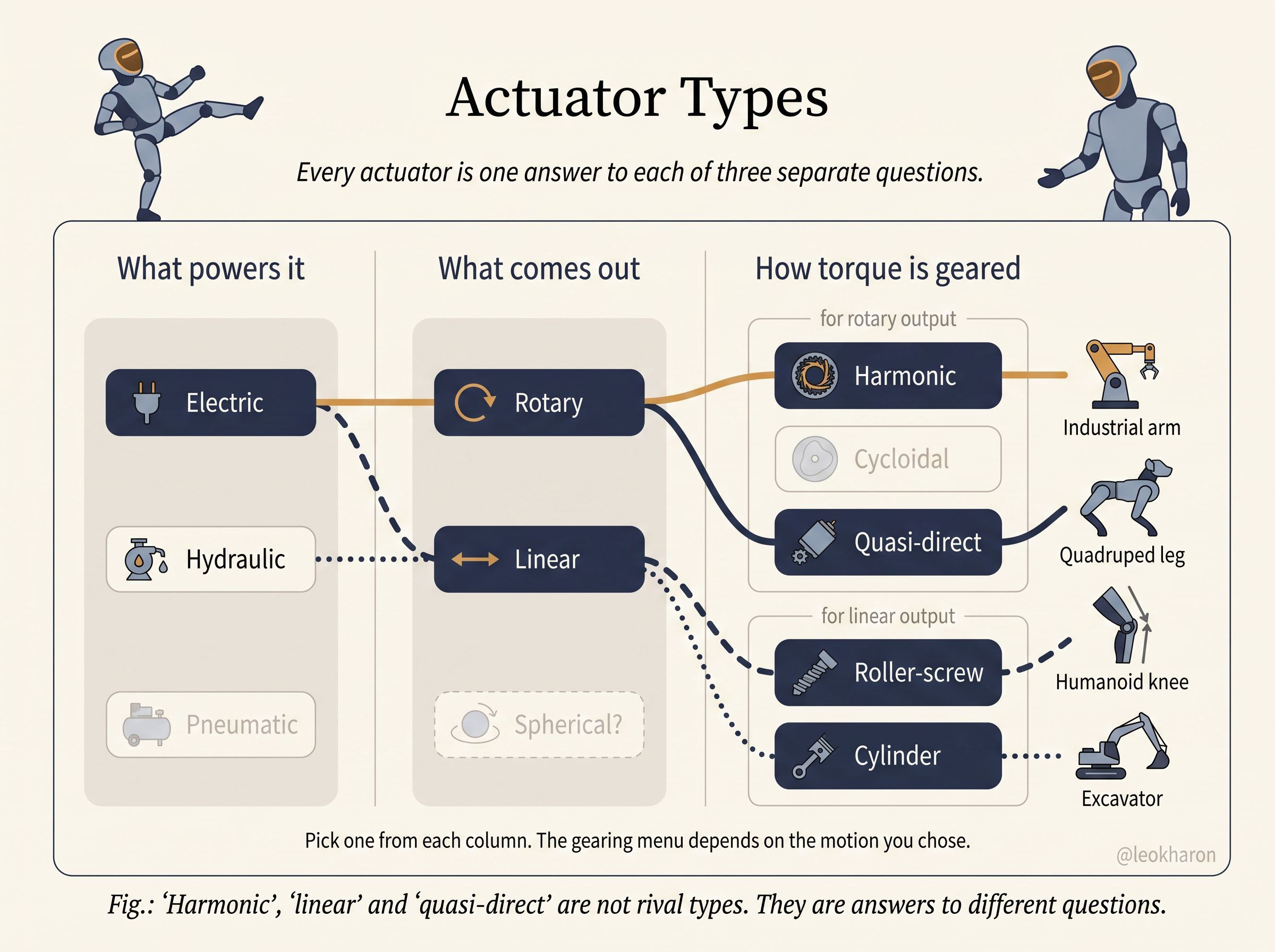
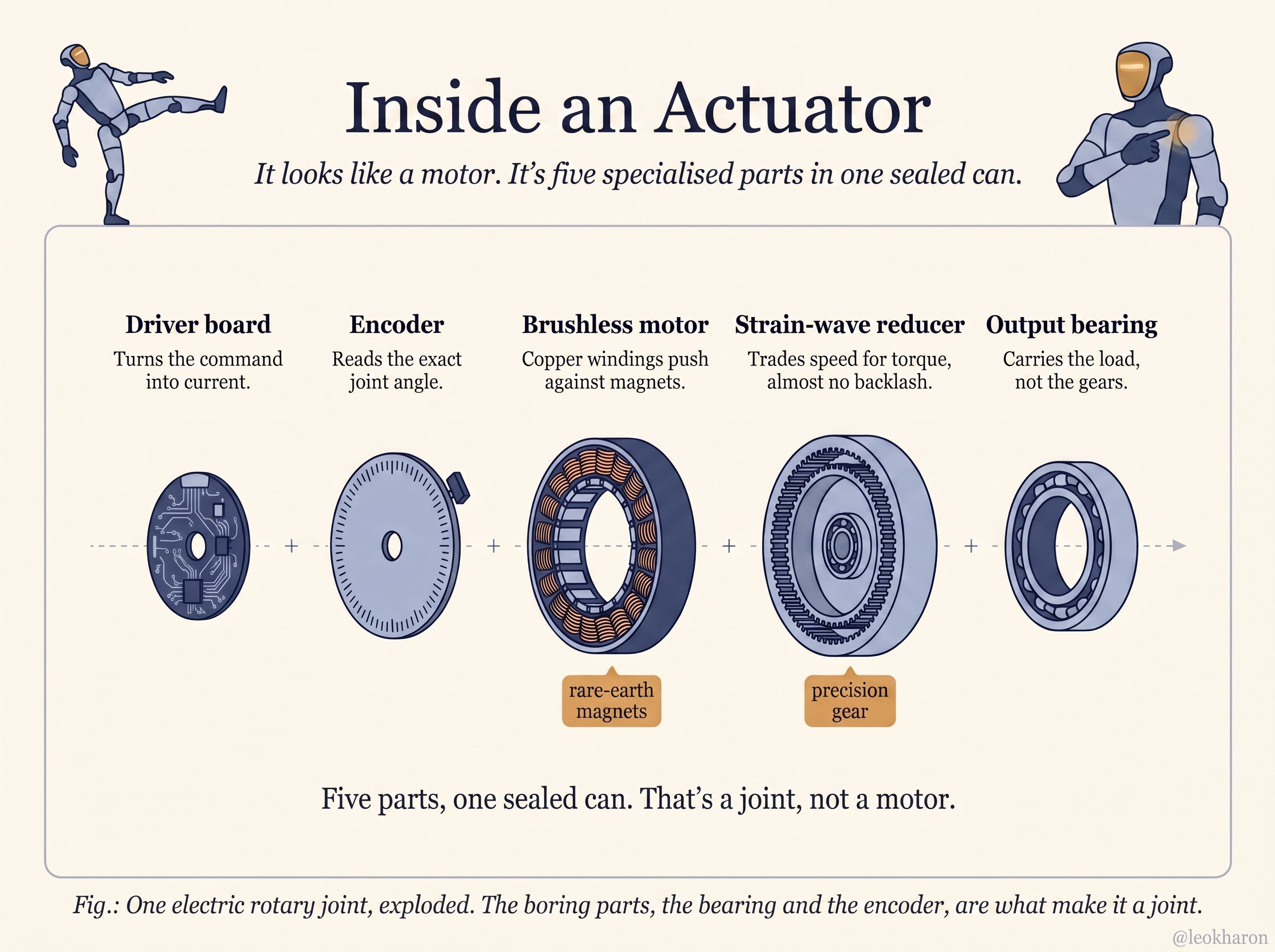
Example of a harmonic Drive actuator. Unitree uses a QDD actuator. (source)
- Actuators are the most important part of the Humanoid. They can cover upto 50 to 60% costs of a humanoid BOM
- Supply for actuators have also started to tighten and companies are racing to increase production of these robotics parts
- Actuators are not just used in Humanoids, they can also be used in other forms of robots which makes it important to understand their supply chain
Why focus on China first?
- Chinese robot parts are currently so much in demand that American technologists are often packing these parts in their personal suitcases to take it to their labs.(source)
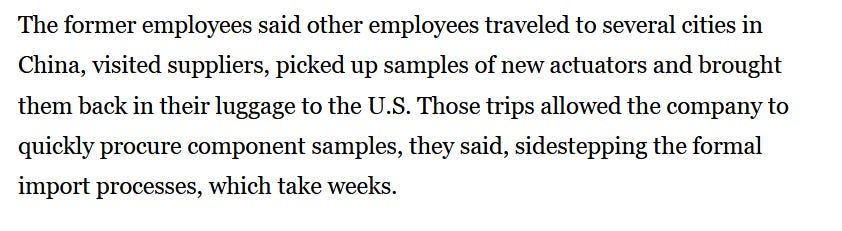
The Information
- Also, the lead times for choosing a US based actuators is incredibly high.
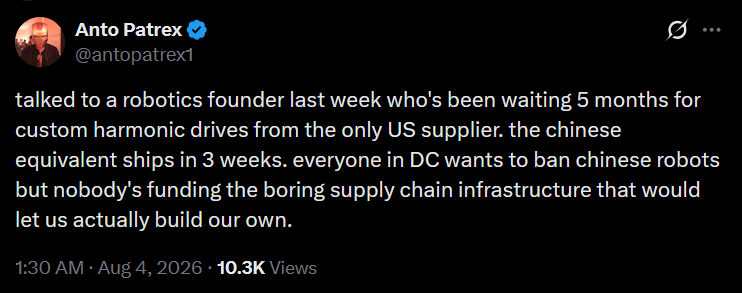 source
 - “Our reducers are selling like hotcakes. Two years ago, the delivery cycle was within 4 weeks, but starting in April 2025, the delivery cycle has become 8 weeks” - Leaderdrive employee(source)
I intend to deeply explore every single actuator producer but the reason i am focusing on the Chinese ecosystem first instead of focusing on the biggest actuator companies first is because both the Semianalysis article and this geekpark articles mention how important the Chinese ecosystem was in helping Unitree grow.
“The architecture Xingxing was working with required small shops that could machine custom motor housings at low volume and low cost, electronics fabs that would run a hundred custom driver boards without making you feel like you were inconveniencing them, and a labor market where a competent robotics master’s graduate cost a fifth of what the equivalent person cost in the Bay Area.” (source)
“Every province now has several manufacturers of rightly sized/spec’d gearboxes, high-torque BLDC motors, and more. Within China, there are now ~200 humanoid companies all reaping the benefits of and contributing to this ecosystem.” (source)
Many of the robotics companies also tend to shift towards manufacturing in-house actuators once they feel like they have nailed the basics but it seems like relying on these third party manufacturers is more viable early in their journey.
Despite companies like Unitree switching to in-house actuator design, the demand for third party actuators is actually rising (as we will see in this article)
The Unitree Story
Unitree recently had a very successful IPO so i want to add additional context that might be important to understand Unitree’s rise.
GeekPark is Unitree’s earliest investor. They recently wrote about their experience. This is what they said about Wang Xingxing -
“His undergraduate thesis had been on the design of a brushless DC motor controller; for his master’s, he had built XDog - a quadruped - for under 20,000 RMB, designing the actuators, the control electronics, and the gait algorithms himself, around low-cost outer-rotor BLDC motors he selected and characterized. That was the part the rest of the field tended to outsource.”
“He has also said he’d concluded hydraulic actuation could not be commercialized as early as 2013, before any of the public pivots had been signaled.”
This shows that Xingxing had actually been working with BLDCs since his undergrad! Not only that, he had written off Hydraulic Actuators back in 2013.
I personally think this is important context, it shows just how long Xingxing had been deeply thinking about actuators which gives you an idea about how long it can take for an idea in robotics to come to fruition!
Part of the actuator that Unitree may get from outside
Unitree develops its actuators in-house. In a recent roadshow investor Q&A, they said this -
“it has full-stack developed core robot models and algorithms (embodied intelligence, reinforcement learning, motion control), intelligent systems (thermal management, energy management, motor drive), and core robot components including high-performance motors, reducers (减速器), dexterous hands, LiDAR and various sensors, forming multiple commercially applied core technologies.”
It’s obvious that Unitree’s main advantage is its vertical integration.
However, The IPO prospectus does mention that Unitree outsources some parts of its products and processes, mostly unimportant inexpensive parts. This is what is said on page 1-1-24 and 1-1-140 of the IPO prospectus -
“The raw materials required by the Company primarily consist of various mechanical parts, electronic components, and electrical materials…
…Specifically, the production and assembly of complete robots and core components are carried out internally, while non-core components and certain processing steps are handled through customized procurement and outsourced processing”
“The company’s primary products are characterized by long manufacturing processes and numerous production stages. Leveraging its mastery of the entire production process, the company outsources specific stages—particularly those involving mature technologies and readily available market supplies—to optimize resource allocation and enhance cost-efficiency. During the reporting period, the company’s outsourced production activities were as follows:”
The parts that Unitree outsources are generic are so they are easily available and cheap. I still believe that it is important to look at those parts to understand the supply chain.
Let’s look at some parts Unitree may source from outside
Reducer Parts(rumored)
Meihu has claimed that it is steadily supplying parts of reducers to a Hangzhou-based leading robot manufacturer. While meihu has not directly named Unitree in its answer, many assume that they are indeed supplying it to Unitree, given that Unitree is the most well known Hangzhou-based robot manufacturer. (Source). This rumor should be taken with a grain of salt because no identifying marks were found on the Unitree reducers themselves.
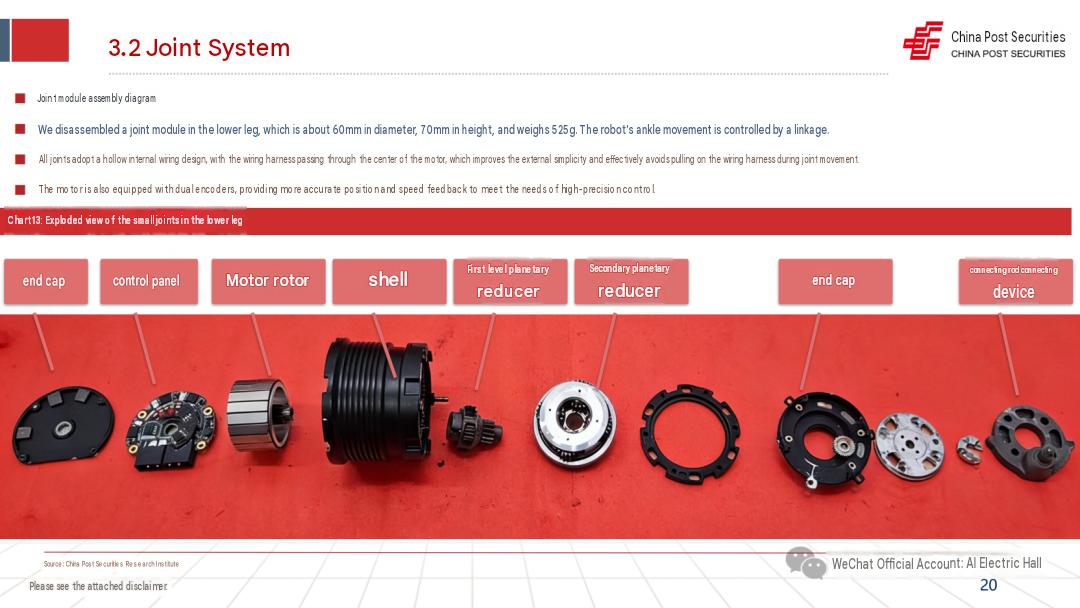
Unitree G1 joint module teardown. source - China post securities
It is important to note that Unitree gets raw materials from a variety of suppliers so Unitree isn’t too dependent on a single supplier. The top 5 raw material suppliers account for only 21% of the raw materials.

Crossed-Roller bearing
In the same teardown, it is noted that the crossed roller bearing used in the actuator do have a name on them. They belong to a company called luoyang baina(website)
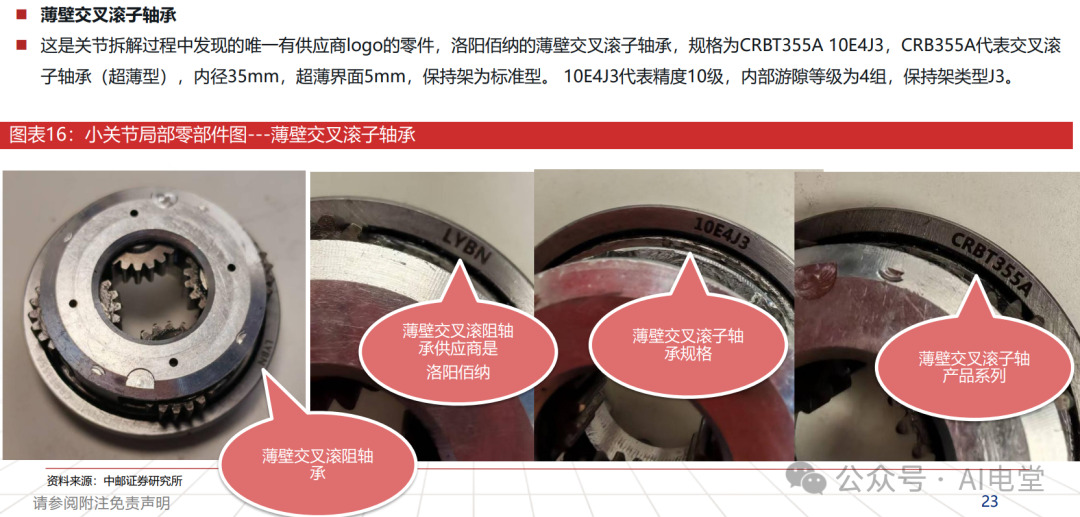
Crossed-roller bearing Unitree G1 (source - China post securities)
The bearing match exactly the ones present on this page. This shows that NOT everything inside the actuator is actually made in-house which makes sense because there is no need to develop in-house the parts of actuators that are easily available in the market.
A quick look at the Chinese Actuator companies
This will be a very general overview of some actuator companies that I found interesting. This is not an exhaustive list and they are not the only interesting projects in chinese actuators, more will be covered in the future. My reasoning for choosing these companies will be mentioned in their profiles.
Companies discussed are -
- Meihu
- Toupu/Top Group
- Sanhua
- LeaderDrive/Green Harmonics
- Laiful Drive
- Encos
Meihu
Meihu is China’s domestic leader in lubricating/cooling pumps, including variable/fixed-displacement pumps , automatic transmission pumps and electronic pumps.
They have recently started focusing on two new areas(both related to AI) -
- High power e-pumps server liquid cooling
- Robot parts
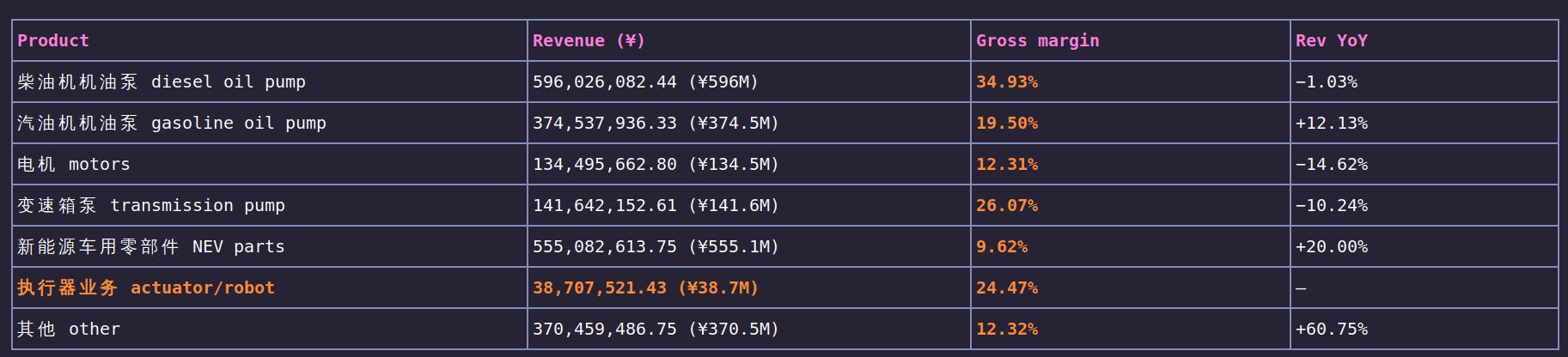
Meihu 2025 revenue split
As you can see, robot parts is still a new section for meihu so it still has only 1.7% of the total revenue.
Meihu only officially established a robot segment in September 2025. They have given several reasons in their filings for finally doing so which paint an important picture of how china is thinking about robotics -
- “China’s robot industry is in an acceleration phase of triple dividends (policy, technology, market) and has risen to a national strategic priority.”
- “2025: intelligent robots written into the Government Work Report for the first time”
- “localization rates for precision reducers, planetary roller screws, etc. remain low; some key technologies are constrained by overseas firms”
- “ leveraging precision-manufacturing + mechatronics heritage to tackle planetary/harmonic reducers, axial-flux/frameless motors, servo drives, and smart-actuator-unit integration”
Meihu is very serious about focusing further on robot parts and is making a huge bet on the same -
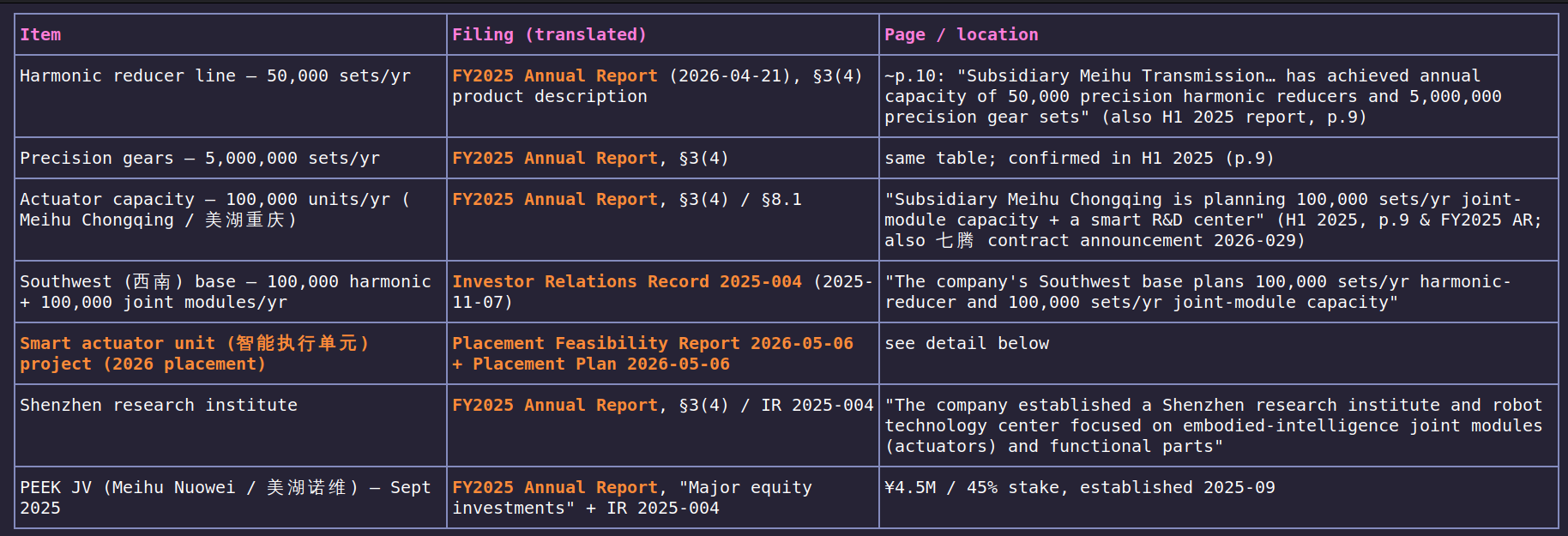
Meihu current capacities and future plans
They seriously plan to increase production of actuators and joint modules in their Chongqing subsidiary and in their southwest base.
They are also building a brand new 9900m<sup>2</sup> plant dedicated to making gears and actuators(smart actuator unit) in which they have invested 387M Yuan($57M) so far. Their reasoning for building such a huge plant is that their current actuator production capacity cannot support the demand that they’re facing.
All this shows the seriousness and speed with which China is further building and expanding actuator capacity.
Tuopu
Tuopu is also an auto parts giant in china. They make lightweight Chasis, soft interior, air suspensions, etc serving customers like BYD, Geely, Xiaomi, etc.
Tuopu is also looking to get into robot parts and data center thermal cooling among other things.
Tuopu’s robot revenue is even smaller than Meihu’s at just ¥13M.

Tuopu robot revenue
However, i included it here because just like Meihu, they are also heavily investing in robot part manufacturing and are motivated by similar reasons as well -
- “In 2025 embodied intelligence was written into the Government Work Report for the first time, signalling it will hold an important position in future industrial development… the global robot industry could reach a ¥100-trillion-class scale… a typical representative of new productive forces.”
- “Each robot needs dozens of motion actuators worth roughly ¥10,000+ per unit — a huge market. To seize this opportunity, Tuopu spun out a dedicated Robot Actuator Division with independent management and a top team, concentrating resources to provide strategic support for rapid growth.”
- “While developing the eight smart-EV product lines, the company seizes the robot industry opportunity, focusing on key robot products/core technology and achieving synergy between smart-auto-parts and robot-parts businesses.”
The reasonings are very similar - government focus, growing market and deep experience in auto manufacturing.
Tuopu already has existing robot lines and is clearly planning to aggressively expand as well just like meihu -
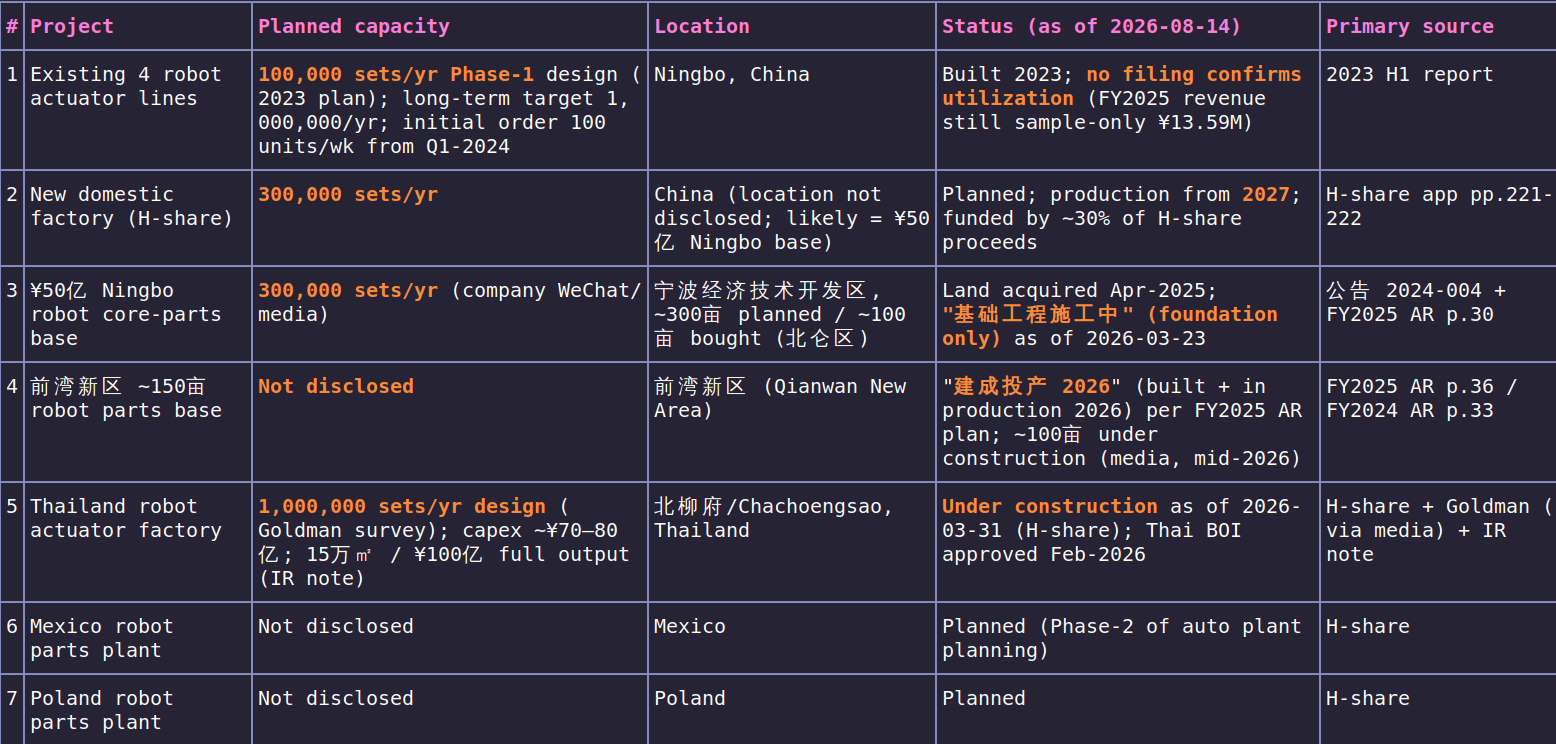
Tuopu robot capacity plans
Tuopu has invested THB 930M($28M) for its Thailand plant. Tuopu is one of the five firms approved by Thai BOI in feb for setting up humanoid robotics base in Thailand.
Other Chinese firms approved by Thai BOI are-
- Sanhua - also makes actuator parts. THB 1.8B($55M) invested. will be covered next.
- Seepin - planetary roller screws and robot ball screws. THB 2.12B($64M) invested.
- Beite - planetary roller screws. THB 1.67($50M) invested.
- Xusheng - actuator housing, robot body components. THB 2.7($82M) invested.
Sanhua
Sanhua is another well known auto and thermal company. Their main focus is refrigeration and auto thermal management.
Sanhua also has similar reasons for focusing on robot parts - new growth curve, manufacturing expertise, etc. But Sanhua doesn’t seem to have a separate robot segment yet in their revenue filings. It seems like Sanhua is playing it relatively safe compared to the previous two firms. They intend to ramp up capacity gradually(according to a Goldman Sachs report)
Sanhua has a Hangzhou Qiantang “Smart Drive Future Industry Center” in which they are focusing on both NEV thermal-management parts and bionic-robot components.
Sanhua also has two plants in Thailand, the newer one does seem to be dedicated towards actuators. This will slowly ramp up capacity.
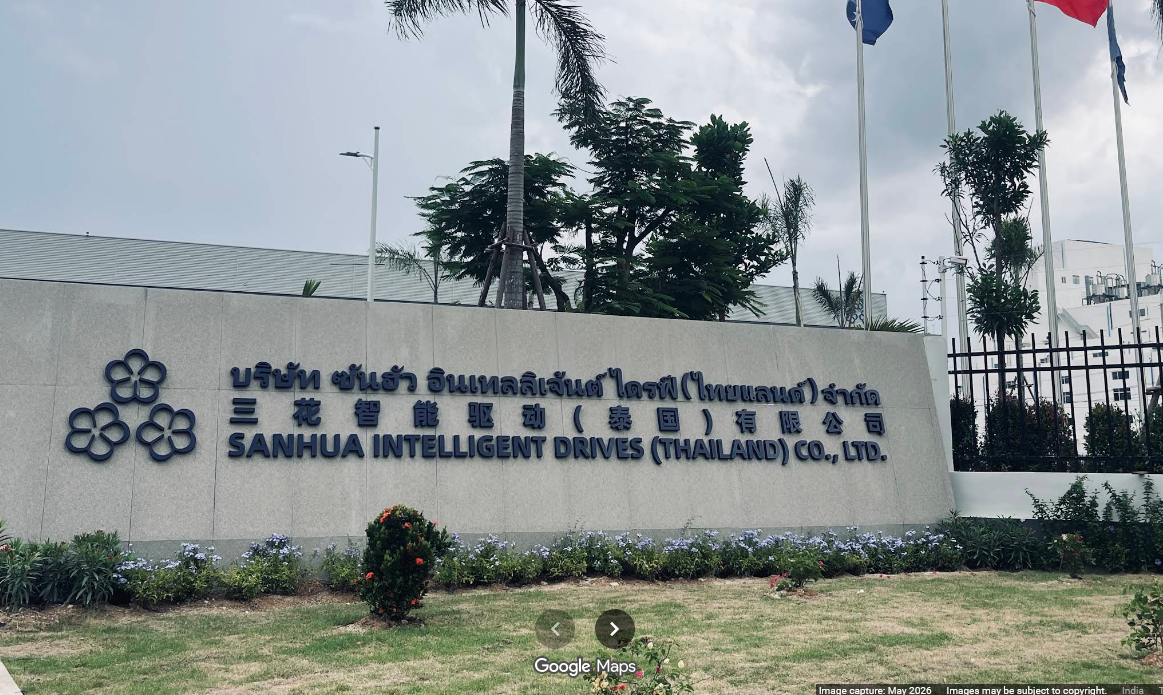
Sanhua Thailand plant (google maps)
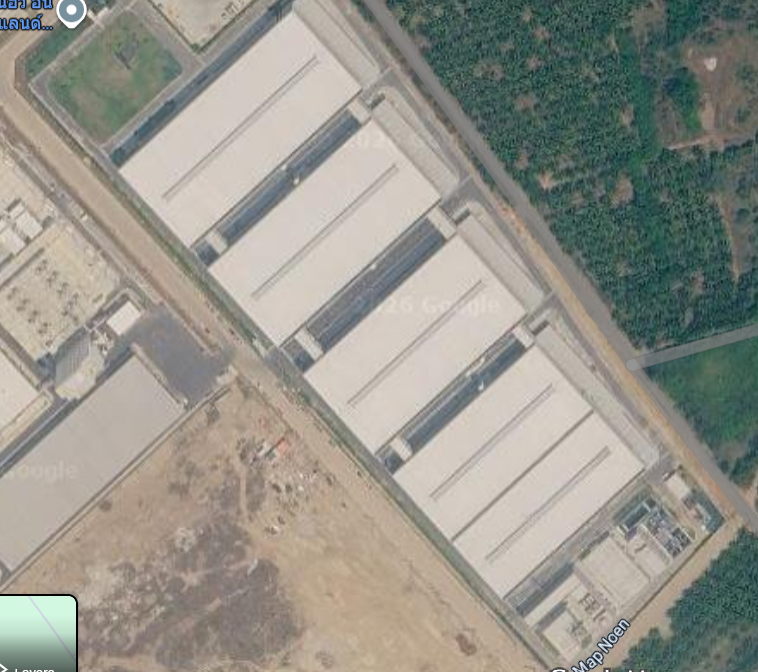
Sanhua thailand buildout(google maps)
Sanhua’s actuator plant is entering pre production phase as can be seen from this job posting on 13 august 2026 - https://www.jobthai.com/th/job/1814568
LeaderDrive / Suzhou Green harmonics
Unlike the last three, LeaderDrive has been in the business of making actuator parts since 2011. Leaderdrive primarily makes Harmonic reducers. They are the current leader in china and overall third worldwide;
- According to a Forbes article, LeaderDrive has about 30 to 40% marketshare for reducers in china.
- Clients include - UBTech Robotics and Agibot. It has also fulfilled small-batch R&D orders from Tesla and Figure AI. (Source)
- The two brother owners(each owning 17%) have become billionaires last year thanks to the rise of robotics
UBTech is mainly buying actuators and other modules from LeaderDrive for its Walker S2 according to JP morgan.
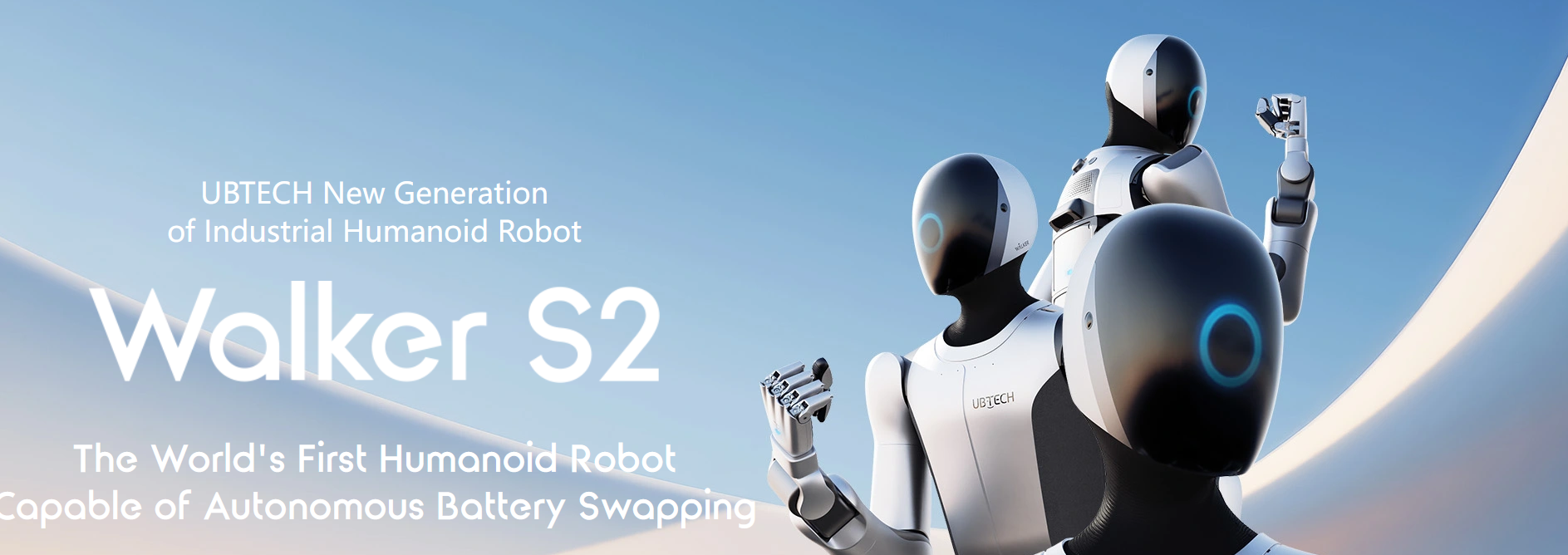
UBTech Walker S2
As seen previously - Many of the auto part manufacturers are starting to jump into robot part manufacturing as well, one of the their main focus has been gear reducers.
Naturally, the reducer market is starting to face stiff competition. LeaderDrive’s reducer sales have almost 4x’ed since 2020 but their gross margins for reducers fell till 2024 and have only slightly gone up in 2025. This means that the average selling price for reducers is also falling. This could be considered a case of neijuan/involution.
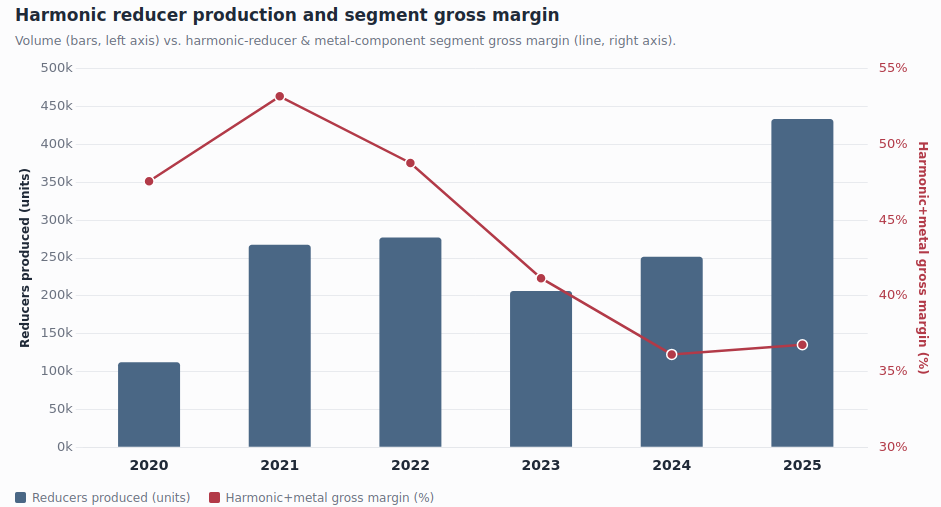
LeaderDrive reducer production over the years
While LeaderDrive’s main product remains reducers, they have already started increasing the production of “mechatronic actuators” and these actuators are increasingly becoming a bigger part of their revenue.
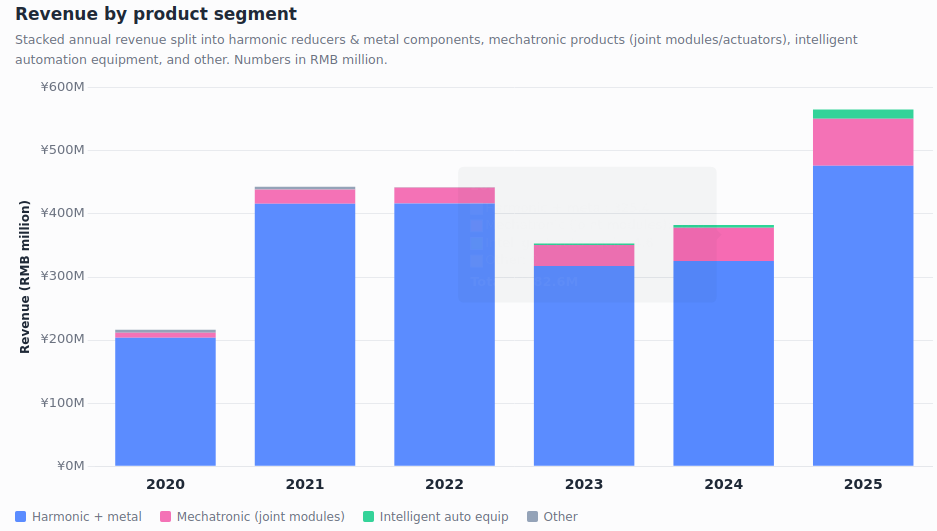
Revenue by products
The margins of reducers(which are an important part of actuators) themselves are falling but the margins of actuators themselves are actually far more stable and healthier.
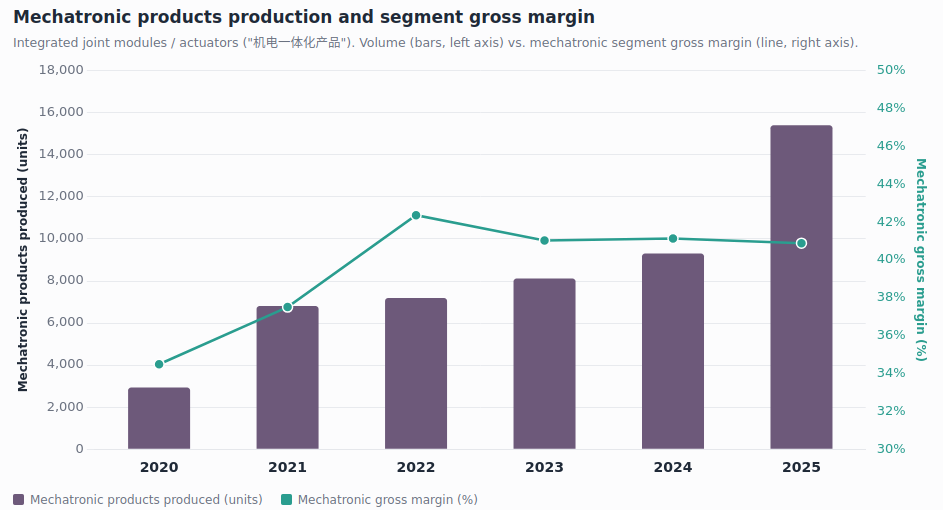
LeaderDrive Actuator production
This clearly shows that a full actuator is more valuable than the underlying reducer itself.
LeaderDrive expects a further increase in demand -
- LeaderDrive has accumulated a lot of raw materials in 2025 so they still expect a dramatic increase in production this year.
- LeaderDrive has also entered a Joint Venture with Minth Group in Feb to further sell robotic products in North America (source)
Laiful Drive
- Laiful Drive is the second biggest reducer producer in china just behind LeaderDrive.
- Laiful IPOed on 30th June. Laiful was oversubscribed by 4500 times but interestingly, it is currently trading at 69 HKD which is below its IPO price of 85.50 HKD.
- Unlike LeaderDrive, Laiful is still loss making.
However, Laiful is also experiencing falling ASPs for their reducers while they are massively increasing the production
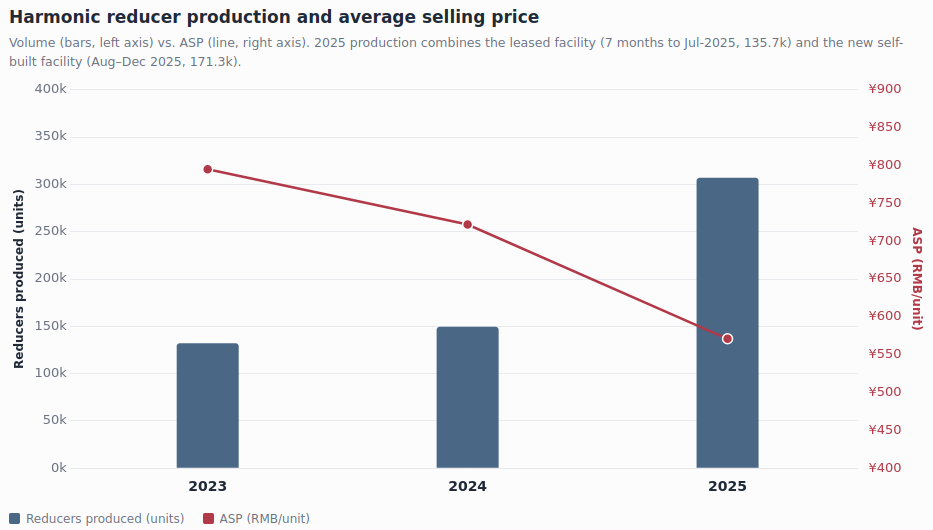
Reducer production and ASP over the years
Laiful, in their filing, claim that this fall in ASP is due to an increased share of smaller reducers(from 2.4% in 2024 to 11% in 2025) but the prices of smaller reducers themselves are also falling. ( rmb 594 → rmb 397)
Naturally, Laiful is also doing the same thing that LeaderDrive is doing - They have started making actuators/joint modules, they are also making robot arms -
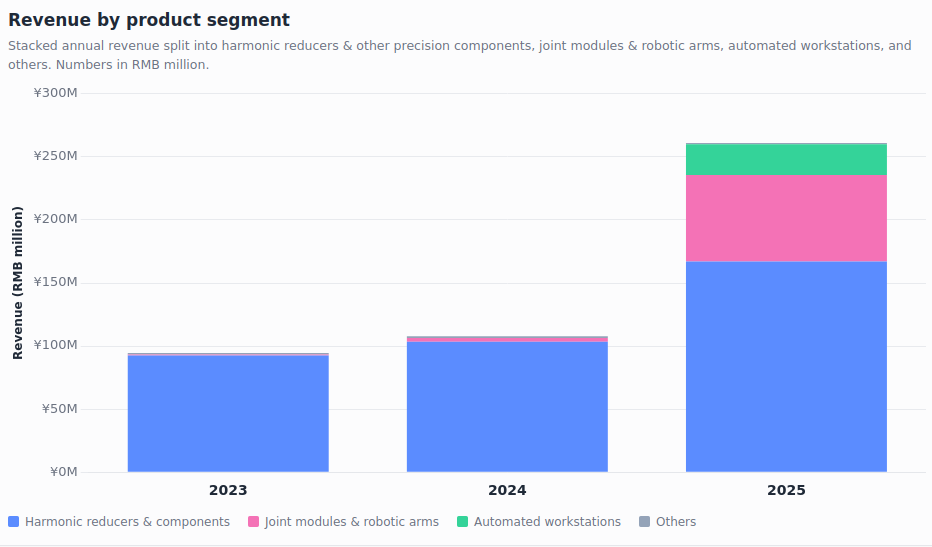
Revenue by products
And their focus on joint modules is paying off -
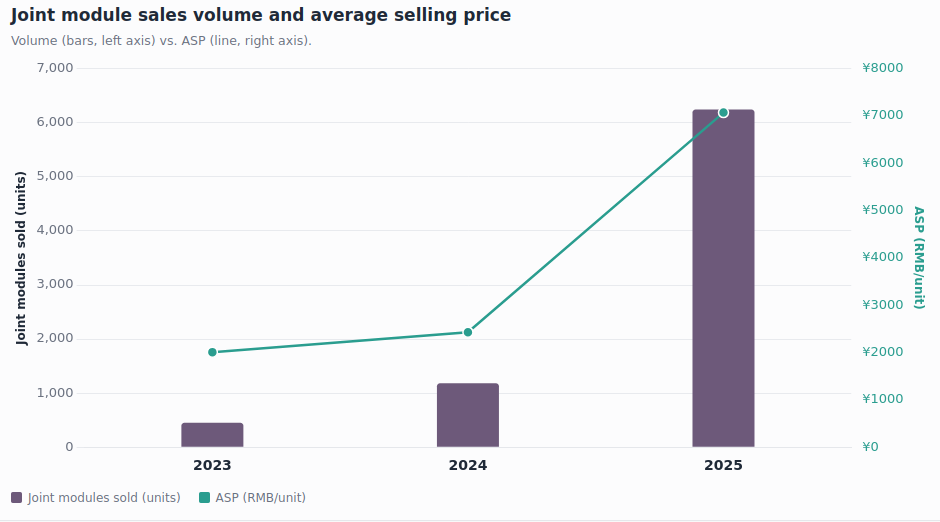
Joint module sales and ASP
This paints a really strong picture of where the market is headed. This clearly shows how high in demand actuators/joint modules are now. So while reducers’ gross margins are falling, joint modules remain in high demand.
So the next firm we will be looking at primarily focuses on joint modules
Encos
- Encos mainly sells whole actuators/Joint modules.
- In the 2025 humanoid games - about 60% of the participants used encos.
- Their customers include -Beijing Embodied-AI Robot Co.(tien kung robotics), Booster Robotics, LimX Dynamics, Songyan Dynamics, Asimov, etc.
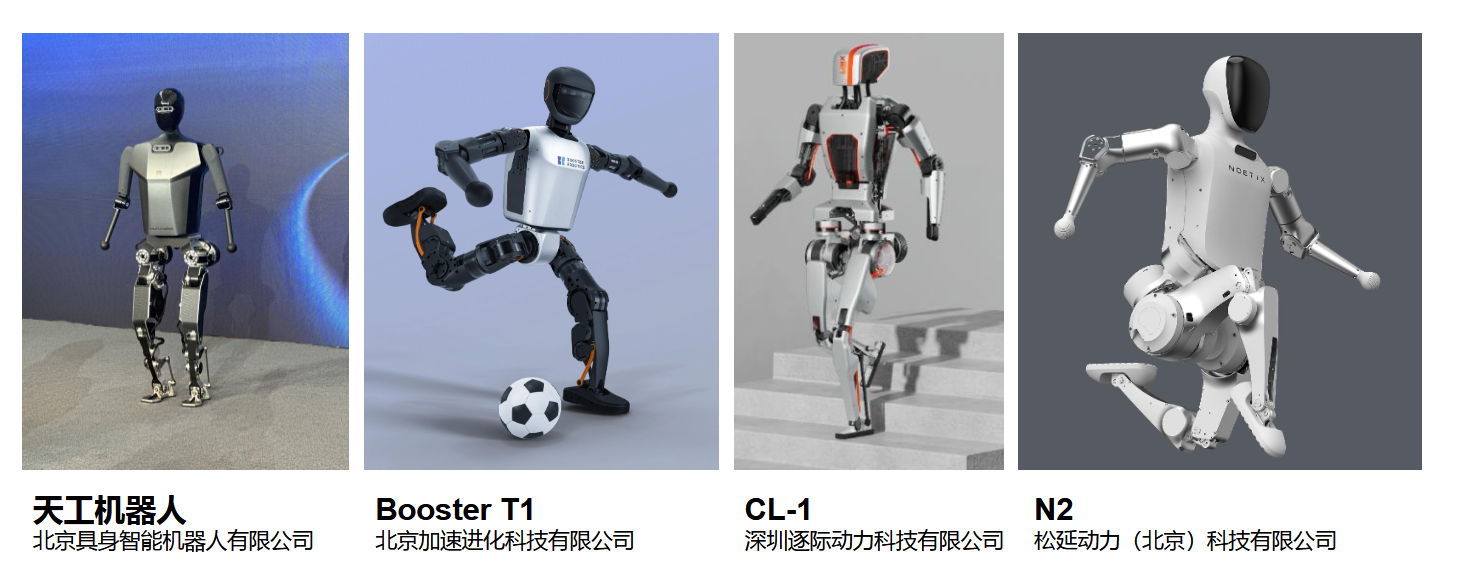
Some robots that use ENCOS joint modules
- They sold 100k+ joint modules in 2025. This number is far higher than that of leaderdrive or laiful.
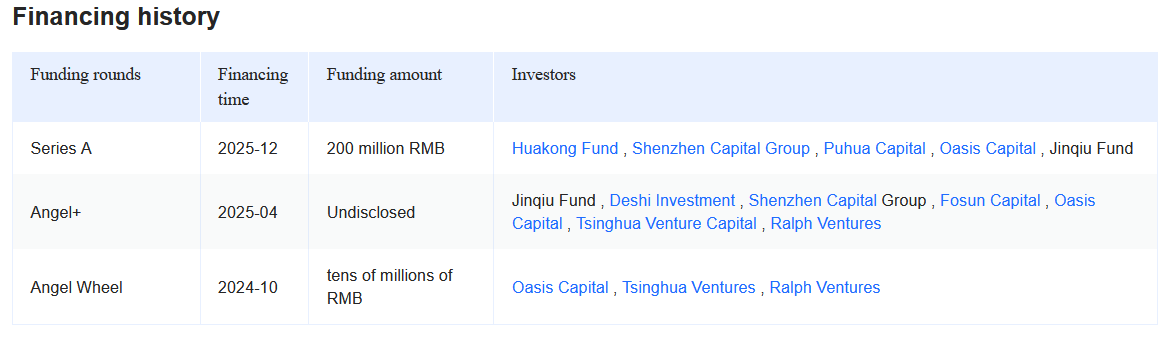
- ENCOS is private company and they have raised ¥200M in last year’s series A.
- ENCOS introduced two new products at the recent WAIC - data collection Gloves and a new inner rotor joint module
Seems like ENCOS wants to focus on the next bottleneck which is dexterous hands.
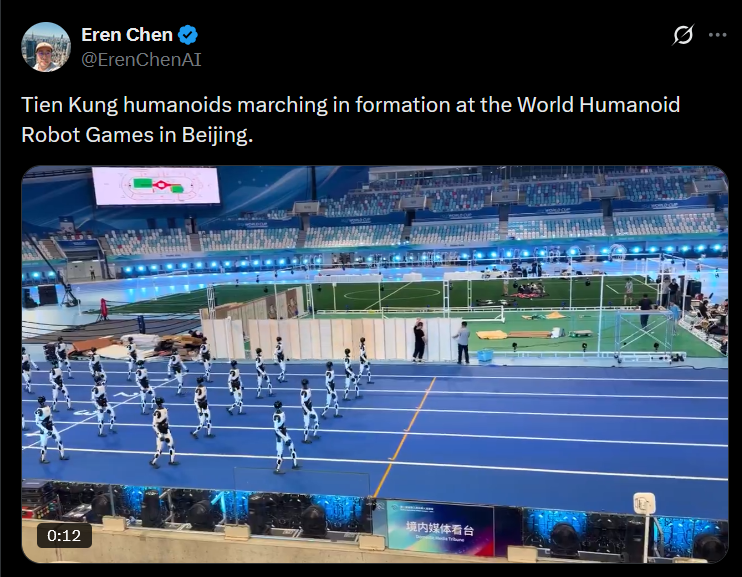
Newer Tien Kung robots use in-house actuators and are closed source, this shows that firms initially rely on the third party actuators when they are still figuring things out and then move onto building in-house actuators once they have nailed a form factor. I personally believe that third-party actuators will stay relevant for now because a lot of companies are still experimenting with their products.
Personal Opinion -
One reason i like ENCOS is that it is used by Open-Source projects such as Asimov 1 by Menlo Research and Tien Kung(x-humanoid)
Asimov 1 uses both QDDs and Harmonic Drive actuators, both supplied by Encos. It launched this August and costs $20k. Asimov 1 is not exactly state of the art for its price but the fact that it is completely open source makes it an amazing tool for learners and researchers.
One should note that Unitree’s biggest use case is still R&D so there’s a lot of value in developing a robot like Asimov 1.
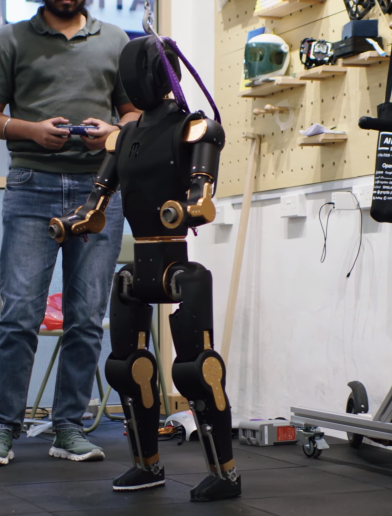
Asimov 1
Open source appears to be general strategy that is used by many firms in china, we will perhaps explore this in later articles.
Closing remarks
- This article barely even scratches the surface of actuator supply chain which is still rapidly evolving
- i have collected a lot more actionable data which i wish to share in the future
- I am really interested in Chinese open source companies. More will be said about them in the future.
- I am thinking of making a live dashboard to regularly track every minor moment in robotics supply chain. let me know if you’re interested.