
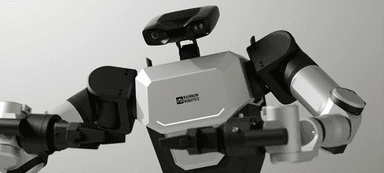
South Korea launches a $770M humanoid robotics initiative aiming to scale production, reduce labor gaps, and compete globally by 2030.
 Mar 17·5m read·▲ 1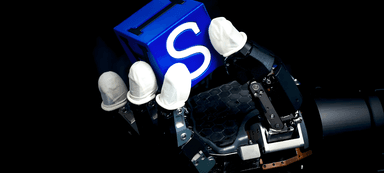
Sanctuary AI skipped bipedal locomotion to focus on dexterous manipulation, building a 21-degree-of-freedom hydraulic hand and filing approximately 140 US patents — making it the only startup in the global top 20 for humanoid robotics IP alongside industrial giants like Sony, Toyota, and Honda.
Feb 19·8m read·▲ 0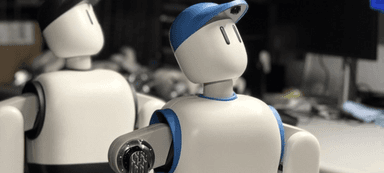
Sunday Robotics' Memo is a household robot built by Stanford PhD dropouts that learns tasks from human demonstrations captured through wearable Skill Capture Gloves rather than traditional robot teleoperation. This approach enables scalable training data collection from real homes, generating approximately 10 million episodes of authentic household routines across 500+ participating homes.
Dec 10·15m read·▲ 0
Foundation Robotics Labs' Phantom MK1 humanoid robot was designed for defense applications yet performed a DJ set at a San Francisco nightclub — raising urgent questions about the future of militarized robotics and who gets to decide when a machine becomes a weapon.
Nov 27·7m read·▲ 1
Where to invest as the humanoid robot market accelerates past $70 billion. The robotics sector is projected to expand from USD 64.8 billion in 2025 to over USD 375 billion by 2035, but most of the most compelling companies remain private.
Nov 4·8m read·▲ 0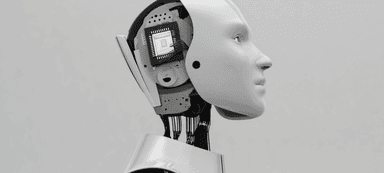
Etched is betting that burning the transformer architecture directly into silicon—via its Sohu ASIC chip—will make it the fastest and most efficient AI inference hardware on the market. The article examines whether this transformer-only gamble positions Etched as foundational infrastructure for humanoid robots and AI systems.
Aug 22·9m read·▲ 0
A deep-dive survey of the silicon and software companies building the core infrastructure for physical AI, covering chip makers like NVIDIA, Etched, and Hailo alongside mind/software platforms like Physical Intelligence, Skild AI, Covariant, OpenAI, Sanctuary AI, and Field AI. The article positions these firms as the infrastructure layer of tomorrow's robotic economy.
Aug 14·12m read·▲ 0
A detailed profile of NEURA Robotics and its 4NE-1 humanoid robot, examining the German company's AURA AI platform, tiered neural architecture, Neuraverse skills ecosystem, and its roadmap to deploying 5 million robots worldwide by 2030.
Jun 23·6m read·▲ 0
XMAQUINA's Northstar Council profiles seven leading private humanoid robotics startups—1X Technologies, Agility Robotics, Apptronik, Figure AI, Neura Robotics, Sanctuary AI, and Unitree Robotics—evaluating each as a potential investment target for the DAO's Wave 2 Genesis Auction. The article covers funding, partnerships, real-world deployments, and council commentary for each company.
Jun 3·15m read·▲ 0
Drawing on historical monopoly patterns and current market dynamics, this article argues that no single company will dominate humanoid robotics due to fierce global competition, geopolitical fragmentation (sovereignty, protectionism, national security), inevitable use-case specialization across factory, home, agriculture, military, and space, and brand-driven market segmentation.
May 20·13m read·▲ 0
