


Home Robots Will Not Scale Until the Data Problem Is Solved
Jessica Alvarez - 1w read →
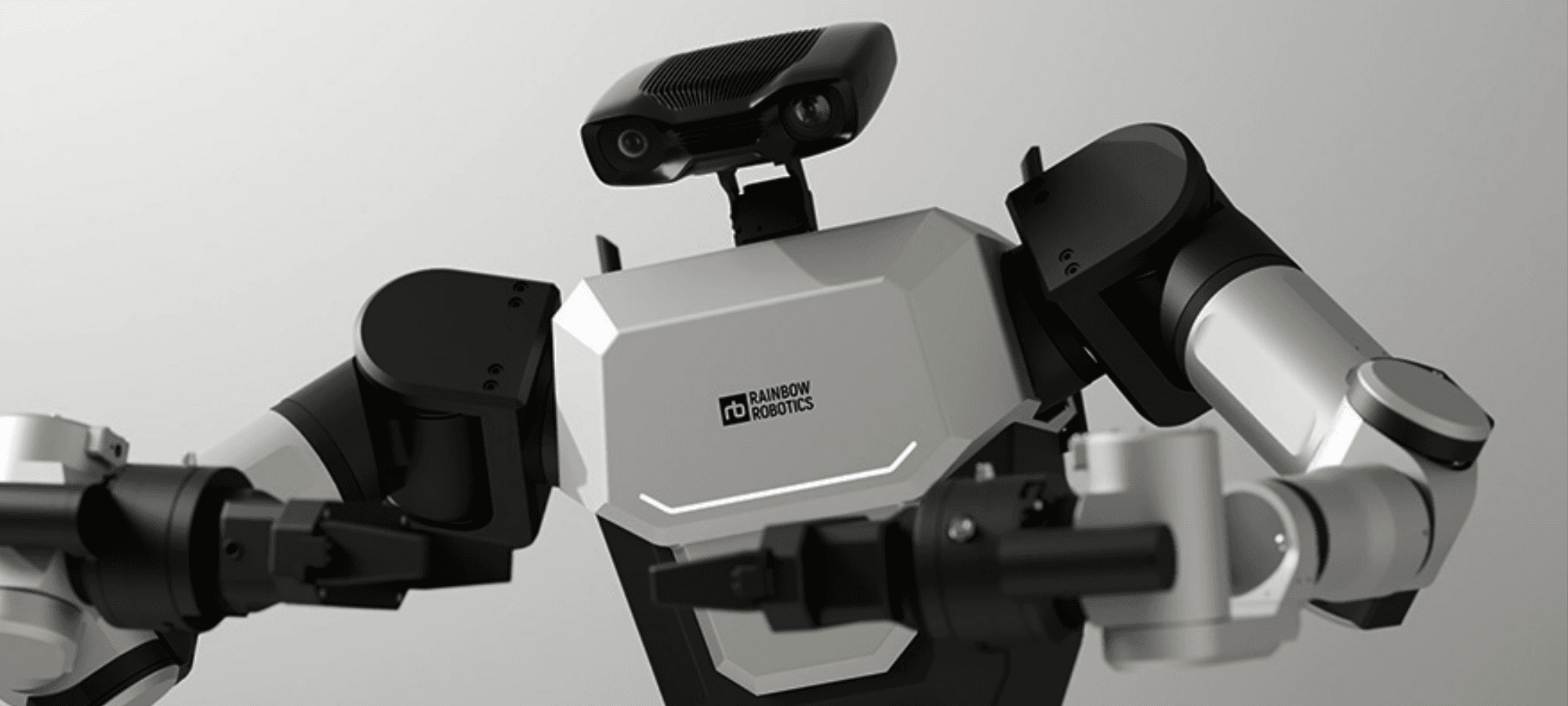
South Korea launches a $770M humanoid robotics initiative aiming to scale production, reduce labor gaps, and compete globally by 2030.
South Korea has committed roughly $770 million to accelerate humanoid robotics development, signaling a clear intention to secure a position in one of the most competitive technology sectors of the coming decade.
The initiative, introduced in April 2025, brings together universities, robotics firms, and major industrial groups under a single national program. The goal is straightforward. Build commercially viable humanoid systems and deploy them at scale before the market consolidates around a small number of global leaders.
This is not an exploratory effort. It is a timed push into a market that is already beginning to take shape.
South Korea is entering the humanoid race after momentum has already built elsewhere.
In the United States, companies are advancing rapidly with strong access to capital and leading AI systems. In China, manufacturers are moving quickly toward large-scale production supported by domestic supply chains and state backing.
South Korea’s position sits between these two models. It does not have the same venture capital depth as the US or the same manufacturing scale as China. What it does have is a history of executing complex industrial transitions under pressure.
That context matters. The country is dealing with a shrinking workforce and rising dependency ratios, which are beginning to affect core industries. Automation is no longer optional. It is becoming necessary.
There is also a clear awareness of past missteps. In electric vehicles, Chinese companies scaled faster and captured global share while Korean players lagged behind. Policymakers appear determined not to repeat that outcome in robotics.
The K-Humanoid Alliance is built around practical development targets rather than open-ended research.
One area of focus is a shared AI system that can be used across multiple robots. Instead of each company building its own software stack from scratch, research groups are working on a common base that can be adapted depending on the application.
Another priority is hardware performance. The program is targeting specific benchmarks for weight, mobility, payload, and speed. These are not theoretical goals. They are tied directly to industrial use cases where robots need to operate reliably in real environments.
A third focus is on core components. This includes processors designed for robotics workloads and batteries capable of supporting long operating cycles. Without progress in these areas, deployment at scale becomes difficult regardless of how advanced the robots are.
Several Korean robotics firms are already active within this framework.
Rainbow Robotics, which originated from academic research, is now closely tied to industrial partners and has begun integrating its systems into real environments. Its progression reflects a shift from research prototypes toward applied use.
AeiROBOT is taking a more specialized approach, focusing on control systems and autonomy. The company has gained recognition for its technical direction and continues to build within a narrower but differentiated segment.
WIRobotics represents a newer category of developer. Its systems are designed to respond directly to physical interaction, including force and contact, rather than simply executing pre-defined movement. This approach targets one of the more difficult challenges in humanoid robotics.
These companies remain smaller than their global counterparts, but they provide a base for domestic capability.
In the United States, robotics companies are raising hundreds of millions, sometimes billions, to accelerate development and production. In China, manufacturers benefit from deep supply chains and lower production costs, allowing them to move quickly once designs stabilize.
South Korea’s total national commitment is smaller than what some individual companies are deploying. This limits its ability to compete purely through spending.
Instead, progress will depend on execution. Systems need to work, costs need to come down, and deployment needs to move beyond pilot programs.
Despite these constraints, South Korea is not starting from zero.
The country has strong positions in batteries and semiconductors, both of which are critical to robotics. It also has highly developed manufacturing infrastructure and companies capable of scaling production once designs are ready.
Large industrial groups play an important role here. They provide testing environments, production capacity, and integration pathways that smaller startups cannot access on their own.
There is also a cultural advantage. Automation is already widely accepted, and industrial robot adoption is among the highest globally. This reduces resistance to deploying humanoid systems in real settings.
The program sets 2028 as a key checkpoint.
By then, South Korea needs working humanoid systems that meet performance targets, operate outside controlled environments, and begin to generate commercial demand.
If those conditions are met, the country can establish a credible position in the market.
If not, the gap with competitors will widen quickly. Lower-cost Chinese systems and more advanced American platforms will dominate early adoption.
Becoming a global leader in humanoid robotics by 2030 is an ambitious target. A more realistic outcome is securing a stable position among the top group of producers. That would still represent a significant achievement.
South Korea has built global industries before without being first to enter them. The pattern has been consistent. Strong engineering, disciplined manufacturing, and sustained execution over time.
Humanoid robotics will test whether that model still holds in a faster-moving and more competitive environment.
The commitment has been made. What matters now is delivery.


