

At Humandroid, this realization has driven a fundamental strategic pivot: from deploying robots, to building the operating system that allows robots of any origin to be trusted, trained, and deployed at scale.
Welcome to the Learning Era. From Programming to Learning
Industrial robots were traditionally programmed.
Humanoid robots must be taught.
The complexity of real-world environments unstructured spaces, variability, human interaction makes handcrafted programming economically and operationally unviable.
The breakthrough is not better code. It is better learning pipelines. Humandroid is building Robots ID, an operating system designed to accelerate humanoid robot learning through:
- Human demonstration
- Teleoperation
- Synthetic data generation
- Vision-Language-Action (VLA) models
- Continuous simulation via Digital Twins
This shifts robotics from a one-off engineering project to a repeatable learning process.
Teleoperation as the First Layer of Intelligence
At the core of Robots ID is teleoperation.
Using VR headsets, motion capture, and vision systems, human operators perform tasks remotely while seeing through the robot’s sensors. Every movement, decision, and correction becomes high-fidelity training data.
Teleoperation serves three critical purposes:
Immediate Value
Robots can perform useful work before full autonomy is achieved.
Data Capture at Scale
Every session generates structured datasets aligned with real tasks, not lab experiments.
Skill Transfer
Human expertise becomes a digital asset that can be reused, refined, and redeployed across fleets.
Teleoperation is not the end goal.
It is the on-ramp to autonomy.
The Learning Pipeline: From Reality to Policy
Robots ID orchestrates an end-to-end learning loop:
Real-World Data Capture
Via VR-based teleoperation, cameras, and sensors.
Simulation & Digital Twins
Physical environments are replicated to expand coverage safely.
Synthetic Data Generation
New scenarios, edge cases, and variations are generated automatically.
Model Training (VLA)
Vision, language, and action are trained together to enable generalization.
Policy Deployment
Updated behaviors are deployed back to physical robots, regardless of brand.
Continuous Feedback Loop
Real-world execution feeds the next training cycle.
The result:
Faster learning, lower risk, and dramatically reduced time-to-deployment.
Multibrand, Hardware-Agnostic by Design
The humanoid robotics market is fragmenting.
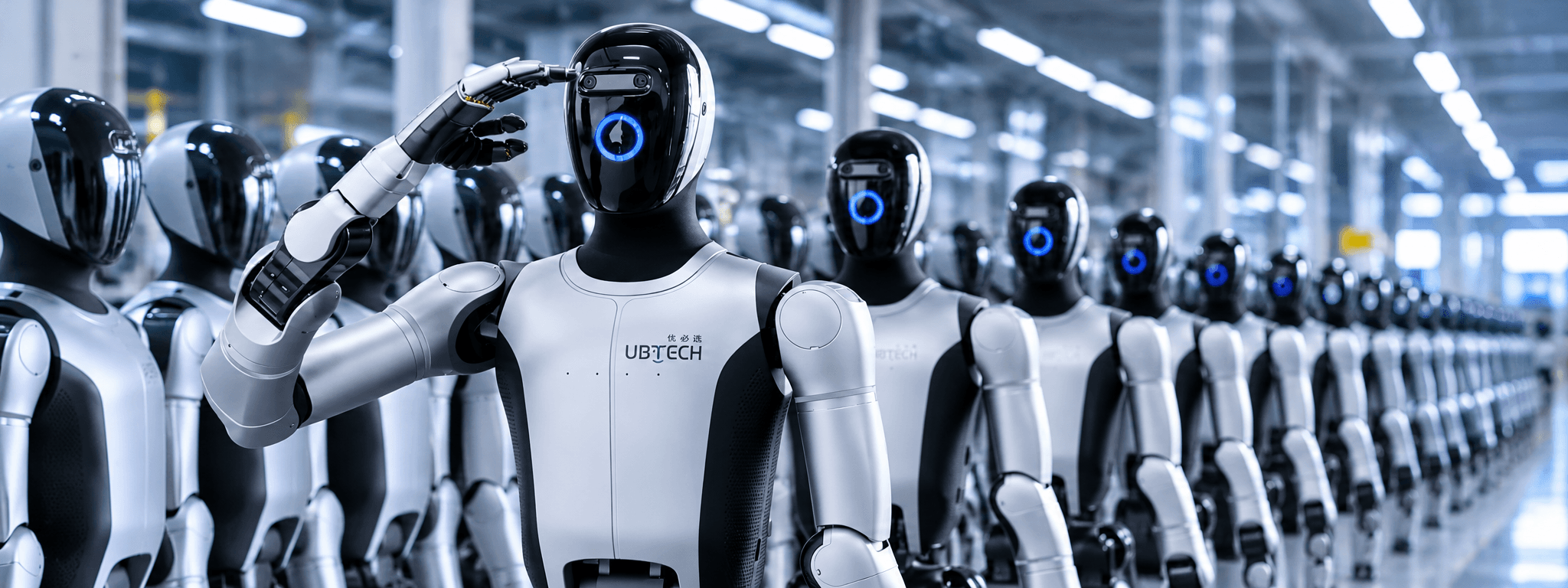
Unitree, Ubtech, AgiBot , Fourier, and others are advancing rapidly—often with closed, proprietary software stacks.
For enterprises, this creates lock-in risk.
RobotsOS H1 is multibrand and hardware-agnostic, acting as a neutral software layer that allows companies to:
Train multiple robot brands under a single interface
Compare performance objectively
Avoid dependency on any single manufacturer
Future-proof their robotics strategy
We are not competing with robot manufacturers.
We are enabling enterprises to work with all of them.
Teleoperation for Scalable Learning
High-quality data is the main bottleneck in humanoid robotics.
We built our teleoperation layer to allow engineering teams to directly operate robots and collect their own task-specific data in real environments.
This stage enables fast data generation through human demonstrations, giving teams full ownership of their datasets and a clear path from manual control to training and scalable autonomy.
Sovereign-by-Design Data Architecture
As humanoid robots enter factories, warehouses, and critical infrastructure, data becomes a geopolitical and regulatory issue—not just a technical one.
Enterprises consistently raise the same concerns:
Where does the data go?
Who can access it?
Does the robot firmware contain backdoors?
Does this comply with local regulations?
RobotsOS ID1 is built on a Sovereign-by-Design Data Architecture, which means:
Data residency aligned with regional regulations (GDPR, local CISO requirements, national data laws)
Auditable data flows at the firmware and OS level
The ability to “override” or isolate vendor firmware when required
Clear ownership of training data and learned skills
This is not a feature.
It is a prerequisite for enterprise adoption.
Turning Learning into an Economic Asset
One of the most profound shifts in this model is economic.
In the Learning Era, skills become assets.
RobotsOS ID1 enables new business models where companies can:
License robotic skills they have trained
Participate in shared data pools within their industry
Monetize validated, sovereign training data
Receive compensation for contributing to collective learning
This creates a future where companies are not just robot users—but contributors to a global learning ecosystem, while retaining control over their intellectual property.
How This Accelerates Adoption for Clients and Partners
For enterprise clients, RobotsOS ID1:
Reduces deployment timelines from years to months
Lowers risk by validating skills in simulation first
Avoids vendor lock-in
Ensures regulatory compliance
Converts robotics into an internal, repeatable capability
For integrator and technology partners:
Provides a standardized learning and deployment layer
Reduces custom engineering per project
Enables scalable, repeatable implementations
Unlocks recurring revenue via training, updates, and skill expansion
Not a Robot Company — A Learning Infrastructure Company
Humandroid is not building robots.
We are building the operating system of learning that allows robots—of any brand, from any country—to operate safely, productively, and legally inside real businesses.
If the first era of robotics was about motion,
and the second about autonomy,
The next era is about learning.
And learning, at scale, requires infrastructure.
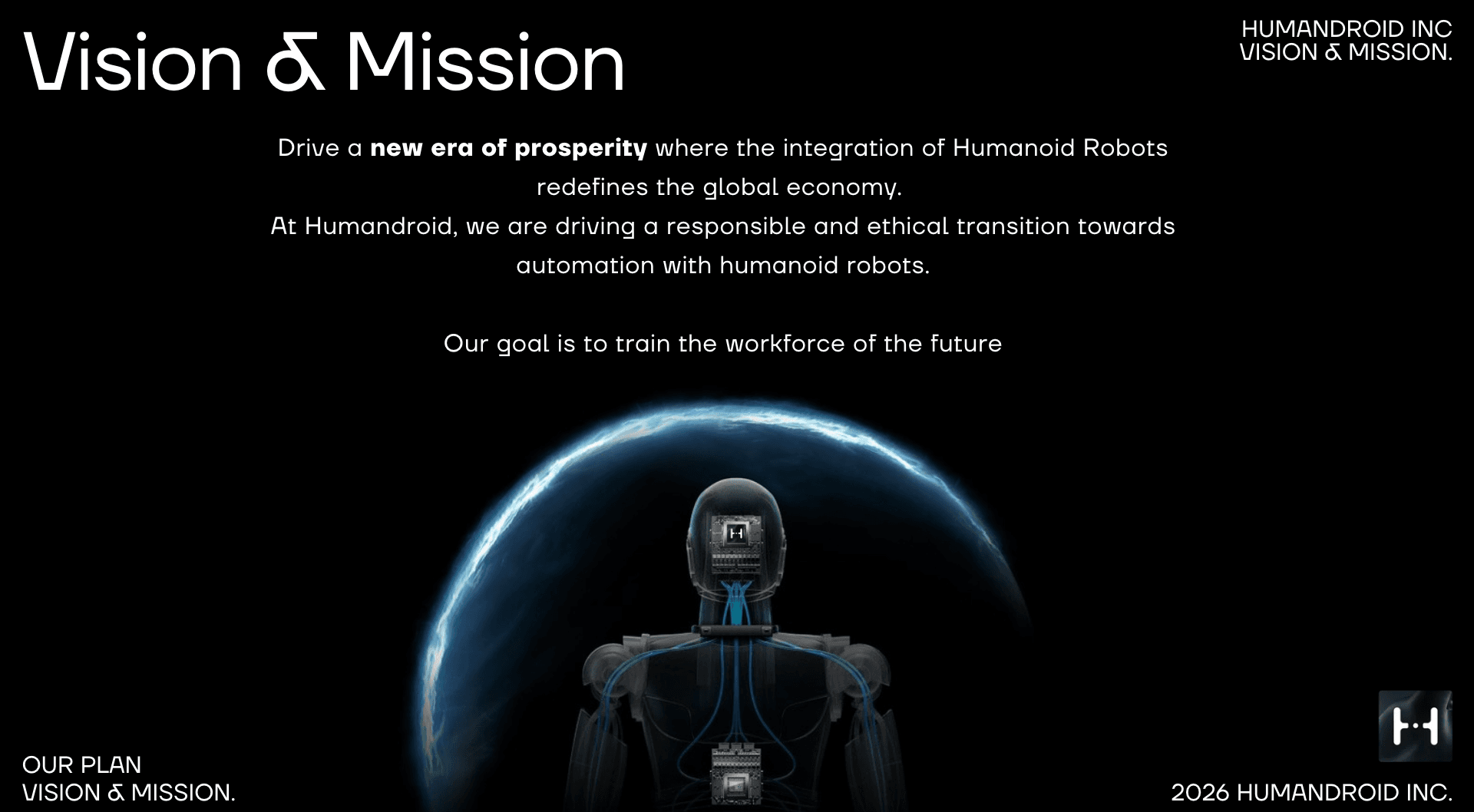
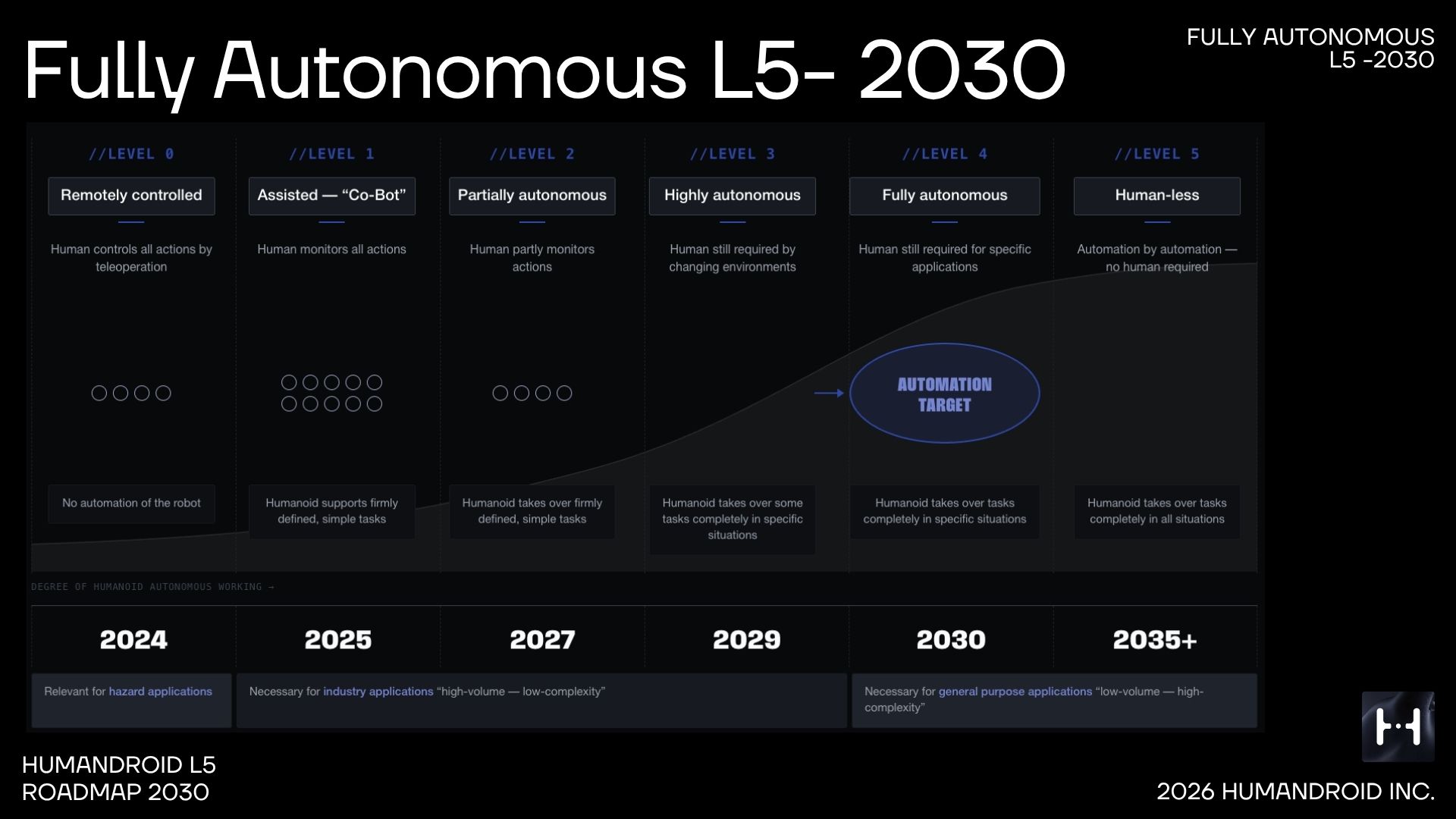
That is the role Humandroid is building toward 2030—and beyond.
Robots ID is the foundation for a future where humans teach once, robots learn continuously, and enterprises deploy intelligence—not just machines.