Humanoid designed for healthcare, research and commercial applications.
About Fourier Intelligence
Fourier, also known as Fourier Intelligence, develops humanoid robots and robotic rehabilitation systems. Founded in 2015 and headquartered in Shanghai, the company builds the GRx humanoid series alongside the Fourier Rehab portfolio of rehabilitation devices.
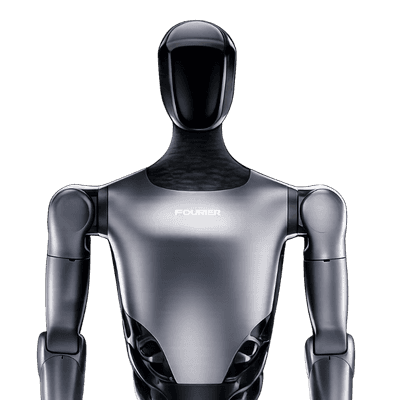
Fourier announced GR-2 on 30 September 2024 as a platform for developers, researchers and enterprises. The manufacturer’s technical brochure lists a 175 cm, approximately 63 kg humanoid with up to 53 degrees of freedom and a single-handed payload of approximately 3 kg. Its dexterous-hand options, teleoperation and developer toolkit support robot research and adaptation.
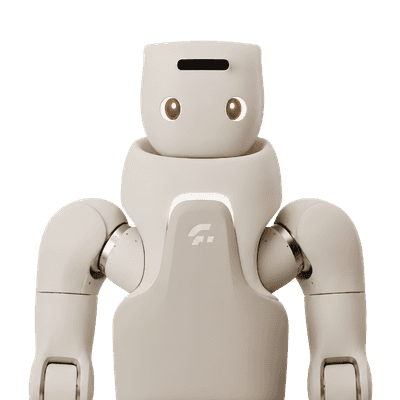
Fourier unveiled GR-3 on 6 August 2025 with a focus on companionship and human interaction. Its current developer documentation lists a height of 165 cm, a weight of approximately 71 kg and up to 55 degrees of freedom with optional dexterous hands. The launch framed mobility support, health monitoring and physical rehabilitation as potential future applications.
Fourier Rehab’s portfolio includes ArmMotus EMU, a cable-driven system for upper-limb rehabilitation, and ExoMotus M4, a lower-limb exoskeleton for supported gait and sit-to-stand training. The RehabHub ecosystem brings together dedicated rehabilitation devices with their own intended uses and product documentation.
FDA’s device-listing dataset includes Fourier GR-3 Humanoid Robot as a class I powered exerciser under product code BXB. Registration and listing do not establish approval, clearance or authorization, and this record supplies no 510(k) number. CE and ISO 13482 certification claims for GR-2 or GR-3 remain unverified in the reviewed product documents. Regulatory status should be checked for the named model, intended use and jurisdiction.
Fourier was founded in 2015 by Alex Gu (Gu Jie) and Zen Koh in Shanghai's Zhangjiang high-tech zone, with the mission of transforming physical rehabilitation through robotics. In 2017, Fourier unveiled the X1, China's first lower-limb exoskeleton with tactile feedback, and launched the M2 upper-limb rehabilitation robot.
ShanghaiX1M2
2019 - July 2023
The GR humanoid program emerges from the rehab business
By 2019, Fourier had deployed devices in hundreds of hospitals across more than 10 countries, establishing itself as a global leader in rehabilitation robotics. The humanoid pivot began in 2019 with development of the GR-1. In July 2023, the GR-1 was publicly unveiled at WAIC in Shanghai.
GR-1WAIC
2024 - 2025
GR-2 and new financing support the humanoid push
In 2024, Fourier unveiled the GR-2, a next-generation humanoid with comprehensive upgrades. The company rebranded, splitting into "Fourier" for humanoid robotics and "Fourier Rehab" for medical devices. Since founding, Fourier has completed nine funding rounds, including Series D backed by SoftBank Vision Fund II and a Series E in early 2025 worth nearly 800 million yuan.
GR-2Series E
August 6, 2025
GR-3 care-centric humanoid unveiled
In August 2025 Fourier positioned GR-3 as its first care-centric humanoid, emphasizing soft design, multimodal vision/audio/tactile interaction, dual hot-swappable batteries, and service scenarios such as companionship, education, and assisted living. Specs widely listed: 165 cm, 71 kg, 55 DoF, ~3h runtime per pack.
GR-3care-bothumanoid
2026
Fourier unveils the GR-3 care robot
In early 2026, Fourier unveiled the GR-3, a humanoid care robot advancing emotional AI in robotics.
GR-3Care robotics
Fourier was founded in 2015. It announced GR-2 on 30 September 2024 and unveiled the care-oriented GR-3 on 6 August 2025. Its product portfolio includes humanoid platforms for research and interaction, alongside dedicated robotic rehabilitation devices.