AI Stack
Capabilities and model layers highlighted by the company.

FieldAI is building foundation models that enable autonomous robots to operate anywhere without predefined maps or infrastructure.
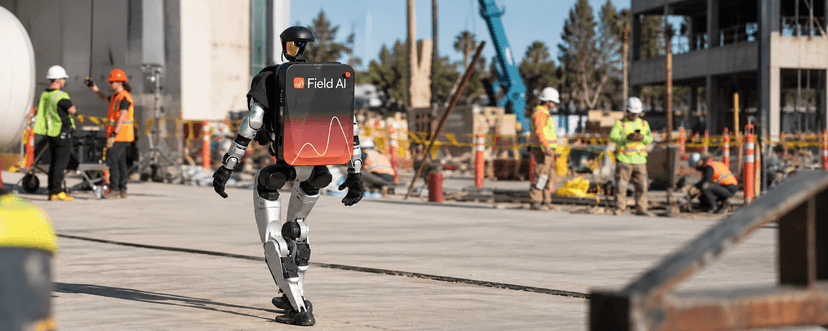
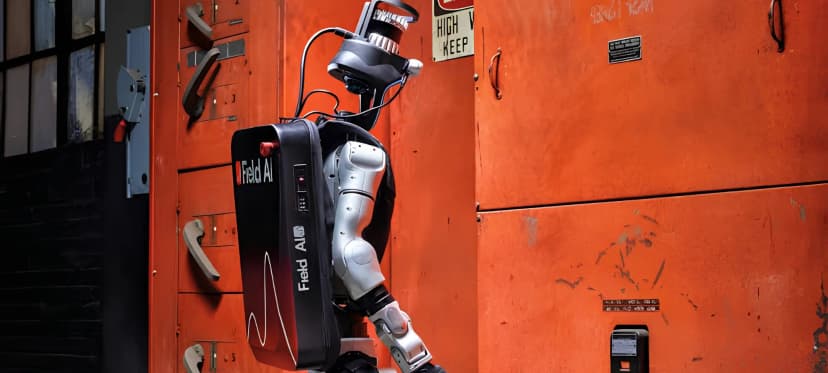
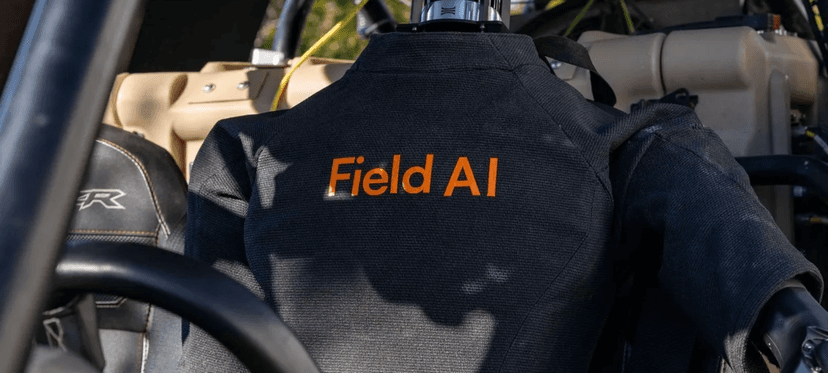
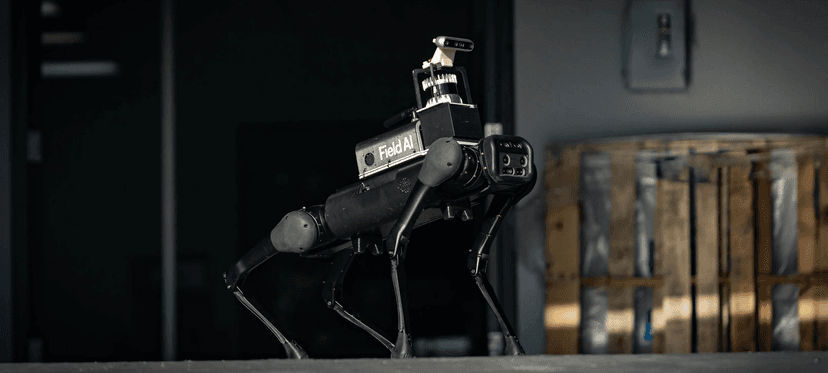
Field AI is an American robotics software company founded in 2023 by former NASA Jet Propulsion Laboratory robotics lead Ali Agha. The company develops foundation models for autonomous robots, enabling machines to perceive, reason, and operate in complex real-world environments without relying on GPS, pre-built maps, or task-specific programming. Its technology is designed to bring general-purpose autonomy to a wide range of mobile robotic platforms. At the core of its platform are Field Foundation Models, which combine multimodal AI with real-time perception and decision-making to enable robots to navigate and perform tasks in unstructured environments. While not focused exclusively on humanoids, Field AI provides a foundational autonomy layer applicable across industrial robots, autonomous vehicles, defense systems, and future embodied AI platforms.
Platform maturity, autonomy stack, and flagship-system specifications in one view.
Capabilities and model layers highlighted by the company.
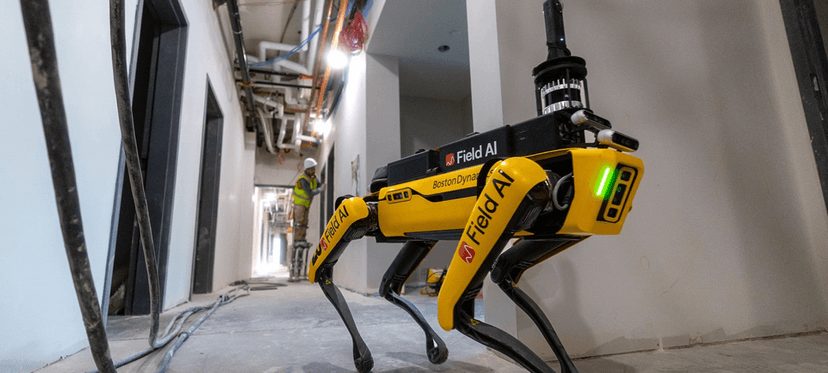
Boston Dynamics and FieldAI announce a strategic partnership to bring Field Foundation Models to Spot, Stretch, and the new electric Atlas, targeting construction and other dynamic environments. Early results cite a 90% reduction in inspection time.

Best Humanoid Robotics Companies To Watch In 2026
The companies defining the control stack and the humanoid hardware that will anchor the next decade of automation.

Boston Dynamics Connects FieldAI to Spot and Atlas
Boston Dynamics has owned every layer of its stack for twenty years. On March 12, 2026, it quietly admitted the autonomy race is moving faster than any vertical integrator can keep up, and handed FieldAI the keys to Spot's brain.

FieldAI: The Universal Robot Brain That Doesn't Build Robots
Born in the trenches of DARPA's hardest autonomy challenges and NASA JPL's Mars programs, FieldAI has crossed the $2B mark in 18 months without shipping a single robot. It wants to be the operating intelligence for every machine in motion.

$405M in Two Rounds: The Investment Thesis Behind FieldAI's $2B Unicorn Status
In eighteen months, FieldAI went from stealth to unicorn without shipping a robot. The cap table reads like a conviction vote on a very specific thesis: in robotics, the brain is worth more than the body.

Physics First: Why FieldAI's Foundation Models Break the VLA Playbook
Physical Intelligence retrofits vision-language models. Skild AI scales imitation learning. FieldAI took a third road, one that starts from the physics of being wrong, and treats risk as a first-class citizen of the model.
Track FieldAI's valuation over time.
At NASA Jet Propulsion Laboratory, Ali Agha leads a team developing autonomous navigation for planetary lava tubes, laying the technical foundation for what will become FieldAI.
Agha's Team CoSTAR competes in the DARPA Subterranean Challenge and wins the Urban Circuit in 2020, demonstrating multi-kilometer autonomous exploration in GPS-denied environments.
Ali Agha founds FieldAI in Irvine, California. Early hires come from NASA JPL, DARPA, DeepMind, Google, Tesla, and Carnegie Mellon.
FieldAI announces $405M raised across two consecutive oversubscribed rounds, reaching a $2B valuation. Investors include Bezos Expeditions, Gates Frontier, NVentures (NVIDIA), Temasek, Samsung NEXT, Intel Capital, Khosla Ventures, Prysm Capital, Canaan Partners, Emerson Collective, and BHP Ventures.
FieldAI and DPR Construction disclose a deployment on active job sites, with autonomous progress scanning, site analytics, and multi-robot coordination, all running on-device.
Boston Dynamics and FieldAI announce a strategic partnership to bring Field Foundation Models to Spot, Stretch, and the new electric Atlas, targeting construction and other dynamic environments. Early results cite a 90% reduction in inspection time.