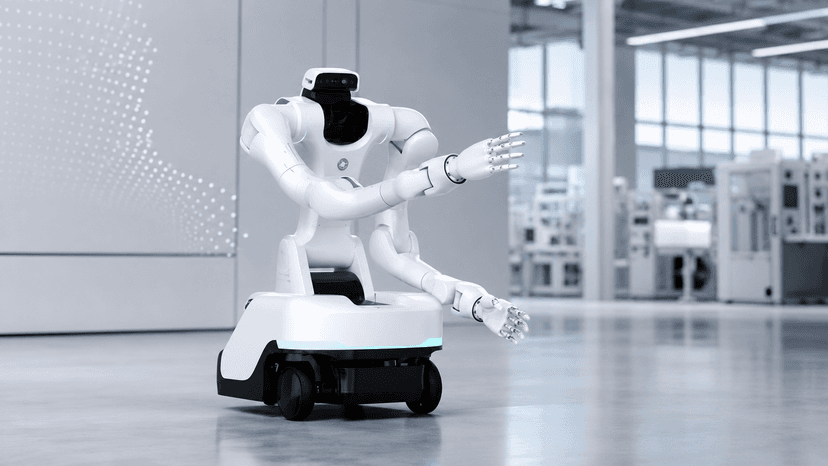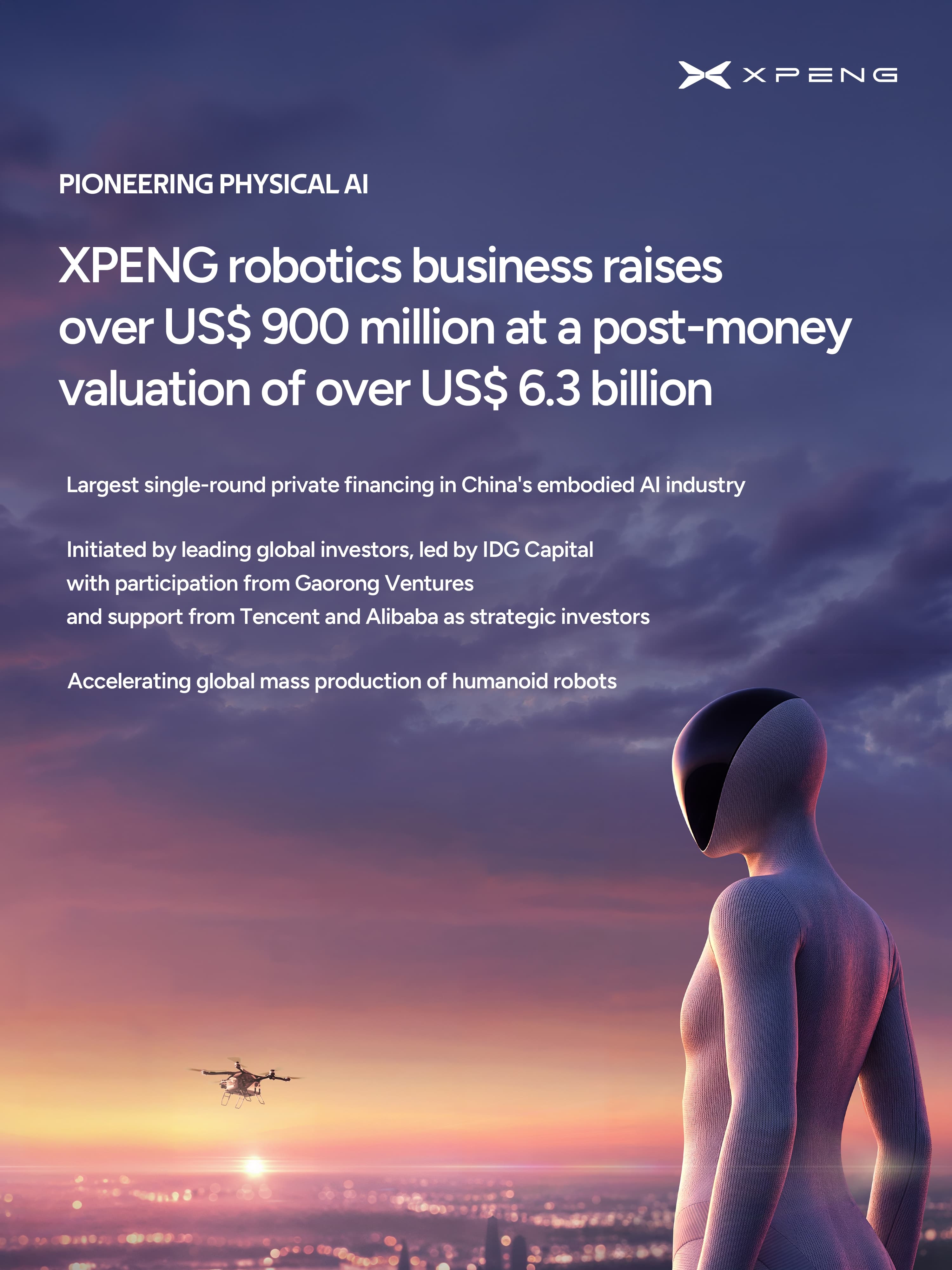

XPENG is taking a major step into the Physical AI race, with its robotics business raising more than US$900 million in a new financing round at a post-money valuation exceeding US$6.3 billion.
The round marks the largest single-round private financing in China’s embodied AI industry, highlighting the growing investor interest in humanoid robotics and the race to bring intelligent machines into real-world applications.
The financing was initiated by leading global investors and led by IDG Capital, with participation from Gaorong Ventures and strategic support from Tencent and Alibaba. The significant capital injection gives XPENG Robotics additional resources to expand its technology, manufacturing capabilities, and global ambitions.
From Smart Mobility to Physical AI
XPENG is best known for its work in intelligent electric vehicles and autonomous driving, but the company has increasingly expanded its vision toward robotics. Its humanoid robotics business aims to leverage technologies developed across perception, mobility, AI, and autonomous systems to build machines capable of operating in human environments.
The latest funding is expected to help accelerate the mass production of humanoid robots, moving the industry beyond prototypes and demonstrations toward commercially scalable systems.
That shift is critical for Physical AI. Building capable humanoids requires more than advanced AI models—it demands sophisticated hardware, reliable sensing, precise movement, large-scale manufacturing, and enormous amounts of real-world data.
XPENG’s background in intelligent vehicles could give its robotics business an advantage in several of these areas. Technologies developed for autonomous driving, including perception and environmental understanding, can potentially contribute to robots that need to navigate and interact with complex physical environments.
A Bigger Bet on Humanoid Robotics
The size of the investment reflects how quickly the humanoid robotics market is developing, particularly in China. As companies compete to make robots useful in factories, logistics, homes, and other environments, access to capital is becoming increasingly important for moving from research and prototypes to large-scale deployment.
With a valuation above $6.3 billion, XPENG Robotics is positioning itself as one of the major players in this emerging industry.
The bigger story, however, is not just the funding itself. It signals a growing belief that humanoid robots could become a major platform for the next generation of Physical AI—where intelligence moves beyond screens and into the physical world.
For XPENG, the next challenge is turning that vision into robots that can be produced at scale, operate reliably, and deliver real-world value.