
NEC’s venture fund has invested in Dexmate, backing the robotics startup behind VEGA as the two companies explore ways to bring Physical AI into real-world industries.
The race to turn Physical AI into practical automation is attracting another major technology player.
NEC Corporation’s Orchestrating Future Fund has invested in U.S.-based robotics startup Dexmate, developer of the VEGA general-purpose robot and an integrated platform for building and operating Physical AI systems.
The investment amount was not disclosed, but the partnership is focused on something increasingly important across the robotics industry: moving advanced robot intelligence out of controlled demonstrations and into real operating environments.
Lowering the Barrier to Physical AI
Building an intelligent robot involves much more than combining an AI model with hardware.
Developers must bring together sensors, control systems, training data, simulation, robot hardware and on-site configuration before a system can reliably perform useful work.
Dexmate is attempting to simplify that process by developing both sides of the stack.
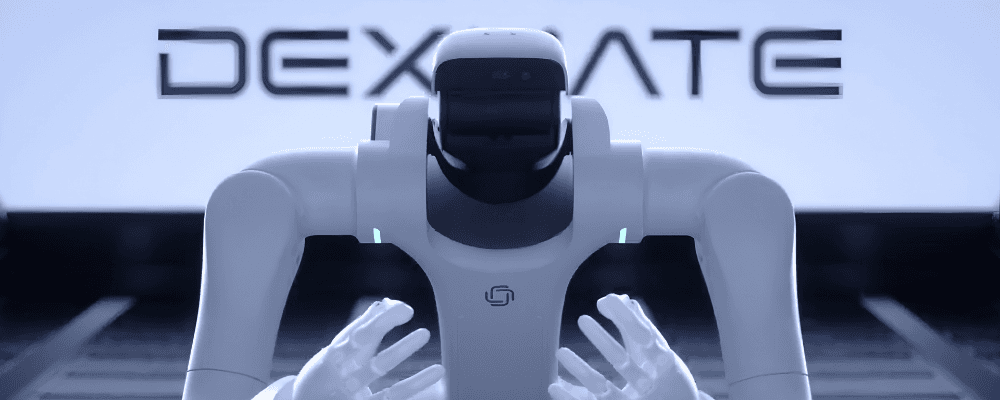
Its VEGA platform combines dual dexterous arms with an omnidirectional wheeled base and an adjustable body capable of reaching up to 2.2 meters vertically. The robot is designed for manipulation-intensive applications where mobility, reach and long operating times matter.
Alongside the hardware, Dexmate is building a Physical AI development platform intended to make robots easier to configure, train and operate.
That full-stack approach appears to be one of the key reasons NEC is interested.
From Robotics Research to Deployment
NEC says the companies will explore opportunities to combine Dexmate’s technology with NEC’s AI capabilities and experience across multiple industries.
For Dexmate, that could provide another path toward larger-scale commercial deployment.
The startup is already positioning VEGA for use across manufacturing, logistics, research and other environments requiring flexible manipulation. Instead of using legs, VEGA relies on a mobile wheeled base, prioritizing stability and operating efficiency while maintaining a human-like upper-body workspace.
This reflects a broader trend emerging in Physical AI.
The industry is increasingly looking beyond the question of whether robots can perform impressive individual tasks. The focus is shifting toward whether those systems can be deployed reliably, configured efficiently and operated economically at scale.
The Physical AI Stack Is Becoming the Battleground
As robot hardware improves, competition is expanding into the infrastructure surrounding the machines.
Simulation, foundation models, teleoperation, data collection, fleet management and developer tools are becoming almost as important as the robot itself.
Companies capable of connecting these layers may have an advantage as enterprises begin experimenting with larger robot fleets.
Dexmate is betting that making the entire development and deployment process easier will help accelerate that transition.
NEC’s investment adds another major technology company to the growing list of strategic players putting capital behind Physical AI.
The next phase will be proving that platforms like VEGA can move beyond development and testing into repeatable, economically useful real-world deployments.
And increasingly, that is where the real robotics race is being fought.