

What are humanoids?
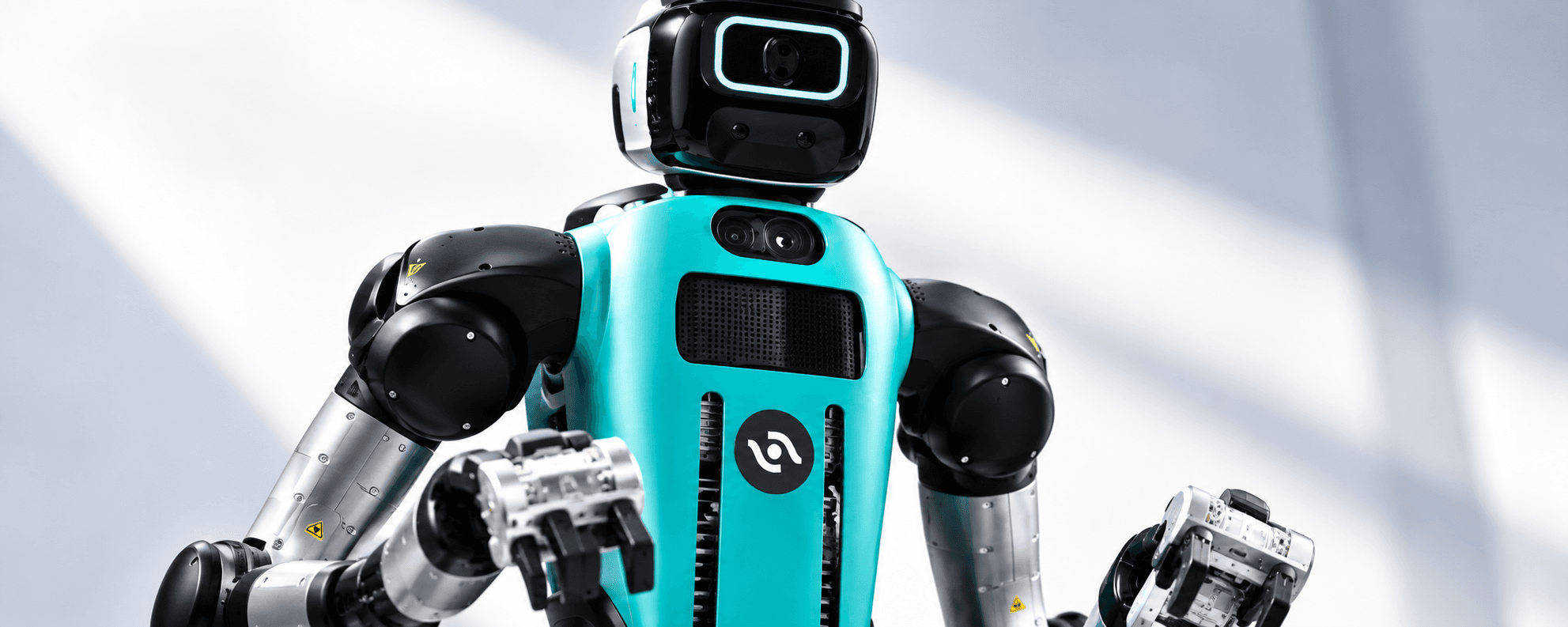
The general consensus is that we are currently at an inflection point in terms of humanoid robots. My thesis is slightly different, but before we come to that we need to define what a “humanoid robot” actually characterizes: the public perception of humanoid robots is still heavily influenced by science fiction, where a humanoid is often assumed to possess both a human-like appearance and human-level intelligence, but robotics engineers define humanoids primarily by their physical embodiment and ability to operate in human environments: a humanoid is a robot whose morphology is sufficiently human-like to navigate, manipulate and
interact in and with environments, tools, infrastructure, and workflows that were originally designed for people. From that perspective a humanoid can be biped, but also wheeled, which illustrates that humanoids are not intended to become perfect replicas of humans, but rather engineering abstractions optimized for specific economic tasks.
Do we need humanoids?
Which brings us to the question if there is a real use-case for humanoids in the economical world beyond demos and the human fascination and fulfillment of the deeply human aspiration of creating a being mirroring ourselves?
At first glance, the answer seems to be yes: Humans evolved in this world, and much of our infrastructure was subsequently designed around human capabilities. But the economic criteria is not if humanoids fit perfectly in this world as a whole, the main driver for their acceptance will be if humanoids will provide a productivity improvement at lower cost compared to human labor. The rise of modern mass production, popularized by Henry Ford, drove an extensive division of labor across industry, so that the remaining tasks for human workers are usually highly specialized. And for specialized tasks the better choice is a specialized robot with less generalization capability, but being more efficient for that use case. Example: most of the production steps are stationary which does not need a robot with locomotion capabilities. Sure, there will be also in future some tasks which require the combination of all 4 human general capabilities which are
- Mobility/navigation/locomotion
- Manipulation capability
- Coping with task variability
- Environmental flexibility
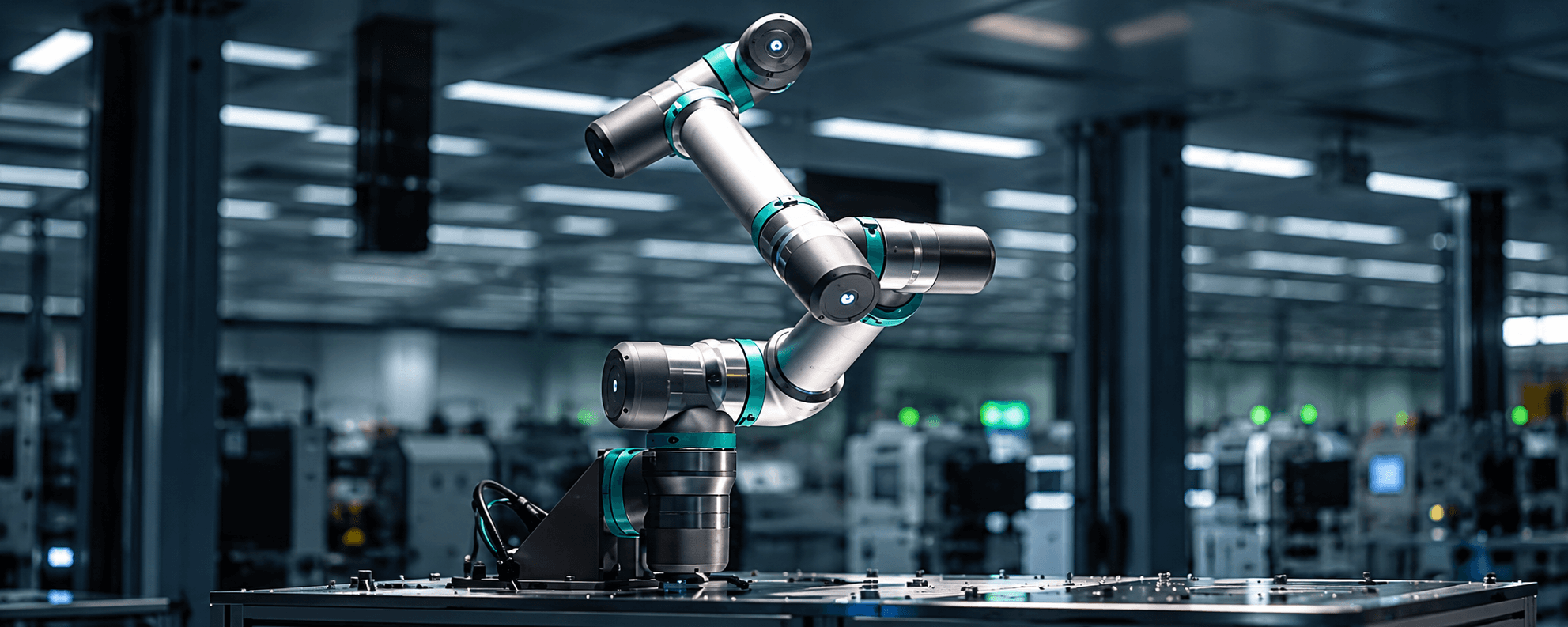
But these jobs are not the majority, what we are more likely to see is an evolutionary diversification of robot form factors which excel at specific tasks like transportation or dexterity. And there will also emerge the augmentation and combination of traditional industrial robots with parts of humanoids. Formfactors like fixed arms with gripper, fixed arm with dexterous hand, wheeled arms or quadrupeds are only a few examples of them. This will generate a new market of humanoid spin-offs and wave of new products comparable to the technological breakthroughs driven by the space program in the late 60s. The humanoid race will almost certainly generate sustainable growth, even without the pure humanoid archetype.
The key question is not how many jobs can be automated by humanoids, but how many economically relevant jobs cannot be automated without the combination of mobility, manipulation, adaptability, and human-environment compatibility? These jobs certainly exist, but they likely represent only a minority of physical work, perhaps 10-20% of all activities. They are concentrated in professions such as maintenance, skilled trades, construction, healthcare, hospitality, and household services.
Humanoids: The Honeypot of Physical AI
If humanoids are unlikely to become the dominant solution for most physical jobs, why are governments, investors, and some of the world’s largest companies investing billions into them?
The answer is that humanoids have become the honeypot of the Physical AI revolution.
Much like autonomous driving in the previous decade, humanoids represent a grand technological challenge that requires multiple technology domains to mature simultaneously. Investors are not necessarily betting on a future in which every physical worker is replaced by a humanoid. Rather, they are investing in the technologies that must emerge on the path toward that vision.
The autonomous driving industry provides a useful precedent. While fully autonomous vehicles have proven more difficult to commercialize than many initially expected, the pursuit of autonomy accelerated advances in perception, artificial intelligence, simulation, high-performance computing, sensor technology, and safety engineering. Many of these technologies have subsequently found applications far beyond autonomous driving itself.
Humanoids are following a similar trajectory. They attract investment because they combine nearly all of the hardest problems in robotics into a single challenge. Solving these problems creates technologies that can be applied far beyond humanoids themselves, which is why humanoids have become the focal point of the Physical AI revolution.
In this sense, humanoids represent far more than a new robot category. They are the most visible and ambitious manifestation of the broader shift from digital intelligence to physical intelligence. They attract capital, engineering talent, academic research, media attention, and political support into the entire ecosystem.
Many investors are fully aware that the ultimate winners may not be the companies building the most human-like robots. The larger opportunity may lie in the enabling technologies, the specialized robotic descendants, and the new markets that emerge along the way. Nevertheless, participation in the humanoid race provides exposure to all of these developments.
This is why the current humanoid race should not be viewed merely as a competition to build a robotic worker. It is a catalyst for the next generation of intelligent physical systems.
Just as autonomous driving became the honeypot for intelligent mobility, humanoids have become the honeypot for Physical AI.
Between the Wright Brothers and the DC-3
The current excitement about humanoids probably marks the top of the hype cycle, however, technological revolutions rarely follow a straight path from breakthrough to mass adoption.
Everyone is currently waiting for the “ChatGPT moment” in robotics, ChatGPT was primarily a capability-discovery and accessibility moment. Robotics had it already, I call it the “Wright Brothers moment”. The Wright brothers demonstrated that controlled powered flight was possible in 1903. The fundamental question of whether a human-like robot can walk, manipulate objects, perceive its environment, and execute useful tasks has largely been answered. After the Wright brothers’ breakthrough it took another 10 years until aviation entered a scale-up phase that transformed airplanes from experimental machines into an emerging industry. This development was accelerated by a powerful demand catalyst: World War I created unprecedented investment, rapid innovation, and the first large-scale deployment of aircraft.
What humanoids now need is a “Scale-up moment” and ultimately a DC-3 moment. This scale-up is likely propelled by forces like labor shortages, demographic change, reshoring of manufacturing, and the growing need for flexible automation.
Aviation’s true breakthrough came later with aircraft such as the Douglas DC-3, which made flying reliable, practical, and economically attractive at scale. Humanoid robotics is still searching for its equivalent DC-3 moment: the point at which humanoids become sufficiently reliable, productive, and affordable to create a compelling business case beyond pilot projects and early adopters.
The most important question is therefore not whether humanoids can work, but how far the industry still is from its DC-3 moment. To answer that, we need to look at the major challenges that remain unsolved today.
Six Challenges Still to Solve
Battery lifetime
Depending on the mission profile, current humanoids typically achieve between 2 and 6 hours of operation, with walking, manipulation, payload handling, and AI computation all competing for limited onboard energy. While battery-swapping concepts can partially mitigate this limitation, true multi-shift operation remains an unsolved challenge. Current battery technology is improving incrementally rather than exponentially, making energy density a key bottleneck for the industry.
Dexterity
Many industrial and service tasks require fine manipulation, force control, tactile feedback, and the ability to handle objects of varying shape, size, and stiffness. While humanoids can already perform impressive demonstrations, robust real-world dexterity remains one of the hardest problems in robotics. The gap between picking up a known object in a controlled environment and reliably handling arbitrary objects in the real world remains substantial.
This challenge is reflected by the emergence of specialized companies (e.g. Shadow-Robot, Paxini, Schunk, Mimic Robotics) focusing almost exclusively on robotic hands and end effectors.
Cost
The challenge is not only reducing the purchase price of the robot itself. The decisive metric is the total cost of ownership (TCO) over the robot’s operational lifetime.
Today’s enterprise-grade humanoids are typically discussed in a range between $50,000 and $250,000 per unit, while some vendors increasingly promote leasing and Robotics-as-a-Service (RaaS) models instead of outright sales. TCO over a 5-year period will realistically be 3-5 times the initial hardware price.
The DC-3 did not introduce flight. It introduced economically viable flight. The winner of the humanoid race will not necessarily be the company that builds the most capable robot, but the first company that makes physical labor economically scalable.
Safety, Reliability, Trust & Human Acceptance
While today’s industrial robots often operate in fenced-off environments, humanoids are intended to work alongside humans. Achieving the required safety levels will be a major prerequisite for mass deployment. Like in Automotive/ADAS, safety for humanoids has to be addressed on 3 levels: Functional Safety (electronics and software failures), SOTIF (hazards due to insufficiencies in specification, perception capability, AI model, or environmental assumptions) and Safe AI (hazards arising from the use of AI and machine learning in safety-related systems). Humanoid robotics has a mature standard only for the first (IEC 61508, ISO 10218), an emerging standard for the second level (ISO/CD 25785-1), but is still completely lacking of a standard for Safe AI.
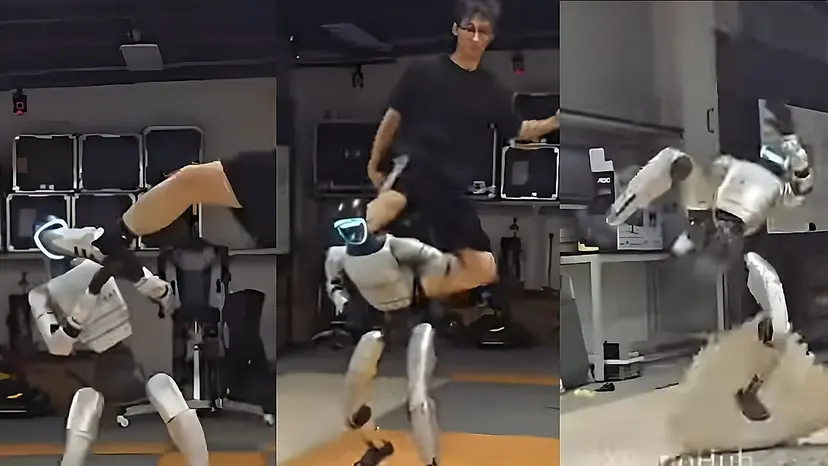
A simple hazard is the uncontrolled falling of a humanoid which can lead to severe safety risks. It can have its root cause on all three levels (motor controller fails, floor friction assumptions wrong, training data lacked shiny floors).
The large-scale adoption of any technology ultimately depends on trust. Society, regulators, and customers must have confidence that these systems are safe and aligned with human interests.
The DC-3 did not succeed because it could fly. It succeeded because it combined capability with reliability and operational economics. The robotics community often focuses on task success rate. However, for commercial deployments the more relevant metric is the intervention rate. Customers do not pay for successful demonstrations. They pay for unattended operation, which requires recovery from a failed state, restart a task, clear an exception or resolve an unexpected situation.
Reliability therefore extends far beyond repeatability. It includes fault detection, graceful degradation, autonomous recovery, and the ability to maintain useful operation despite component failures, environmental changes, or unexpected situations.
Many of the economically attractive future applications of humanoids will be found in customer service, hospitality, healthcare, elderly care, and household assistance. In such environments, robots must not only be reliable and safe, but also perceived as trustworthy, predictable, respectful, and socially acceptable. A technically safe robot that appears intimidating, behaves unpredictably, or fails to understand basic human expectations may still be rejected by users.
In this sense, humanoids face a challenge that traditional industrial robots never had to solve: social compatibility. They must interact naturally with humans, interpret social cues, communicate intentions, respect personal space, and demonstrate an appropriate level of emotional intelligence. This does not necessarily require genuine empathy, but it does require the ability to understand and respond appropriately to human emotions and social situations.
Data
Physical AI requires massive data for Model training, but useful robotics data is significantly harder to obtain than internet-scale text or image data. According to estimations ~1 million – 10 million hours of sufficiently diversified and curated data is necessary to achieve general purpose capability. Publicly available and useful robotics data on huggingface is ~16.000 hours, private robot companies might have 1k – 100k hours of available data each.
But volume is not sufficient, data diversity (distribution over use-cases, scenarios, corner cases) and data modality (video, force/torque, tactile feedback and potentially also audio for certain use cases) are the relevant metrics.
Until the data flywheel from real-world fleet data (requires scaled robot deployment) into the model training can be closed, the industry needs alternative ways to acquire the necessary data. These other ways are motion capture data, teleoperation, egocentric videos and synthetic/simulation data with different price tags, spanning from ~$500+/hour (motion capture) to ~$1/hour (synthetic).
The industry is still one to two orders of magnitude away from the expected generalization threshold. From economic perspective, the different data acquisition strategies needs the right sweet spot.
Regulation and Compliance
A market requires a regulatory framework that provides legal certainty, clear accountability for manufacturers, operators, investors, and users. This is not limited to technical standards. It also provides clarity on certification requirements, liability, accountability, and the legal responsibilities of manufacturers, operators, and users. Ultimately, regulation defines who is responsible when things go wrong.
Increasingly, regulation is also becoming a geopolitical instrument. Humanoid robots are emerging as a strategic technology at the intersection of AI, robotics, manufacturing, and critical infrastructure. As a result, governments are beginning to treat them not only as commercial products but also as assets of national economic and security relevance. Recent discussions and restrictions concerning foreign-produced robotics systems in the United States
illustrate how concerns about cybersecurity, data sovereignty, supply-chain resilience, and industrial competitiveness are becoming part of the regulatory landscape.
Future market access may depend not only on technical performance and compliance with safety standards, but also on factors such as origin of manufacturing, trusted supply chains, data governance, and geopolitical alignment.
Why Companies Are Deploying Humanoids Today
Seen from this perspective, many of today’s pilot deployments become easier to understand.
Companies such as BMW, Mercedes-Benz, Schaeffler, GXO and others are not necessarily expecting immediate economic returns. Instead, they are collecting data, building organizational know-how, identifying suitable use cases, and preparing for the moment when humanoids cross the threshold of economic viability.
At the same time, these deployments also serve as powerful marketing and positioning instruments. Being associated with cutting-edge humanoid robotics signals innovation capability to customers, investors, employees, and the broader public.
Another important motivation is the opportunity to actively shape the future of the industry. Organizations that gain early operational experience are in a much stronger position to contribute to emerging standards, safety concepts, best practices, certification approaches, and future regulatory frameworks.
Finally, the current pilot phase is not only about evaluating classical humanoids. It is equally an opportunity to explore which form factors ultimately deliver the best economics for specific applications. The long-term winners may not always be fully humanoid systems.
The Neura Robotics Example
The recent acquisitions pursued by Neura provide an interesting illustration of this broader strategy. At first sight, acquiring established robotics businesses may appear unrelated to the long-term humanoid vision. Neura is not primarily acquiring revenue or profitability. They are buying for installed fleets (real robots in the field), getting access to operational real-world data, customer access, fleet management software and application expertise.
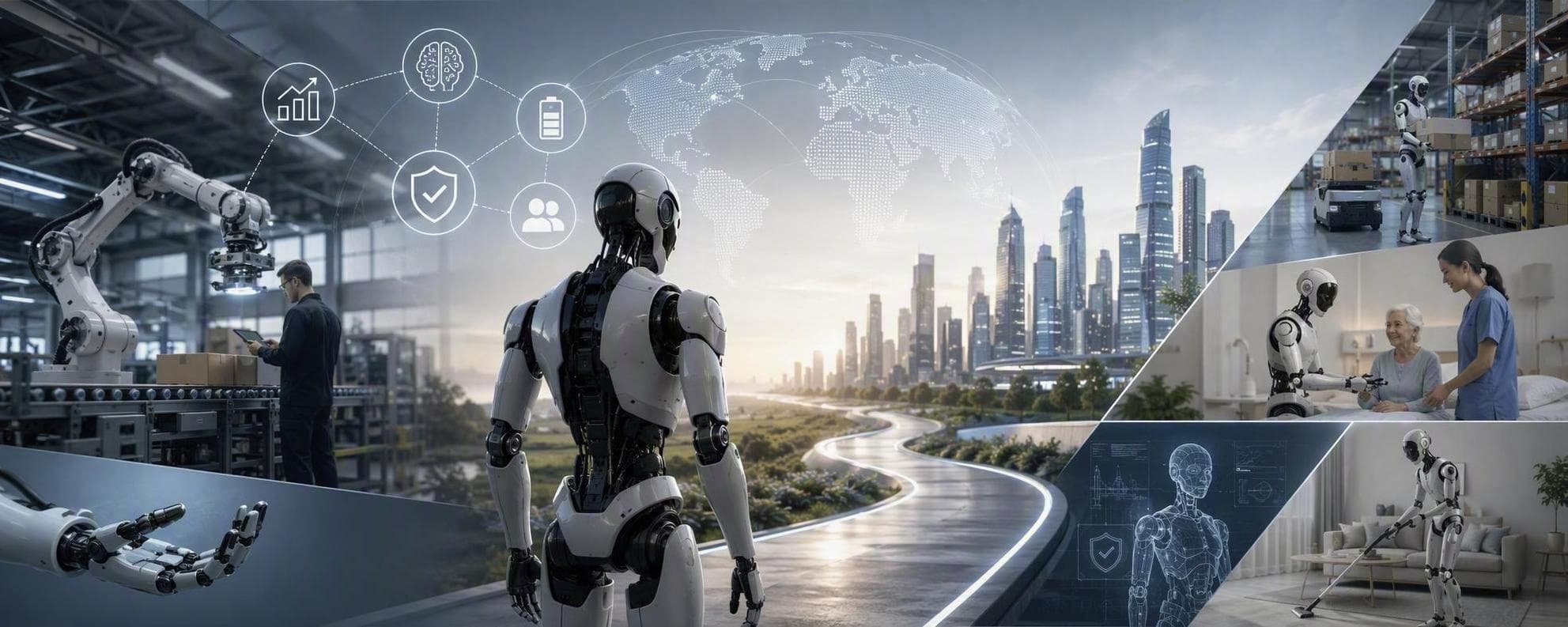
NEURA’s acquisition strategy points toward a future that is far bigger than humanoids. The real opportunity is not a single robot form factor, but an ecosystem of specialized robotic derivatives tailored to specific tasks and industries. Humanoids may serve as the catalyst, but mobile robots, cleaning robots, logistics systems, industrial manipulators, and future robotic species will all contribute to the same objective: generating real-world experience at scale. Every deployed robot becomes part of a shared learning network, continuously producing the data required to advance Physical AI. The ultimate winner may therefore not be the company that builds the best humanoid, but the one that builds the largest and most valuable ecosystem of connected robots. Whoever achieves that could become the Google of the Physical AI era.
Conclusion
The current excitement about humanoids may indeed represent the peak of the hype cycle. Yet beneath the hype, something far more important is happening. Humanoids are becoming the focal point around which the Physical AI ecosystem is forming.
Whether the future belongs to classical humanoids, specialized robotic descendants, or entirely new form factors remains an open question. The more important observation is that the underlying technologies are advancing rapidly and are already creating value far beyond humanoid robots themselves.
Humanoid robotics has already passed its Wright Brothers moment. The scaling moment may be approaching. The true question is who will be first to reach the industry’s DC-3 moment: the point at which physical intelligence becomes not only technically possible, but economically irresistible.