
The humanoid robotics industry is entering a stage where impressive demonstrations are no longer enough. Companies considering robots for warehouses and factories increasingly need answers to much less glamorous questions: How much does the robot cost? How often does it work? How much human supervision does it require? And when does the investment pay for itself?
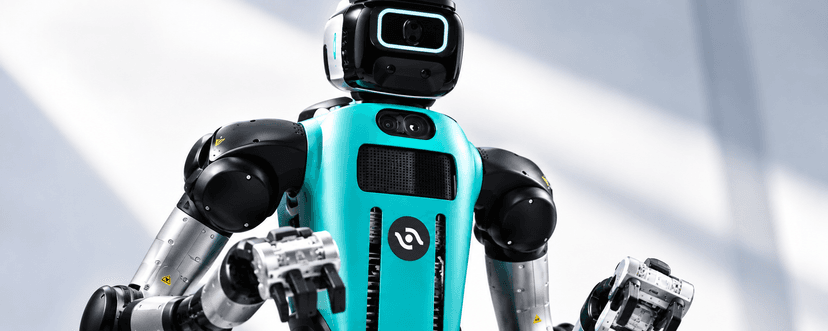
Those questions are becoming easier to quantify. Agility Robotics recently provided an illustrative cost model for its Digit v5 humanoid: roughly $200,000 for the robot, $20,000 for deployment, and about $36,000 annually for software and maintenance. Across an assumed five-year operating life, the total could approach $400,000.
At first glance, $400,000 sounds expensive. But comparing a robot’s purchase price directly with one employee’s salary misses the economic argument. A robot capable of operating across multiple shifts, handling repetitive material-moving tasks and reducing dependence on hard-to-fill positions could potentially spread its cost across far more productive hours. Agility’s illustrative model suggests customer breakeven could occur in a little over a year under favorable operating assumptions.
The Real Metric Is Cost per Productive Hour
This may become one of the most important metrics in commercial robotics.
A $100,000 robot that operates reliably only a few hours each day could ultimately be more expensive than a $200,000 machine capable of completing useful work for 18 or 20 hours. Hardware price therefore tells investors and customers surprisingly little by itself.
Uptime, task-success rate, maintenance requirements, energy consumption, integration costs and human intervention all contribute to the real economics.
This is also why Robotics-as-a-Service (RaaS) could become increasingly important. Instead of asking a factory to make a large upfront investment in an immature technology, robotics companies can potentially charge for deployment, software, maintenance or robot usage. IDC says acceptance of RaaS is growing as vendors look for ways to reduce adoption barriers.
Humanoids Still Have to Beat Simpler Machines
There is another uncomfortable question for the industry:
Does the job actually require a humanoid?
A warehouse may not care whether a robot looks human. It cares whether boxes move from point A to point B reliably and cheaply.
Wheeled autonomous mobile robots, robotic arms and specialized automation can already perform many industrial tasks extremely efficiently. Gartner consequently expects fewer than 20 companies to reach production-stage humanoid deployments in manufacturing and supply chains by 2028, arguing that alternative robot designs may sometimes provide better performance and economics.
Humanoids therefore need to justify their complexity.
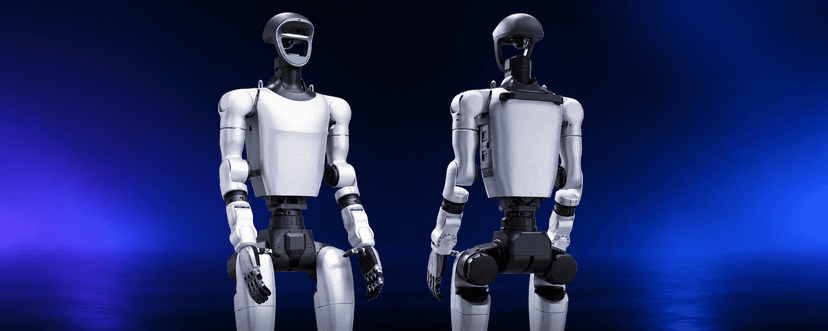
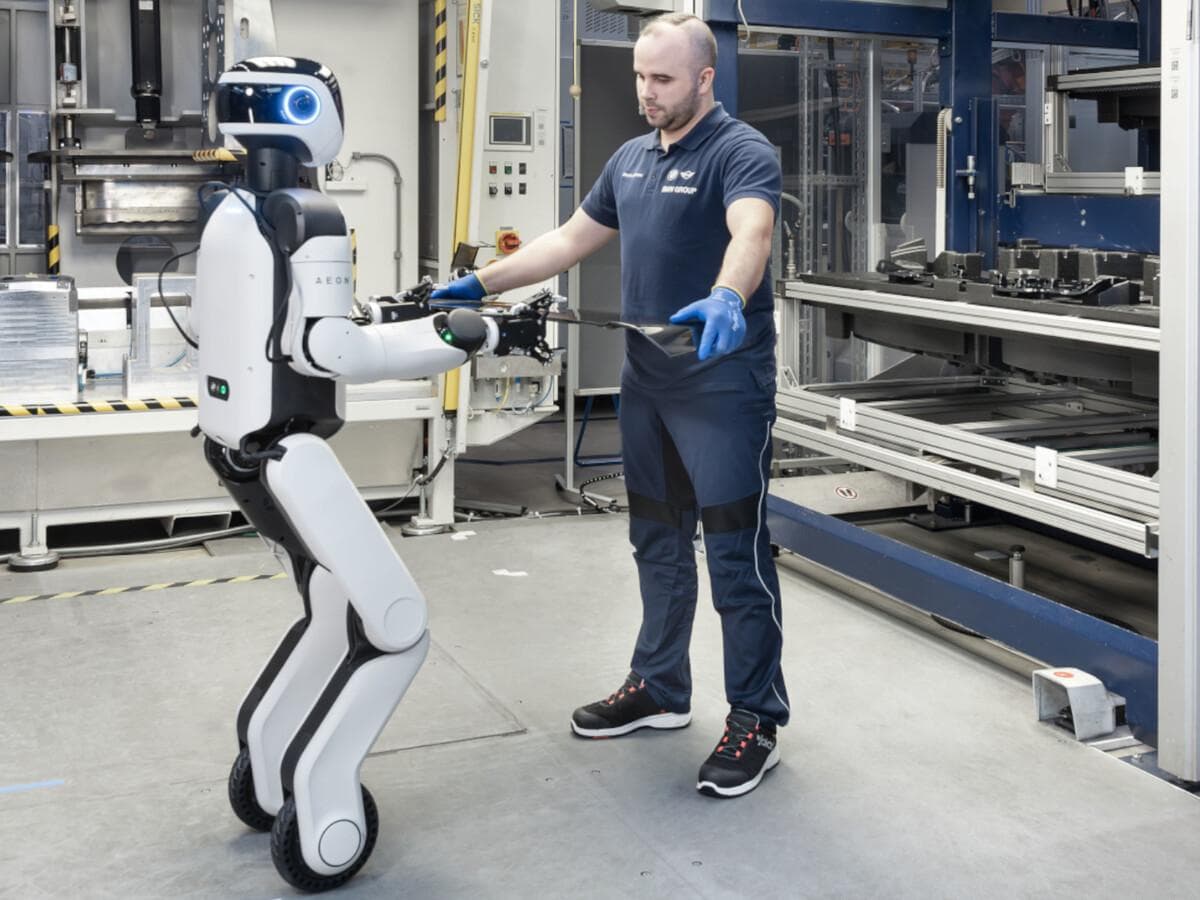
Their strongest advantage may eventually be environments originally designed around humans: stairs, doors, shelves, tools, workstations and factory layouts built for human arms and legs. Instead of rebuilding an entire facility around automation, businesses could theoretically deploy machines capable of using existing infrastructure.
That flexibility is valuable—but only when it works reliably.
The Hidden Opportunity May Be Below the Robot
The economics also reveal something important for the robotics investment landscape.
The companies building complete humanoids won’t necessarily capture all the value.
Actuators alone can represent roughly 40–60% of a humanoid robot’s bill of materials, according to McKinsey’s teardown analysis. Perception and computing can account for another 10–20%.
That creates a potentially enormous supporting market around motors, gearboxes, actuators, batteries, sensors, cameras, semiconductors, simulation software, robot foundation models and fleet-management systems.
In other words, the robotics boom may eventually resemble other technology revolutions: some of the most durable businesses could be the companies supplying the infrastructure rather than selling the finished product.
Opinion: The Next Robotics Race Is Economic, Not Athletic
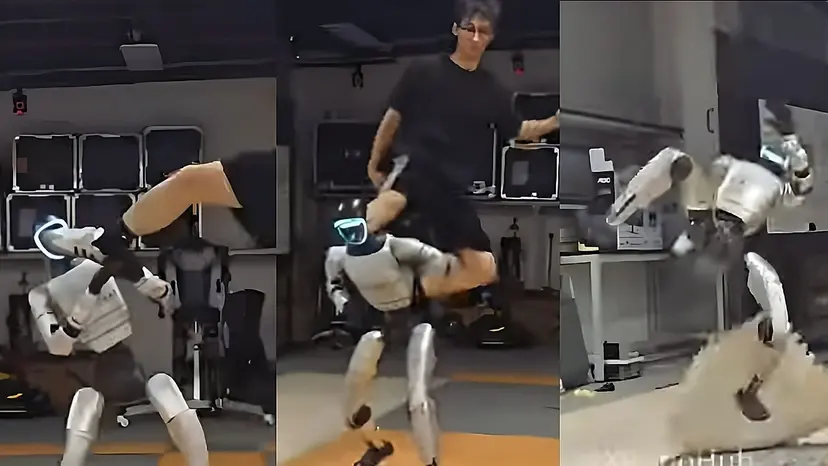
Robots running marathons, performing backflips and competing in sporting events are useful demonstrations of progress. They prove advances in balance, control and mechanical engineering.
But businesses aren’t purchasing backflips.
They’re purchasing productive hours.
The companies that dominate the next phase of robotics may therefore be those that can demonstrate something less exciting but far more important: a robot completing the same useful task thousands of times, with minimal supervision, predictable maintenance and an economic return that a CFO can understand.
That’s when humanoid robotics stops being primarily a technology story.
It becomes an industry.