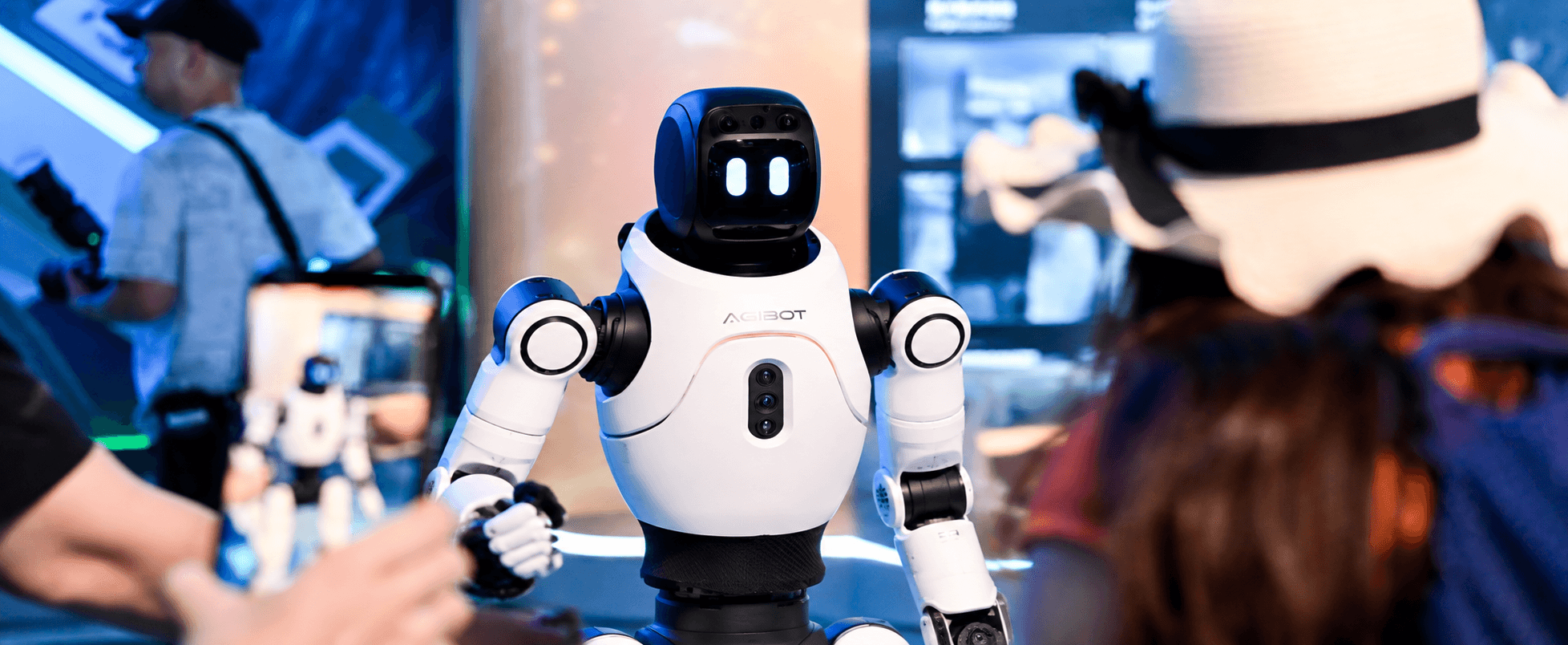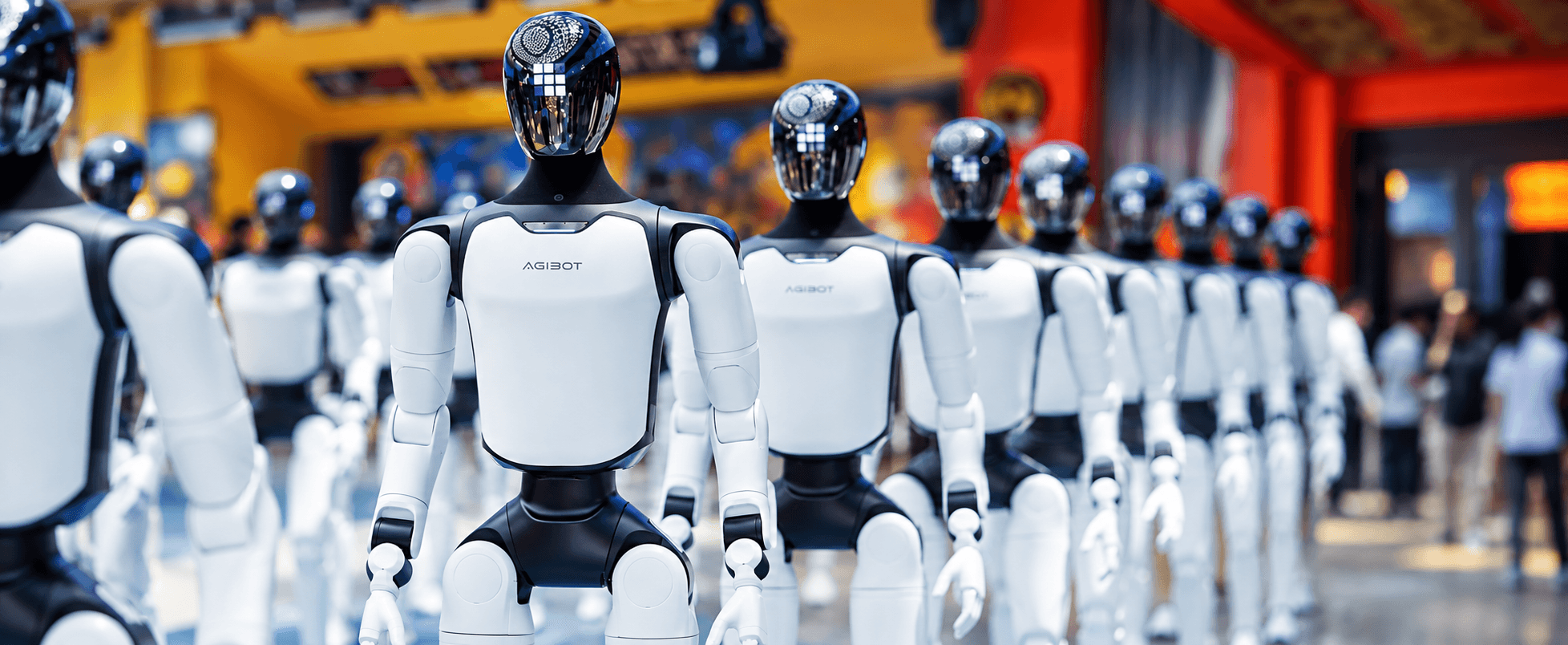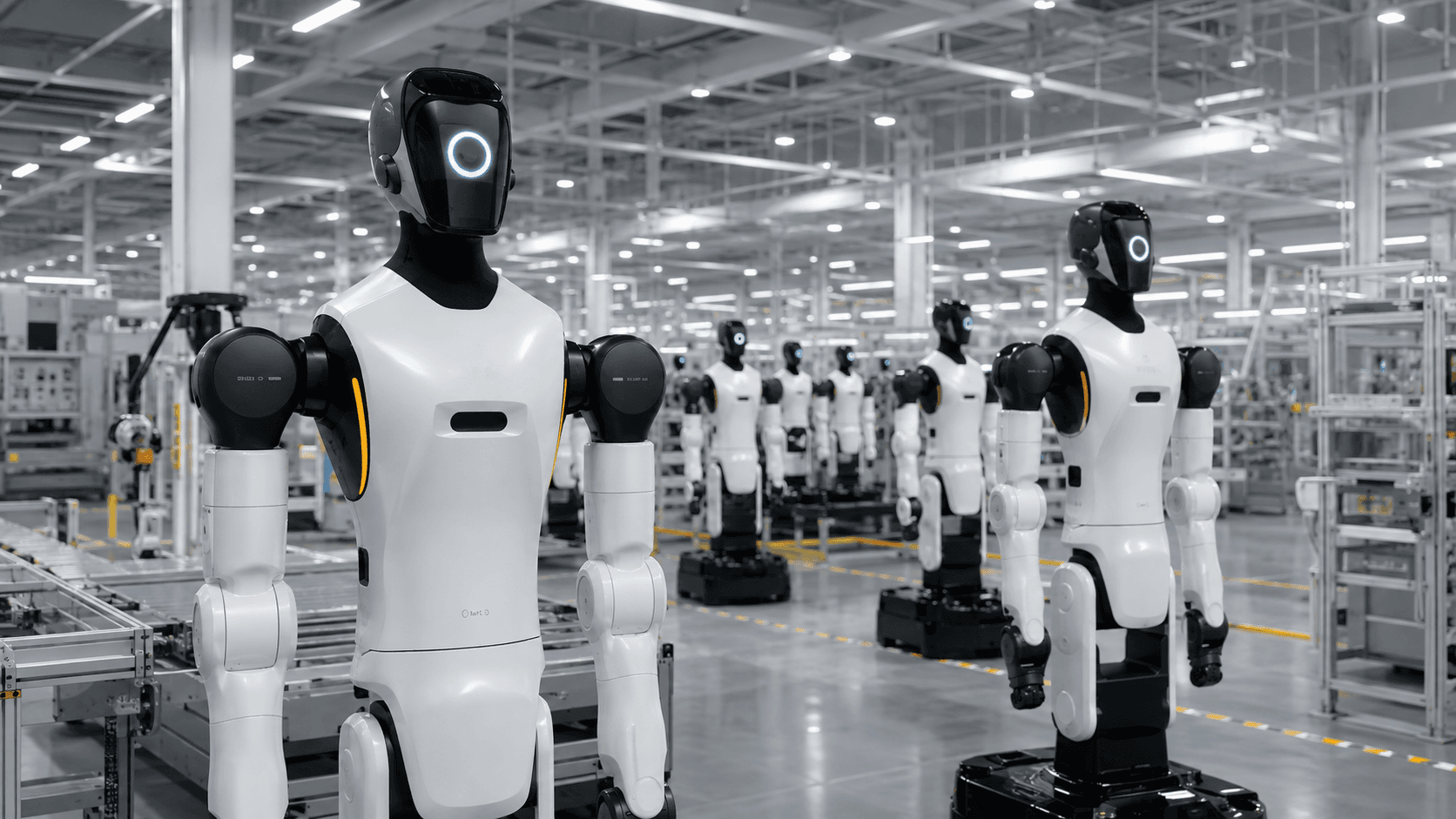

Serbia has opened a new humanoid robotics production facility in partnership with Minth Group and AGIBOT, with plans to eventually build as many as 20,000 humanoid robots and robotic dogs per year.
Europe’s humanoid robotics industry is gaining a new manufacturing base.
Minth Group has officially launched serial production of humanoid robots at its Minth Metal Parts Majur facility in Šabac, Serbia, through a strategic partnership with Chinese robotics company AGIBOT.
The Development Agency of Serbia describes the project as the first mass-production base for humanoid robots in Europe, marking a significant expansion of embodied AI manufacturing outside China.
A €20 Million First Phase
The first phase of the Šabac production base represents an investment of approximately €20 million.
But the project is expected to become considerably larger.
Plans include the development of a dedicated Robotics Industrial Park in Inđija, Serbia, which would bring total planned investment to around €200 million.
Once the broader project is completed, the partners are targeting annual production capacity of up to 20,000 humanoid robots and robotic dogs for customers across Europe and other international markets.
Serbian officials have said the factory could initially assemble more than 5,000 robots annually before expanding production.
AGIBOT Technology Meets Minth Manufacturing
The project combines two very different areas of expertise.
Minth Group already operates extensive industrial manufacturing infrastructure and is best known as a global automotive-components supplier.
AGIBOT, meanwhile, has rapidly expanded within China’s embodied AI industry, developing humanoid and general-purpose robotic systems designed for industrial, commercial and service applications.
Their partnership provides AGIBOT with a European manufacturing foothold while allowing Minth to expand beyond conventional automotive manufacturing into robotics and Physical AI.
The Serbian Development Agency says AGIBOT had produced its 15,000th robot by mid-2026. It also cites company data showing approximately 8,400 humanoid robots delivered during the first half of 2026.
From Demonstrations to Manufacturing Scale
The opening highlights an important shift taking place across humanoid robotics.
Much of the industry’s attention has traditionally focused on demonstrations: robots walking, running, manipulating objects or performing increasingly complex physical tasks.
But manufacturing capacity is becoming equally important.
Companies hoping to deploy thousands—or eventually millions—of robots will need factories capable of producing machines reliably, quickly and at significantly lower costs.
That makes manufacturing partnerships particularly valuable for robotics companies.
Instead of building an entirely new industrial infrastructure from scratch, AGIBOT can leverage Minth’s existing manufacturing capabilities and European footprint.
Serbia Could Become a European Robotics Hub
The project also gives Serbia an unusual position in the growing competition around embodied AI.
Rather than participating only as a customer for robotics technology, the country is positioning itself as a manufacturing location for machines that could eventually be deployed throughout Europe.
The planned Robotics Industrial Park in Inđija could extend that role further by creating an ecosystem around robot manufacturing, components and related technologies.
Minth has also indicated that its Serbian operations could eventually expand into additional technologies, including unmanned aerial vehicles and advanced batteries.
Humanoid Robotics Is Becoming a Global Manufacturing Race
China currently has one of the world’s largest ecosystems for humanoid robotics, covering motors, batteries, sensors, actuators, AI systems and complete robots.
But international expansion is accelerating.
Manufacturing facilities outside China could allow Chinese robotics companies to move closer to customers, establish regional supply chains and potentially simplify deployment across foreign markets.
For Europe, the arrival of larger-scale humanoid manufacturing could also accelerate experimentation with robots in factories, warehouses, logistics operations and other industrial environments.
The Šabac facility therefore represents more than another robot factory.
It is a sign that the humanoid robotics race is increasingly moving from laboratories and prototype demonstrations toward industrial-scale production and international deployment.
If production reaches the levels envisioned by Minth and AGIBOT, Serbia could become an important bridge between China’s rapidly growing embodied AI industry and the European robotics market.