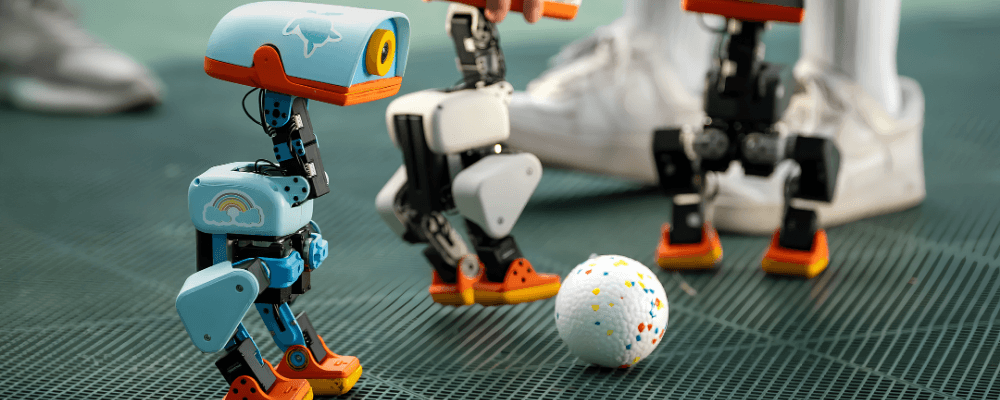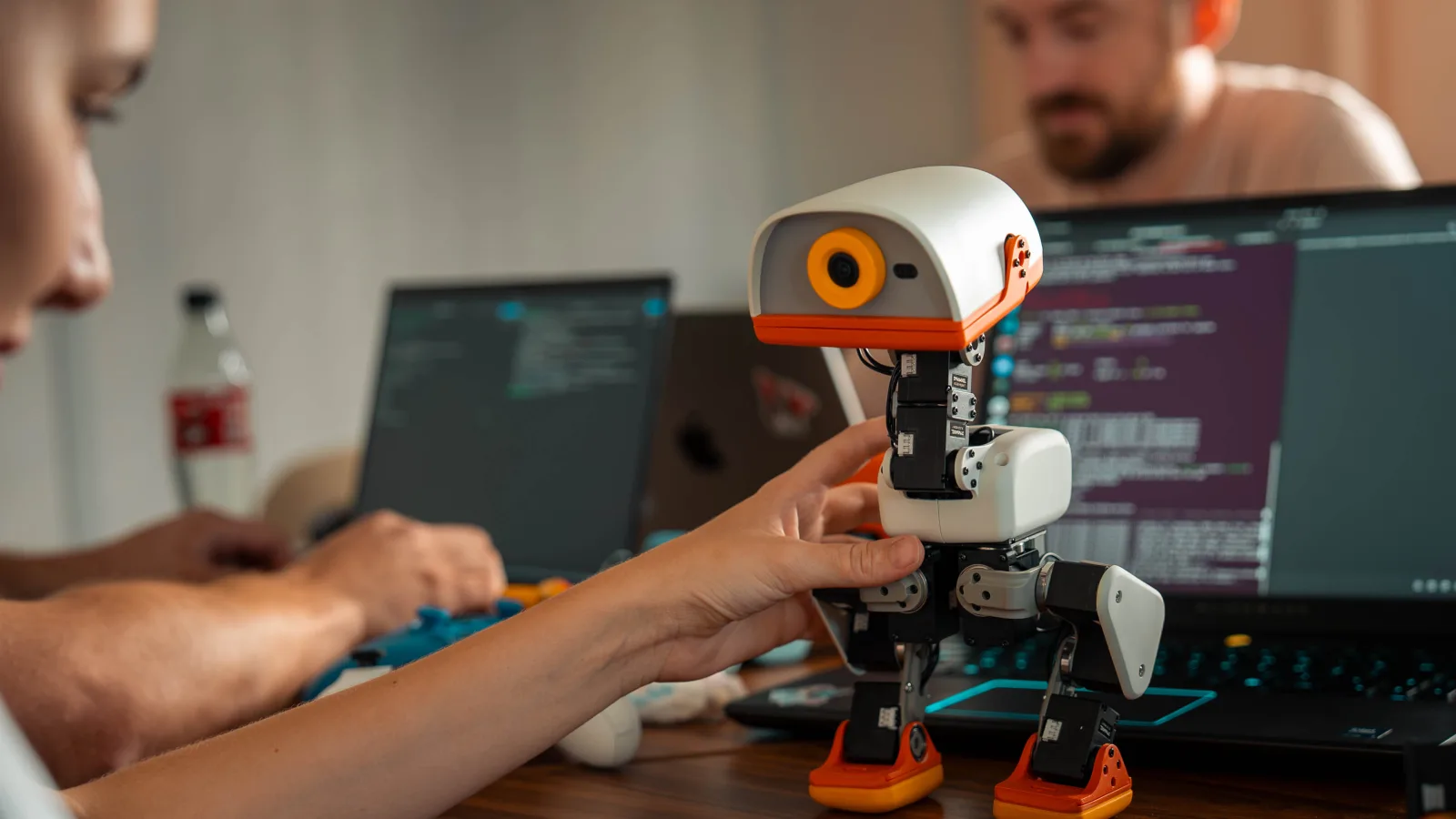

Pollen Robotics is taking a new approach to small-scale robotics with Microduck, a 25 cm-tall bipedal robot designed not just to interact with people, but to physically move through the world.
Following the success of Reachy Mini, more than 10,000 of which have reached users worldwide, Pollen Robotics built Microduck around a different question: What if a small robot’s main purpose was to act?
Weighing less than 800 grams, Microduck packs 15 motors, a camera, depth sensor, two IMUs, and an articulated beak capable of picking up objects. It can walk, crouch, sit, recover from common falls, and even roller-skate. Despite its compact size, it is designed as an accessible platform for experimenting with physical AI, reinforcement learning, and sim-to-real robotics.
Small Size, Big Possibilities
Unlike Reachy Mini, which focuses on conversation and human-robot interaction, Microduck is built around movement and action. Its small and lightweight design makes experimentation safer, cheaper, and more practical outside traditional robotics labs.
Developers can train behaviors in simulation, transfer them to the physical robot, observe failures, and iterate without needing expensive equipment or a dedicated workspace.
Microduck also aims to be fun from the moment it starts. Users can control it with a gamepad, make it follow a laser, trigger movements, or let it respond to its surroundings. Underneath that playful experience is an open-source software stack covering robot control, simulation, reinforcement learning, and sim-to-real deployment.
The robot is available in four colorways—Cream, Graphite, Lavender, and Sky—and its playful duck design is meant to make robotics feel more approachable without hiding the technology underneath.
A Platform for Physical AI
Pollen Robotics hopes Microduck will become more than a small robot. By making its software, behaviors, and reinforcement-learning tools open and shareable, the company wants developers and researchers to build on one another’s work.
With a starting price of $399 before taxes and shipping, Microduck could offer a relatively accessible way for students, developers, and robotics enthusiasts to experiment with embodied AI.
Microduck may be small, but its goal is ambitious: make learning how AI moves from simulation into the real world easier, more affordable, and more fun.