


The Last AI Chip You'll Ever Need?
Mercury One - 34w read →
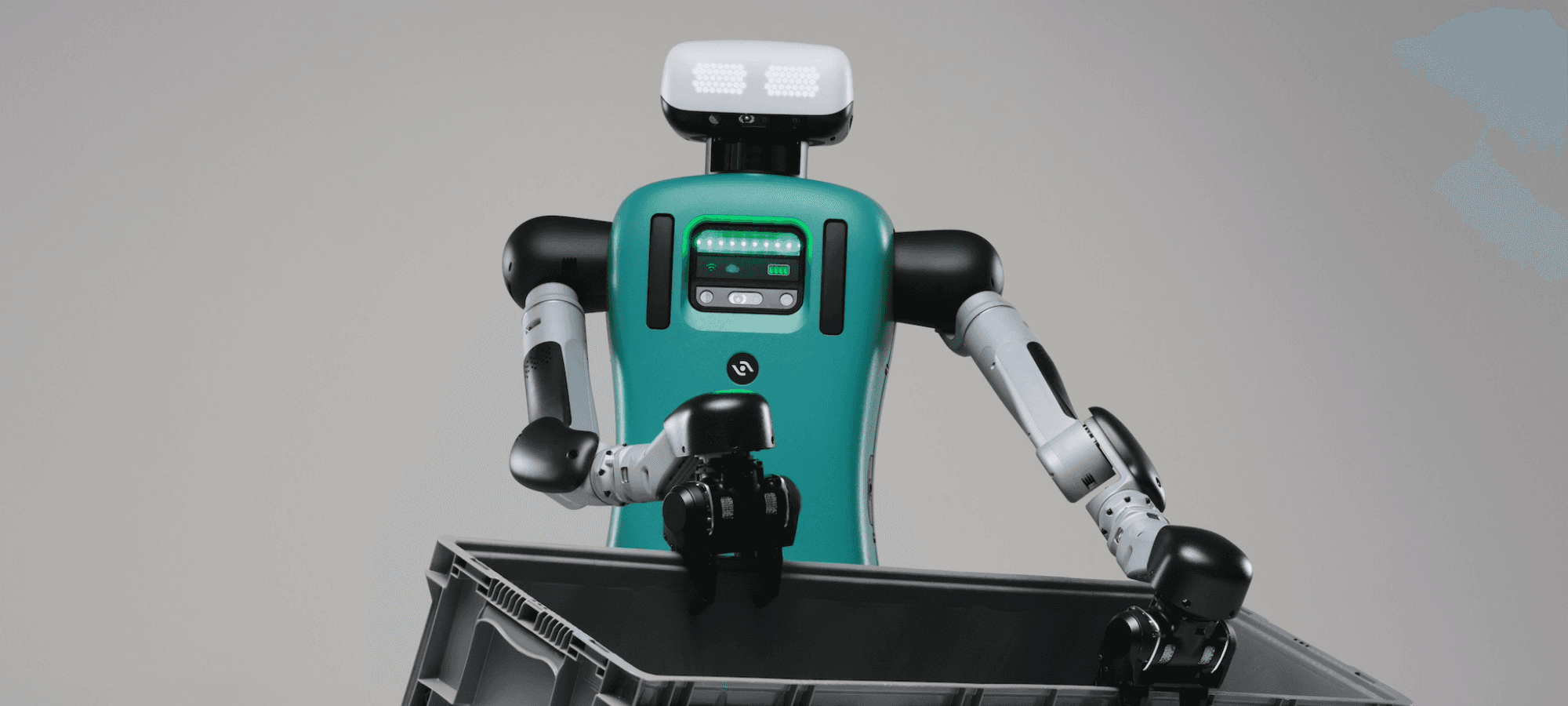
Agility Robotics, the Oregon-based company behind the Digit humanoid robot, has moved from academic research to commercial warehouse deployments with partners including Amazon and GXO Logistics. The article covers Digit's design, its Robot-as-a-Service model, and RoboFab—the company's 10,000-unit-per-year manufacturing facility.
Agility Robotics is one of the few companies in the humanoid race with robots already earning a pay-check in the real world. Its flagship humanoid, Digit, is built for spaces made for people—warehouses, factories, and eventually public environments. Backed by deep research roots and high-profile partnerships including Amazon, Agility Robotics is moving to scaled production, aiming to meet a growing demand for human-capable automation.
Founded in 2015 in Albany, Oregon, Agility Robotics emerged from Oregon State University’s Dynamic Robotics Lab, led by Professor Jonathan Hurst.
Its first creation, Cassie, launched in 2016 as a bipedal research platform inspired by the biomechanics of flightless birds. Cassie’s efficient, stable gait laid the groundwork for Agility Robotics’s next step—designing a full-bodied humanoid that could operate in human environments.
By 2017, the first version of Digit was introduced, adding arms, a torso, and perception systems to Cassie’s agile legs. Initially sold to research labs and R&D teams, Digit was always intended for practical work alongside humans.
The commercial pivot came in 2020, when Ford trialed Digit for last-mile delivery. By 2021, Agility Robotics had identified a nearer-term and larger market—warehouse logistics. This meant focusing on repetitive, ergonomically challenging, and costly tasks that were ripe for automation.
Agility Robotics’s connection with Amazon began in April 2022, when Amazon’s Industrial Innovation Fund joined a $150 million funding round alongside DCVC and Playground Global.
By October 2023, Amazon began live tests with Digit at its robotics R&D center near Seattle. The trial focused on tote recycling—a monotonous but essential task in fulfillment centers, putting Digit to work in a live operational setting rather than a controlled lab.
Why this matters:
Amazon already operates over a million robots worldwide including, mobile units, robotic arms, autonomous vehicles, and is on track to become one of the largest humanoid robot customers over the next decade.
Digit stands 5’9” (175 cm) and weighs about 65 kg. Its most distinctive feature—reverse-jointed legs inspired by ostriches—gives it balance, Agility Robotics, and reach in tight or uneven spaces.
Other design highlights:
At ProMat 2025, Agility Robotics introduced major upgrades for scaled industrial use:
Digit is already clocking in under a Robot-as-a-Service (RaaS) model, where customers pay for capability instead of purchasing the robot outright. This reduces upfront costs and allows businesses to scale their use based on need.
At a GXO Logistics–operated Spanx facility, Digit moves totes from storage racks to conveyor belts—tasks that are physically repetitive and ergonomically taxing for humans. In this setting, the robot’s consistency and endurance reduce strain on human workers and keep operations flowing smoothly.
In Amazon’s pilot, the task is similar—recycling totes within warehouse aisles—but the stakes are higher. Amazon’s fulfillment network processes millions of totes daily. Proving a humanoid can handle this work in unmodified facilities without slowing operations could accelerate adoption across the sector.
To deliver at that scale, Agility Robotics built RoboFab, a 70,000-square-foot manufacturing facility in Salem, Oregon. It is purpose-designed for humanoid production with the capacity to build up to 10,000 Digit units per year. The first customer deliveries have already gone out the door.
By keeping manufacturing in-house, Agility Robotics shortens the loop between design, testing, and production. This enables faster iteration, consistent build quality, and the flexibility to ramp up quickly when large orders arrive.
Very few humanoid robotics companies can produce at this pace today. RoboFab positions Agility Robotics not just as a robotics innovator but as a manufacturer capable of supplying enterprise customers at industrial scale.
Agility Robotics is one of the first companies to prove that humanoids can perform real work in industrial settings without costly retrofitting. By pairing tested field deployments with mass-manufacturing capacity, it is setting a precedent for how humanoid robots can enter the workforce.
Its early focus on warehouses is strategic—logistics offers a high-volume, high-impact entry point before expansion into public spaces and service roles. For the broader humanoid robotics market, Digit’s progress signals that the transition from research to revenue is already underway.

