AI Stack
Capabilities and model layers highlighted by the company.
01Foundation Model
02Reinforcement Learning
03Vision-Language-Action



Physical Intelligence develops vision-language-action models that use images and language instructions to generate robot actions.
Physical Intelligence develops vision-language-action models that use images and language instructions to generate robot actions. Founded in 2024, the company researches how models trained across different robots and tasks can adapt to new manipulation settings.
Sources: Physical Intelligence openpi models and checkpoints; Sequoia Capital: company and team
The openpi repository provides code, base checkpoints and adaptation examples for π0, π0-FAST and π0.5. These models combine visual observations and language instructions with robot action prediction. Physical Intelligence announced π0.7, a steerable generalist robot model, on 16 April 2026. Its research announcement describes the model; the downloadable checkpoints listed in openpi cover π0, π0-FAST and π0.5.
Sources: Physical Intelligence openpi models and checkpoints; Physical Intelligence: π0.7 research announcement
In February 2026, Physical Intelligence described work with Weave on laundry folding and Ultra on warehouse packaging. These partnerships apply its models to partners’ robotic systems and customer workflows.
Sources: Physical Intelligence: Weave and Ultra partnerships
The founding team combines robotics and machine learning researchers with engineering and product leaders. CapitalG identifies Karol Hausman as co-founder and CEO. Sequoia lists the following team members:
Karol Hausman, Adnan Esmail, Brian Ichter, Chelsea Finn, Lachy Groom, Quan Vuong, Sergey Levine
Sources: Sequoia Capital: company and team; CapitalG: Series B and leadership
Reuters reported a $400 million funding round in November 2024, with backers including Jeff Bezos and OpenAI. CapitalG announced that it led Physical Intelligence’s $600 million Series B in November 2025.
Sources: Reuters: November 2024 funding; CapitalG: Series B and leadership; CapitalG: $600 million funding announcement
Sources reviewed .
Platform maturity, autonomy stack, and flagship-system specifications in one view.
Capabilities and model layers highlighted by the company.

Physical Intelligence Opens Its Robotics Models to External Developers
Physical Intelligence has introduced the Pi API beta, allowing external robotics developers to train and deploy its foundation models on their own machines.
 Robotico
Ultra Raises $50 Million to Scale AI-Powered Warehouse Robots
Brooklyn-based robotics startup Ultra has raised $50 million in Series A financing as it expands the deployment of AI-powered robots across US warehouses.
Robotico
The Robotico 50: Women in Humanoid Robotics & Embodied AI 2026
An independent editorial selection recognising women working across humanoid robotics and embodied AI.
Robotico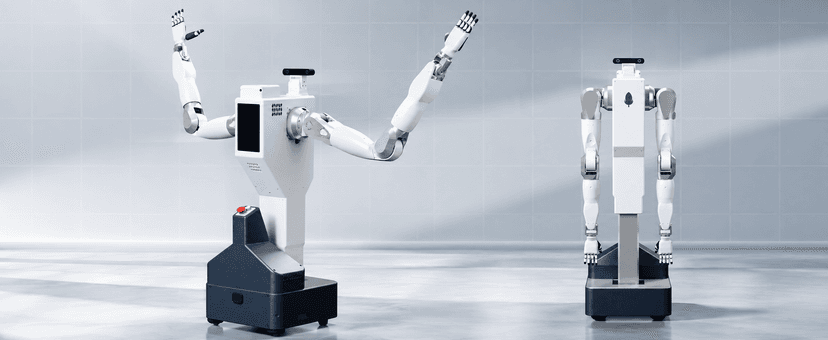
Feather Crosses $1 Million in Revenue With Modular Humanoid Platform
Feather Robotics has surpassed $1 million in revenue from its modular robotics platform, with customer systems already operating in restaurants in Japan and science laboratories, according to new figures disclosed by the company to TechCrunch.
Robotico
Axis Robotics Open-Sources 50,000-Trajectory Dataset for Robot Learning
Axis Robotics has released Axis Sim Dataset V1, an open-source dataset containing more than 50,000 human-teleoperated robot trajectories across 207 manipulation tasks.
Robotico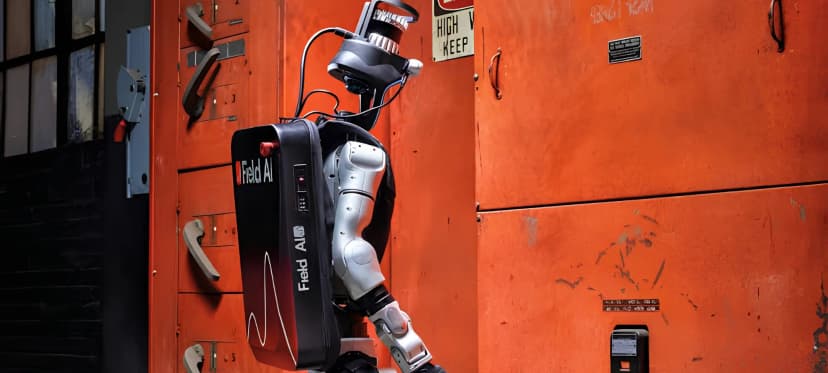
FieldAI: The Universal Robot Brain That Doesn't Build Robots
Born in the trenches of DARPA's hardest autonomy challenges and NASA JPL's Mars programs, FieldAI has crossed the $2B mark in 18 months without shipping a single robot. It wants to be the operating intelligence for every machine in motion.
Robotico
Top Humanoid Robotics Companies To Watch In 2026
The companies defining the control stack and the humanoid hardware that will anchor the next decade of automation.
 Jess Alvarez
Who Owns The Brains And Minds Of Humanoid Robotics
How next generation chips and foundation models will quietly decide which humanoids win.
Jess Alvarez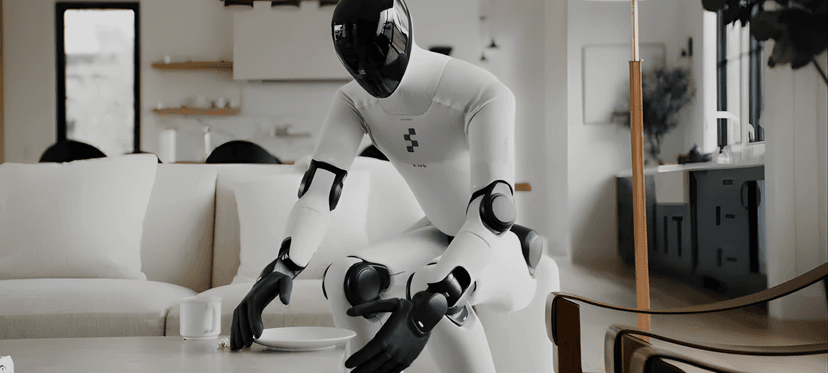
Why Home Robots Won't Scale Until Physical Data Does
Home robots will not reach mass adoption until embodied AI can learn from enough real world data to work reliably in everyday homes.
Jess Alvarez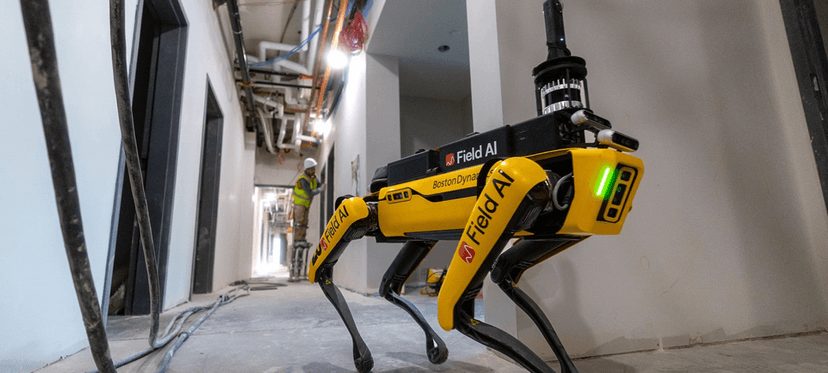
Boston Dynamics Connects FieldAI to Spot and Atlas
Boston Dynamics has owned every layer of its stack for twenty years. On March 12, 2026, it quietly admitted the autonomy race is moving faster than any vertical integrator can keep up, and handed FieldAI the keys to Spot's brain.
 Ben knaus
Track Physical Intelligence's valuation over time.
Physical Intelligence was founded in early 2024 by CEO Karol Hausman (former Google DeepMind), Sergey Levine (UC Berkeley), Chelsea Finn (Stanford), Lachy Groom (former Stripe), Adnan Esmail, Brian Ichter, and Quan Vuong.
Its initial $400 million round at $2 billion valuation was led by Jeff Bezos, Lux Capital, and Thrive Capital, with backing from Khosla Ventures, OpenAI, Sequoia, and Redpoint.
In October 2024, Physical Intelligence released π0, a foundation model demonstrating unprecedented generalist capabilities, robots folding laundry, peeling vegetables, and assembling boxes.
By November 2025, a $600 million Series B led by Alphabet's CapitalG brought total funding past $1 billion at $5.6 billion valuation. The company prioritizes fundamental research over near-term revenue, betting that a single general-purpose model can eventually control any physically-actuated device.
Physical Intelligence was founded in 2024. Its π0 model introduced a vision-language-action approach to robot control, followed by π0-FAST and π0.5, with code and checkpoints available through openpi. The company reported partnerships with Weave and Ultra in February 2026 and announced its steerable π0.7 model in April 2026.