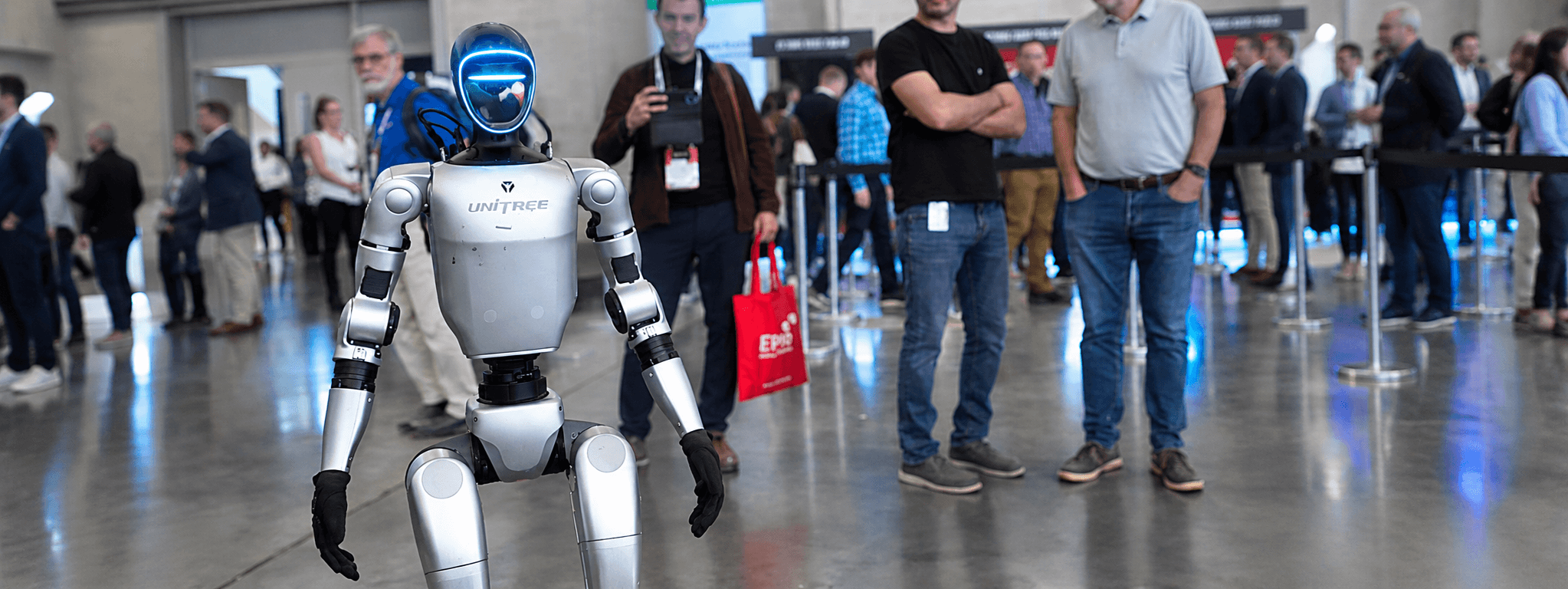

Unitree Robotics has disclosed a cumulative production figure for its G1 humanoid, with founder Wang Xingxing saying that between 10,000 and 20,000 units have come off the production line since the model’s launch in May 2024. He shared the estimate on October 22 at the World Physical AI Conference and Unitree Partner Ecosystem Conference in Hangzhou, China.
The range is unusually broad, but it provides a rare manufacturing reference point in an industry where production targets are often discussed more freely than completed units. Wang described G1 as the world’s best-selling humanoid robot, a claim that has not been independently established through comparable sales disclosures from competing manufacturers. More importantly, the figure measures cumulative production, not shipments, paid orders or robots operating at customer sites.
G1 is Unitree’s compact humanoid platform, sold in configurations aimed at developers, researchers and other customers. Its relatively accessible starting price and widespread use in demonstrations have made it one of the most recognizable machines in the sector. Unitree has since expanded its humanoid range, including the recently introduced H2-X, but Wang’s new figure concerns G1 specifically.
During the same presentation, Wang discussed the challenge of translating advances in general AI models into reliable physical action. He said the alignment between a model’s inputs and outputs and the behavior of a real robot remains a central obstacle. He also described Unitree’s work on an experimental self-improvement system intended to connect coding, simulation, physical testing and feedback.
The manufacturing disclosure is the most concrete part of the update. It establishes that Unitree has produced G1 robots in five-figure cumulative volumes, while leaving open how many were sold, delivered, deployed or remain in inventory. Those distinctions matter when comparing the commercial progress of humanoid manufacturers.