
The Dex5-S is built at approximately 1:1 human-hand scale and measures 102 × 187 × 26 mm. Each hand weighs around 620 grams, down substantially from the 1,000-gram Dex5-1 listed in Unitree’s IPO prospectus.
All 22 joints are individually actuated and backdrivable, allowing external forces applied to the fingers to move the corresponding joints rather than locking them mechanically in place. Each joint also includes impact-torque protection. Unitree uses dual-encoder closed-loop monitoring across the hand.
The new model increases dexterity from the 20 degrees of freedom on Unitree’s existing Dex5-1 to 22. The previous Dex5-1 weighs 1 kg, carries 94 tactile sensors and has a stated maximum load of 4.5 kg, according to Unitree’s IPO prospectus. The Dex5-S adds a roll axis to the little finger and has a reported maximum load of 2 kg.
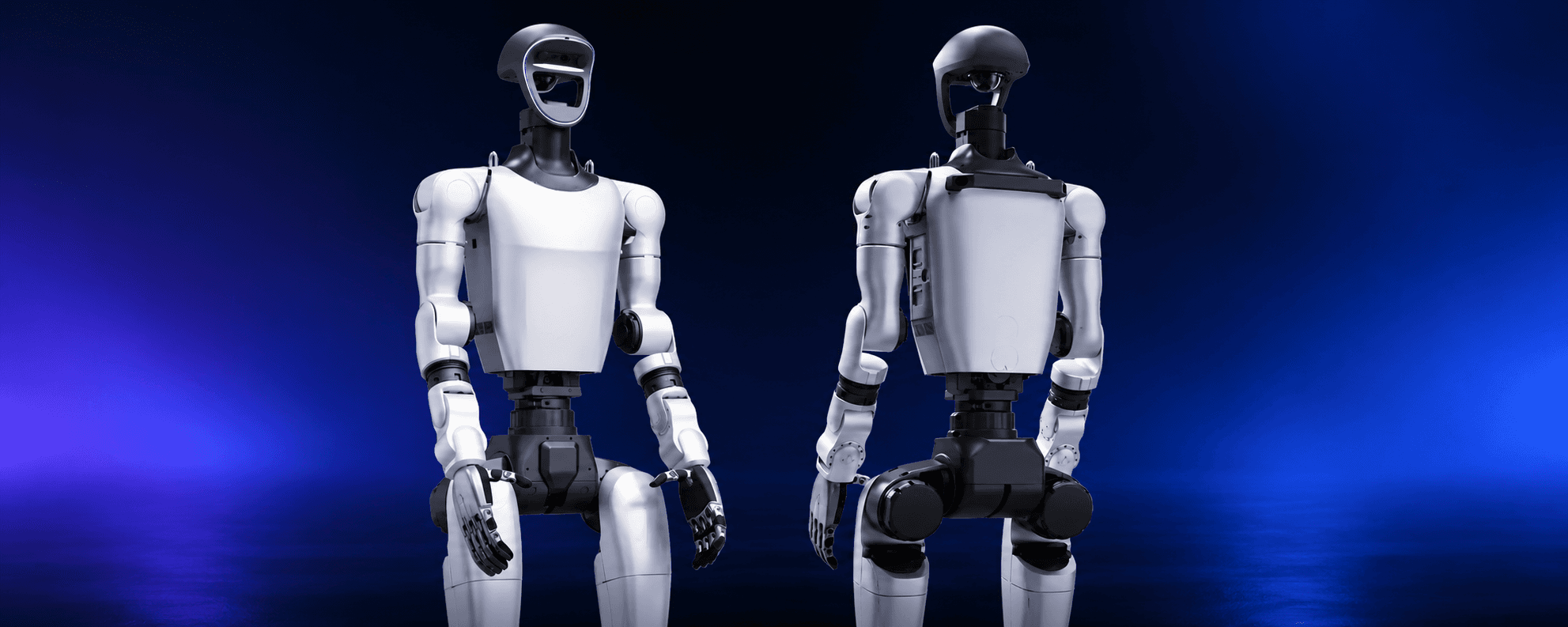
The hand supports CAN, Ethernet and RS-485 communications and can be integrated with Unitree’s humanoid platforms or used as a standalone manipulation system.
Unitree has increasingly paired its hardware development with manipulation models. Earlier this month, the company released UnifoLM-WLA-1.0, its open-source 6-billion-parameter embodied foundation model trained on approximately 2,500 hours of real-robot data and more than 5 million embodied reasoning samples.