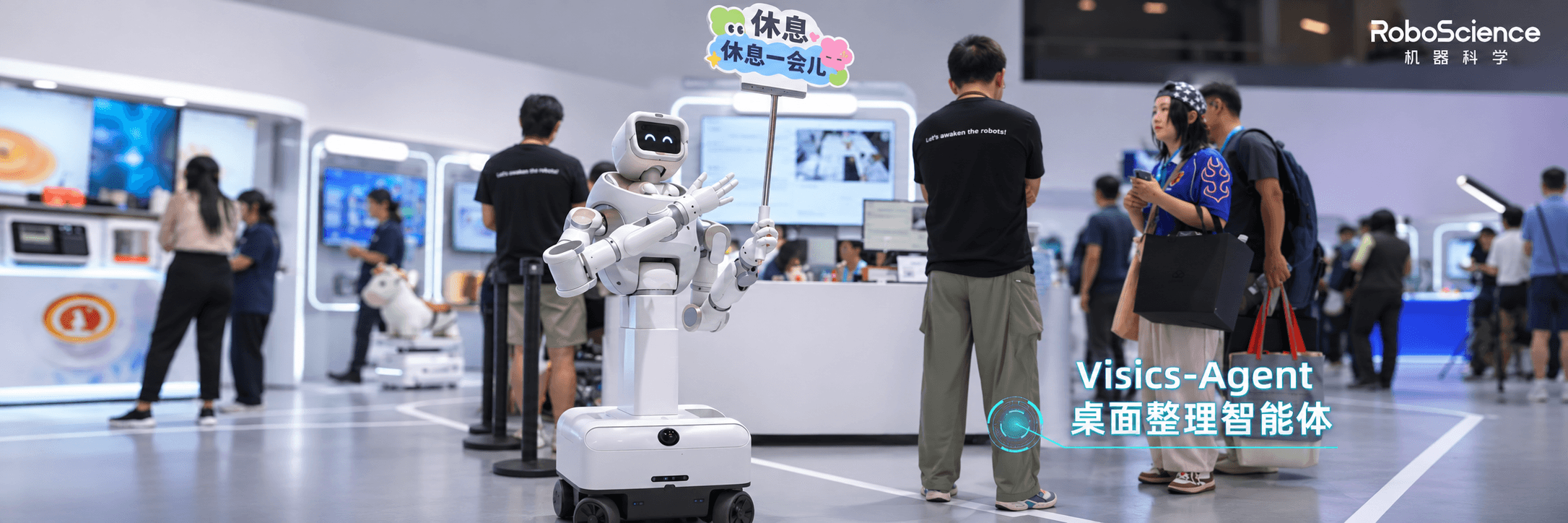

Chinese embodied AI developer RoboScience has opened applications for early access to Visics-Agent, a cloud-based robotics intelligence service designed to let users teach robots new tasks through natural language. The company plans to make the service available in December 2026, according to reporting published on November 13.
Visics-Agent was first demonstrated on October 29 at Tencent’s Global Digital Ecosystem Summit. RoboScience subsequently published details of the demonstration on November 12. The latest announcement provides a timeline for developer access and additional information about the system’s learning capabilities.
Teaching robots through natural language
The service divides robot learning into teaching and execution. Users can explain a task, correct the robot when it makes a mistake and ask it to retain a successful approach. The system stores that experience as a reusable skill, which can subsequently be combined with other skills to complete more complex tasks.
RoboScience has also developed a feedback mechanism that refines skills using observations from physical robot trials. In one demonstration involving desktop organization, the robot learned to reposition its arm when it obstructed the camera’s view.
The company reported internal testing across 454 instructions. Success rates exceeded 90% for simpler tasks involving one or two pick-and-place operations, while tasks requiring three to seven sequential operations achieved 78%. These figures have not been independently validated.
Cloud-based deployment
Visics-Agent uses RoboScience’s Visics manipulation model and is designed to support different robotic grippers and dexterous hands. Developers can access its capabilities through Tencent Cloud without training a manipulation model from scratch.
The planned December rollout follows RoboScience’s July strategic partnership with Tencent Cloud to develop embodied AI services. Early-access applications are open to developers, researchers and businesses evaluating robot applications. The announcement does not establish that the service is already generally available or operating at commercial scale.
Sources: RoboScience