
Training robots on video requires more than collecting footage. Researchers need to identify which actions took place, when they began and ended, and whether the attempt succeeded. NVIDIA has released Flora, a suite of models designed to automate those annotations for the large datasets used in Physical AI development.
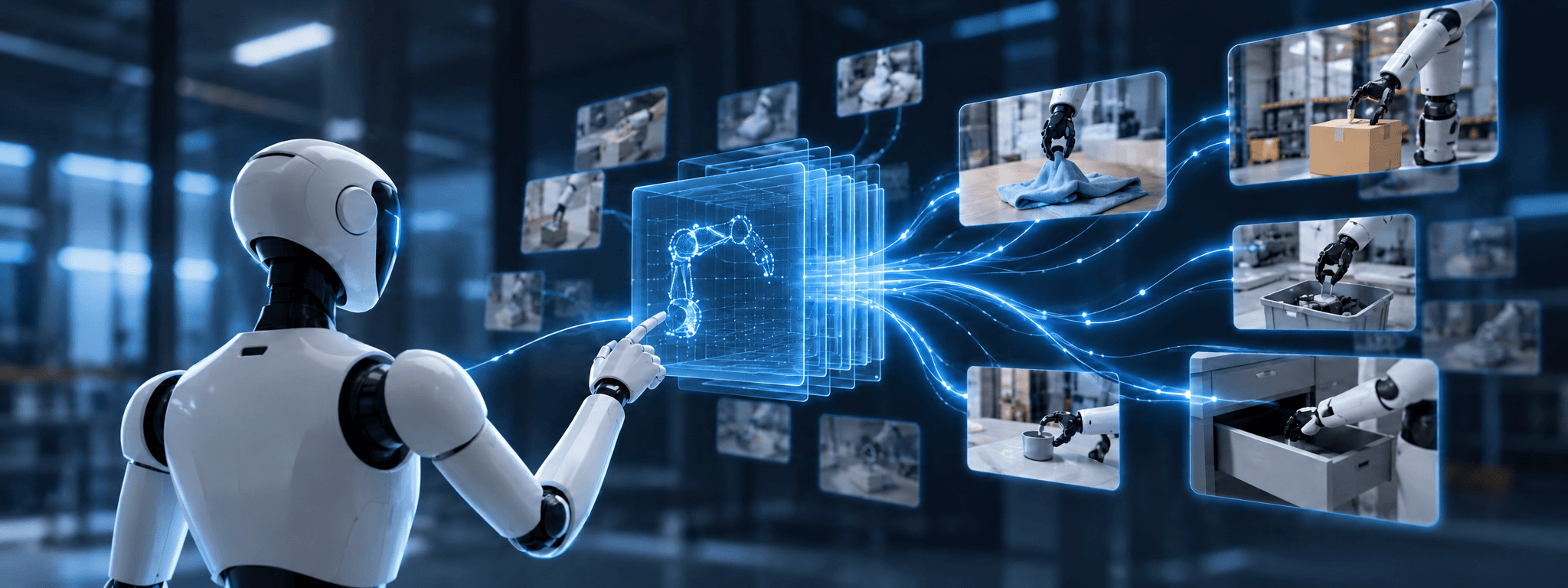
Introduced by NVIDIA’s GEAR research team on October 20, Flora comprises three complementary tools. Flora-TempSeg divides recordings into action intervals, Flora-Captioner describes what is being attempted, and Flora-Rewarder scores the outcome and intermediate steps. The pipeline works with human and robot manipulation footage, allowing teams to organize demonstrations, evaluate robot behavior and generate feedback for reinforcement-learning training.
NVIDIA says the technology already supports its GR00T robotics model development. The company reports processing 200,000 hours of video each day using 512 GB300 GPUs, a measure of annotation throughput rather than robot operating hours. Its researchers also claim annotation costs roughly 125 times lower than using GPT-6 Astra for comparable workloads. That comparison comes from NVIDIA’s own evaluation and does not establish equivalent performance on unrelated AI tasks.
The published benchmarks show different strengths depending on the task. Flora performs well on human-video action segmentation and some reward-modeling measures, while Astra remains ahead on certain robot-video captioning metrics. These distinctions matter because inaccurate descriptions or reward labels can contaminate the data used to train robotic policies.
NVIDIA has made the Flora-TempSeg, Flora-Captioner and Flora-Rewarder weights available through Hugging Face. Despite the project’s open-model positioning, the published licensing restricts use to noncommercial research and development. The models produce labels and evaluations, not motor commands, and are not intended to serve as standalone safety monitors.
The release addresses an expensive part of the robotics training process: turning raw recordings into structured examples that a learning system can use. Its value to other laboratories will depend on the accuracy and operating cost they achieve with their own footage and computing resources.