
Chinese Physical AI data company AstrAlive Intelligence (星忆智能) has raised tens of millions of yuan across consecutive seed and seed-extension rounds, bringing in financial and industrial investors as it expands its business supplying training data for robots. The financing was disclosed on October 22. Shunxi Fund led the seed round, while industrial vision specialist Luster LightTech (凌云光) led the extension, joined by Zhongguancun Capital and First Capital Investment. The company did not disclose a precise total or valuation.
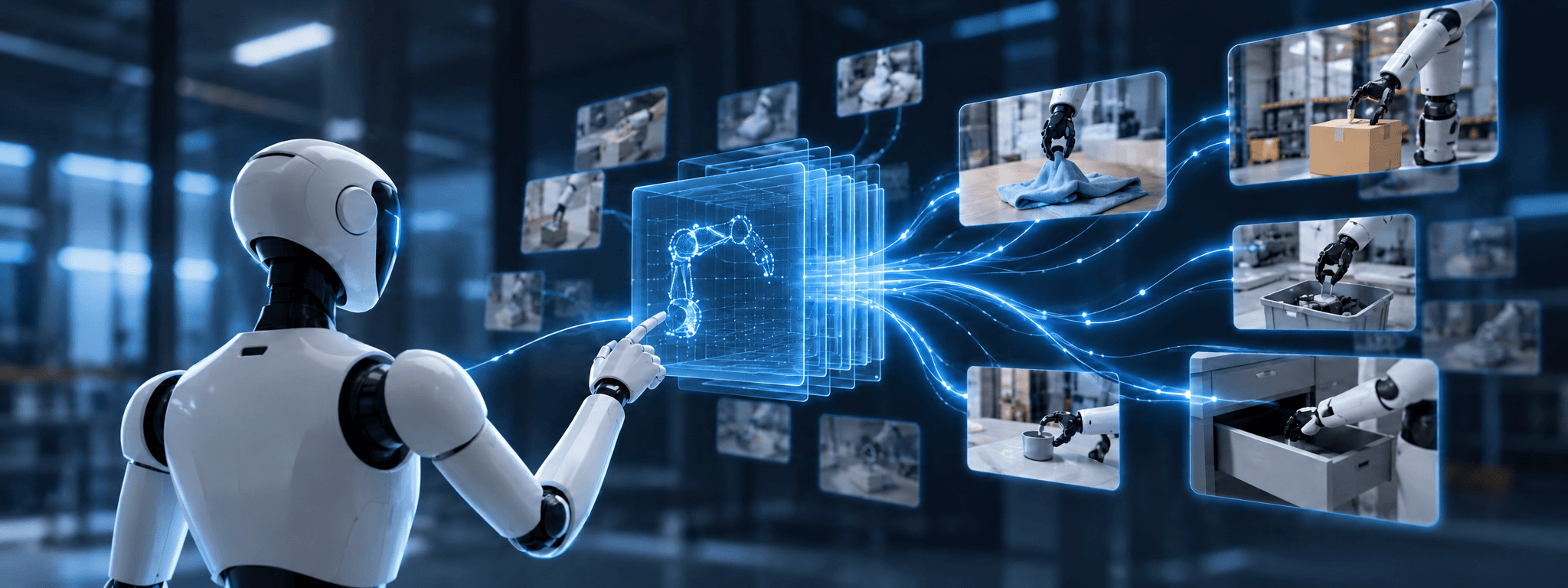
AstrAlive, which emerged from Tsinghua University’s computer science ecosystem, focuses on one of the harder problems in robot learning: capturing exactly how human hands move and interact with objects. Video of a person completing a task does not automatically tell a robot where fingers were positioned, when contact occurred or how a grasp changed under pressure. Occlusion, rapid motion and difficult lighting can make those details especially challenging to reconstruct.
Its existing EgoKit capture system records first-person visual, hand-pose and tactile information, while its HBR Engine processes and annotates multimodal data for robot training. The company says its approach can produce detailed hand-object interaction datasets that robotics developers can use for model training and evaluation. AstrAlive has previously demonstrated the technology, so the October announcement concerns financing and commercial expansion rather than a new product launch.
The industrial investment also comes with a business arrangement. Luster LightTech’s subsidiary Yuanke Vision will work with AstrAlive to combine first-person recording, multi-camera imaging and optical motion capture with automated data processing. The partners intend to offer a more complete workflow from data collection and annotation through quality assessment and delivery.
AstrAlive says it is already working on projects with embodied AI model developers and robot manufacturers, but has not named customers or published independently audited dataset volumes. The new capital is earmarked for algorithms, data infrastructure and commercial delivery. Its approach puts the company in a growing group of suppliers trying to make real-world manipulation data available to robotics developers without requiring every lab to build its own collection operation.