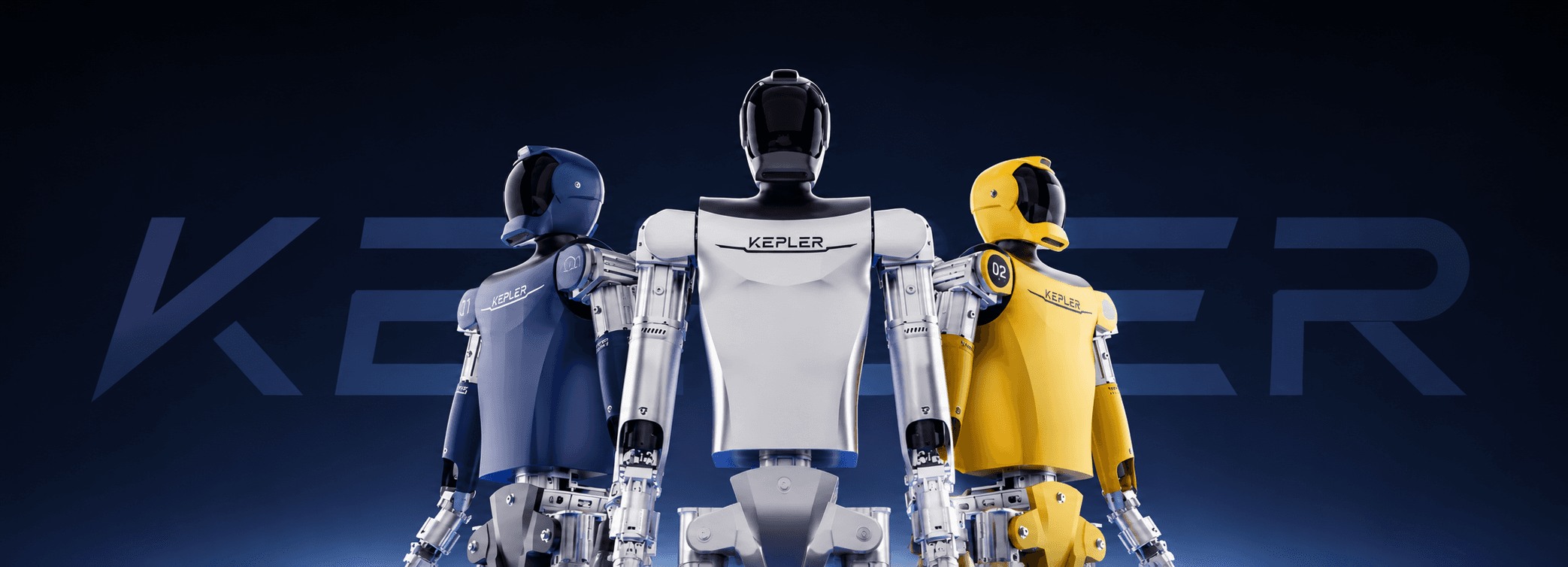

Kepler Robotics announced its IRSI-5.0 embodied intelligence model on November 24, 2026, targeting industrial workflows that require robots to coordinate multiple actions over extended periods. The Chinese humanoid developer says the system builds on NVIDIA Physical AI technologies and research collaboration with Zhejiang University’s artificial intelligence school.
The architecture brings together task orchestration, a physical world model, industrial robot control and iterative learning. Rather than treating each manipulation skill as an isolated operation, the system is designed to coordinate entire workflows and respond to changes in the production environment.
Industrial learning and validation
Kepler describes a process in which operational data is collected from physical robots, used to refine policies in simulation and subsequently validated on hardware. The company also describes mechanisms for human intervention when a robot encounters problems outside its recovery capabilities.
In a machine-loading example involving a laser cutting workstation, Kepler reported that its robot initially completed approximately 70% of the overall workflow autonomously after changes to the production cycle. Following a week of iterative training and physical validation, the company reported a 95% autonomous completion rate for the workflow.
The figures are company-reported results from a specific application rather than an independently established benchmark across industrial environments. The announcement describes the model’s intended application to industrial operations including material handling, machine tending and assembly.
Source: Kepler Robotics