
Hyundai Motor Group is putting the industrial supply chain behind Boston Dynamics’ Atlas humanoid into place, with South Korean electronics and automotive suppliers reportedly selected to manufacture its batteries, cameras and other core components. The emerging supplier network offers a closer look at how Hyundai intends to turn Atlas from a technically impressive machine into a product that can be built at automotive scale.
According to a report published October 26 by South Korea’s ETNews, Samsung SDI and LG Energy Solution have been selected to supply cylindrical batteries for Atlas. The report says Samsung SDI is expected to produce cells in Malaysia and LG Energy Solution in Georgia, while both companies have begun preparing production lines. The specific supplier allocations have not been publicly confirmed by Hyundai or Boston Dynamics.
Hyundai Mobis, which Hyundai has previously identified as a developer and supplier of Atlas actuators, will reportedly provide the full actuator package and the robot’s main head-mounted camera. ETNews also names Namuga as a camera partner, with MCNEX and Cammsys supplying cameras integrated into Atlas’s hands. Those hand-mounted sensors are intended to help the robot identify objects and perform precise manipulation tasks. The publication additionally identifies BH EVS as a charging-system supplier and NVIDIA’s Jetson Thor as the onboard computing platform.
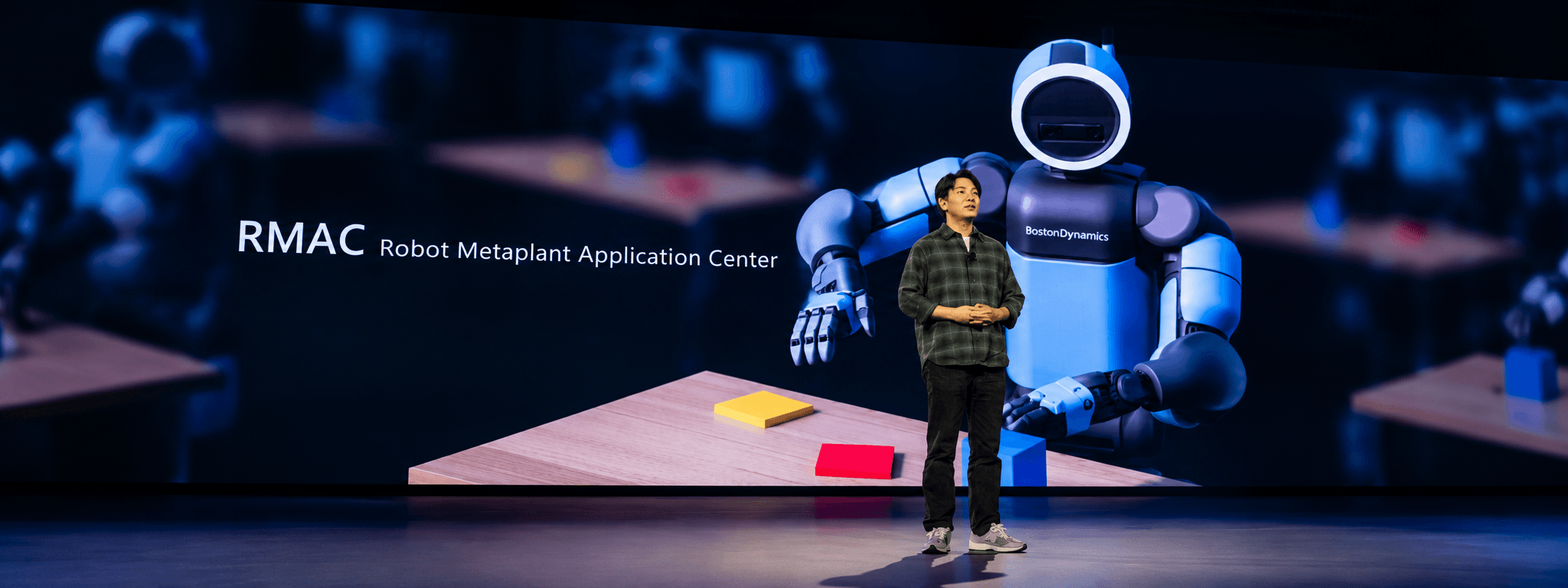
The reported selections matter because Hyundai has already set an unusually ambitious manufacturing target for an industrial humanoid. At CES in January, the group said it aimed to establish capacity for 30,000 robots annually by 2028, supported by its automotive manufacturing and supplier network. Atlas is expected to begin taking on parts-sequencing work at Hyundai’s Georgia manufacturing complex in 2028, with component assembly targeted for 2030.
Hyundai has confirmed the broader plan and Hyundai Mobis’s role in actuator development, but it has not publicly verified every supplier named in the latest report. The distinction is important: an identified supply chain is a step toward mass production, not evidence that all components are already being produced at volume.
For Boston Dynamics, the manufacturing challenge is now as consequential as the robot’s capabilities. Atlas needs reliable actuators, batteries, cameras and computing hardware that can be sourced consistently, serviced economically and assembled repeatedly. Hyundai’s established industrial network may give it an advantage in solving that less visible part of the humanoid equation.