
Humanoid robotics has entered an exciting new phase. Recent demonstrations in Beijing showed just how quickly robotic hardware is improving, with machines achieving performance levels that would have seemed unrealistic only a few years ago.
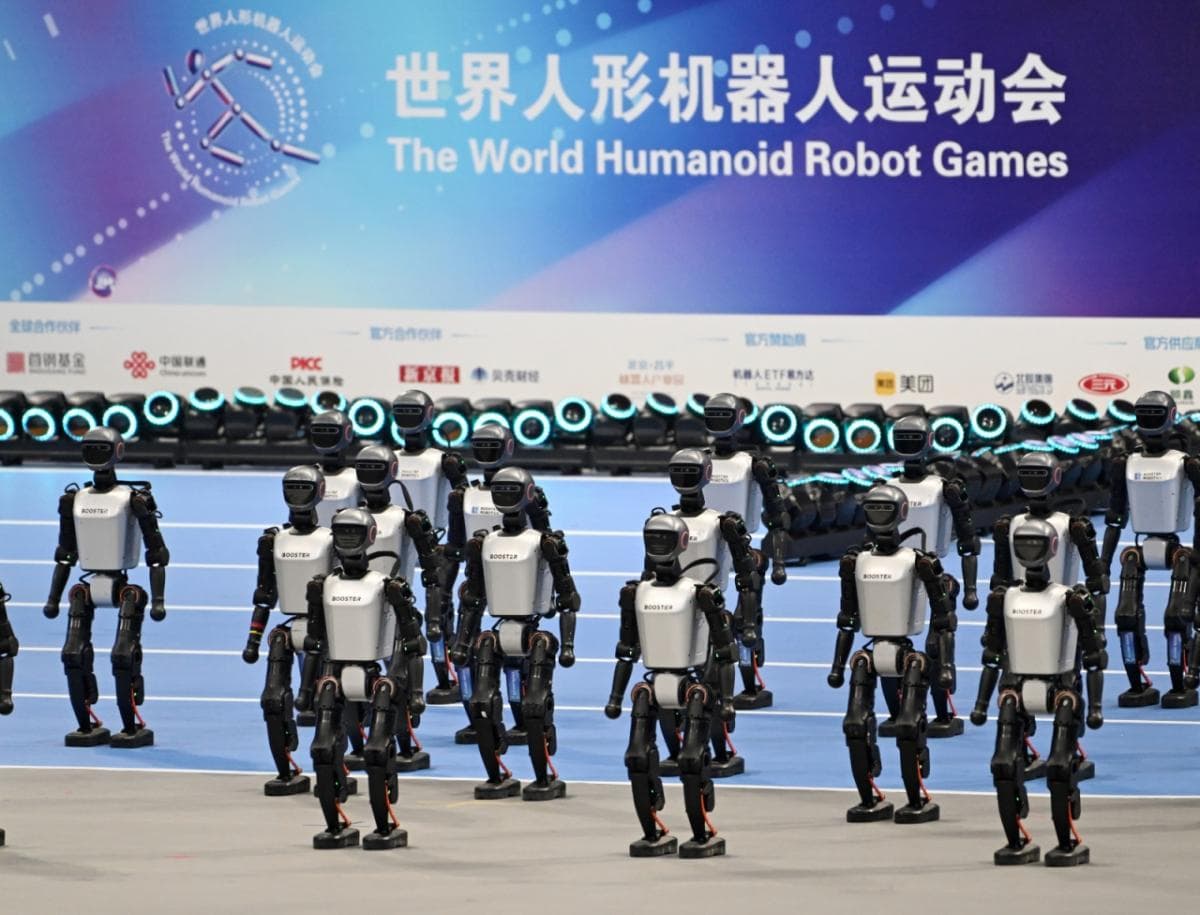
The biggest headline came from the 2026 World Humanoid Robot Games, where Tiangong Ultra ultimately completed the 100-meter sprint in 8.64 seconds, beating Usain Bolt’s 9.58-second human world record. More than 2,000 robots from 666 teams competed across 51 events, covering everything from athletics to practical tasks.
But speed is only one piece of the puzzle. The same competition exposed some of the limitations that still separate impressive demonstrations from useful autonomous machines. Several robots fell, malfunctioned, or required human intervention, highlighting the importance of balance, perception, decision-making, and safety.
This is why the next major robotics breakthrough may come from Physical AI rather than hardware alone. Robots need to understand unfamiliar environments, manipulate objects precisely, recover from mistakes, and complete tasks without constant supervision.
The industry is already moving toward these goals. Companies are investing heavily in humanoid platforms and AI systems designed to give robots greater autonomy, while real-world pilots are expanding across factories, warehouses, logistics, and other industrial environments.
The direction is becoming increasingly clear: building a robot that can move is no longer the hardest challenge. Building one that can reliably understand and act in the real world is.
The coming years could therefore be defined by the race to turn impressive robotic demonstrations into dependable machines capable of working alongside humans every day.