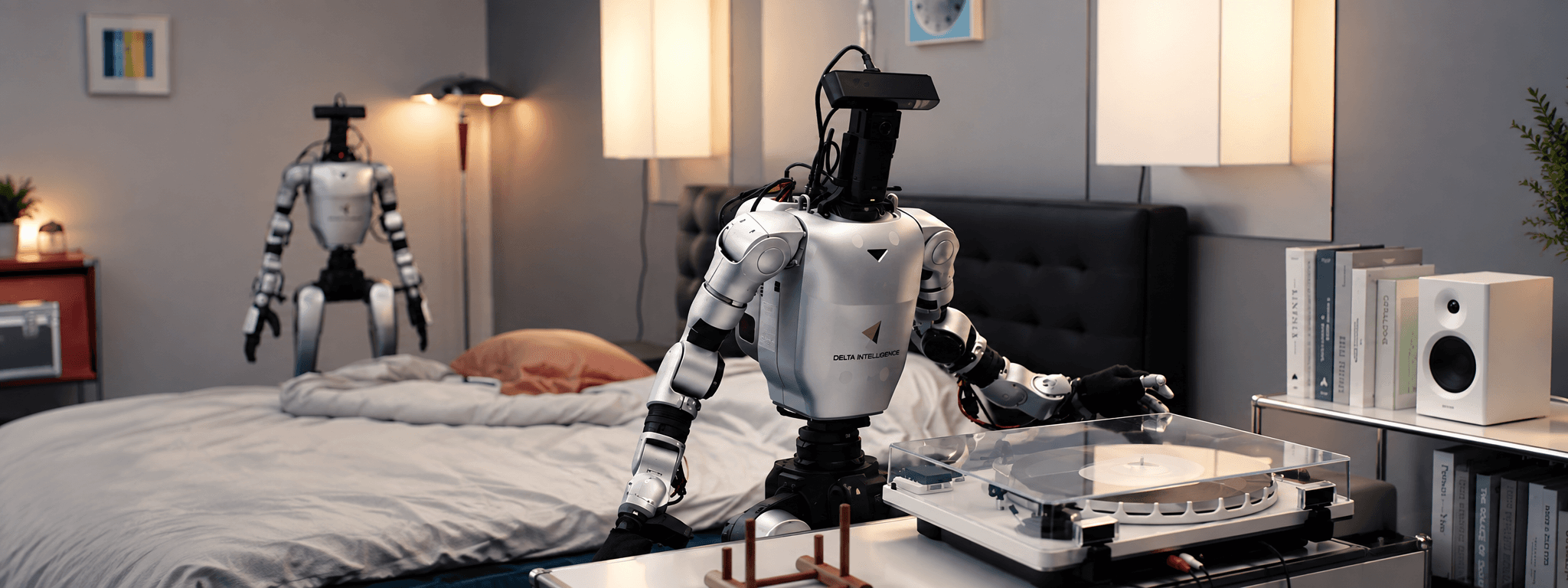

From Agility Robotics’ investor push to Atlas training on factory floors, the humanoid industry is increasingly being judged by deployment, economics, and real-world performance.
The humanoid robotics industry spent the past few years proving that machines could walk, manipulate objects, follow instructions, and operate in human-designed environments.
Now the question is changing.
Can these robots actually work at scale?
Late September has provided several signals that the sector is entering a more commercially focused phase. Humanoid companies are talking less about impressive demonstrations and more about production capacity, customer orders, factory deployments, safety, and—perhaps most importantly—whether the economics can justify widespread adoption.
Agility Robotics Steps Further Into the Investor Spotlight
Agility Robotics is becoming one of the clearest examples of that transition.
The company participated in the Evercore ADAS, AV & AI Forum in New York on September 29, continuing a run of investor-facing events following its planned public-market transaction with Churchill Capital Corp XI. Agility has also scheduled an Analyst & Investor Day for October 6, where management plans to discuss Digit 5, its technology roadmap, commercial traction, manufacturing strategy, and long-term financial opportunity. Agility Robotics
That October event could be particularly important because investors are now getting more concrete numbers to examine.
Agility says its newly unveiled Digit 5 builds on more than 65,000 hours of operational experience from the previous generation. The company also reports more than $300 million in multi-year customer orders, subject to contractual milestones, across manufacturing, warehousing, and logistics. Agility Robotics
Digit 5 also represents a significant shift in how Agility wants humanoids to operate. Rather than keeping robots separated behind traditional industrial safety barriers, the new architecture is designed for what Agility calls “cooperatively safe” work—allowing robots to operate closer to human employees while using sensors and AI-based human detection to respond appropriately.

For the humanoid industry more broadly, Agility’s upcoming Investor Day is worth watching because the conversation is likely to go beyond whether Digit works.
Investors will increasingly want to understand how quickly humanoids can be manufactured, how much customers are willing to pay, how efficiently fleets can operate, and how deployments translate into recurring revenue.
That is a very different test from producing an impressive robotics demo.
Boston Dynamics Brings Atlas Into a Real Factory Training Environment
Agility is not alone in moving toward real-world industrial validation.
Boston Dynamics recently opened its Robotics Metaplant Application Center, or RMAC, inside Hyundai Motor Group’s manufacturing campus near Savannah, Georgia.
Atlas robots are now being trained there for manufacturing-related tasks, including preparing and sequencing automotive components before assembly. Boston Dynamics describes the center as a testbed for integrating humanoids directly into Hyundai’s manufacturing operations, with plans to broaden the program and move into a larger facility in 2027.

This is significant because factories provide something AI robotics developers desperately need: real-world training data.
Physical AI is much harder than training software entirely inside a digital environment. Robots have to deal with imperfect positioning, unexpected obstacles, changing objects, human workers, balance, friction, hardware wear, and countless small variations that simulations struggle to reproduce perfectly.
Facilities like RMAC effectively become both deployment sites and data-generation engines.
The Numbers Still Show How Early Humanoids Really Are
Despite the accelerating investment, humanoids remain a very small part of the global robotics market.
New figures reported by Reuters from the International Federation of Robotics estimate that roughly 7,000 humanoid robots were sold globally in 2025 for industrial and professional-service applications. Reuters
For perspective, traditional industrial robotics operates at a vastly larger scale. Around 542,000 conventional industrial robots were installed during 2024, according to the same reporting. Reuters
That gap is important.
The humanoid industry may attract enormous valuations and attention, but commercially it is still near the beginning of its adoption curve.
Many of the humanoids sold today are also being purchased for research, development, or pilot programs rather than being deployed as full-time replacements for existing industrial systems. Reuters
That means companies such as Agility, Boston Dynamics, Figure, Unitree and others still have to demonstrate something considerably harder than technical capability:
reliable economics.
China Faces Its Own “Prove It” Moment
The same shift toward commercial accountability is becoming visible in China.
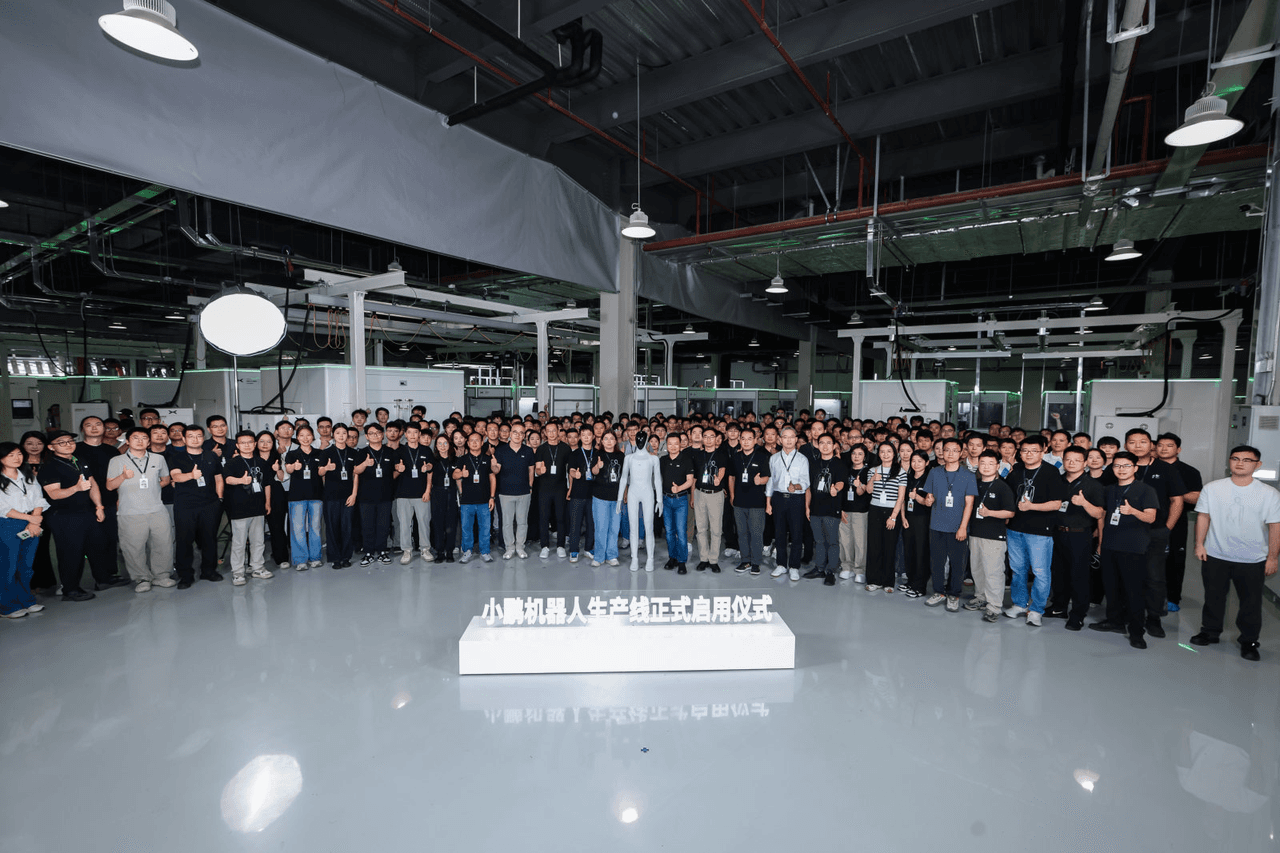
China has emerged as an enormous center for humanoid hardware, with companies including Unitree and UBTECH pushing rapid development and manufacturing. Reuters recently described China as particularly strong in robotics hardware while the United States continues to hold advantages in some advanced embodied-AI software capabilities. Reuters
But enthusiasm has also attracted regulatory scrutiny.
Chinese regulators have reportedly raised expectations for humanoid robotics companies seeking public listings, focusing more heavily on recurring revenue, narrowing losses, and genuine technological differentiation. Reuters
That mirrors what investors elsewhere are beginning to ask.
A robot being technically impressive is no longer enough. Companies increasingly need to demonstrate that customers will repeatedly pay for it.
Physical AI Is Becoming a Major AI Investment Theme
The robotics race is also starting to reshape the broader AI industry.
AMD announced this week that it intends to acquire World Labs, the spatial-intelligence company founded by computer-vision pioneer Fei-Fei Li, in an approximately $8.2 billion all-stock transaction. Reuters reported that AMD sees technologies capable of understanding and interacting with three-dimensional environments as strategically important for areas including robotics, simulation, and design. Reuters
The deal reinforces an increasingly important idea:
The next frontier of AI may not simply be better chatbots.
It may be AI systems capable of understanding and acting within the physical world.
That requires a combination of foundation models, spatial reasoning, sensors, robotics hardware, simulation, computing infrastructure, and enormous amounts of real-world interaction data.
Humanoid robots sit directly at the intersection of those technologies.
What to Watch Next
The most interesting development over the next week may therefore be Agility Robotics’ October 6 Analyst & Investor Day.
The company says leadership will discuss Digit 5’s commercial momentum, technology roadmap, manufacturing and operating model, market opportunity, and long-term financial profile. Agility Robotics
Those subjects represent exactly where the humanoid industry is heading.
The race is no longer simply about which robot walks the smoothest or produces the most impressive demo video.
The next competition is about deployment hours, safety, reliability, manufacturing capacity, customer contracts, fleet economics, and ultimately revenue.
Humanoid robotics is still early.
But the industry increasingly looks like it is leaving the laboratory—and entering its “prove it” era.