


Inside the Brains and Minds Powering Physical AI Robotics
Mercury One - 35w read →
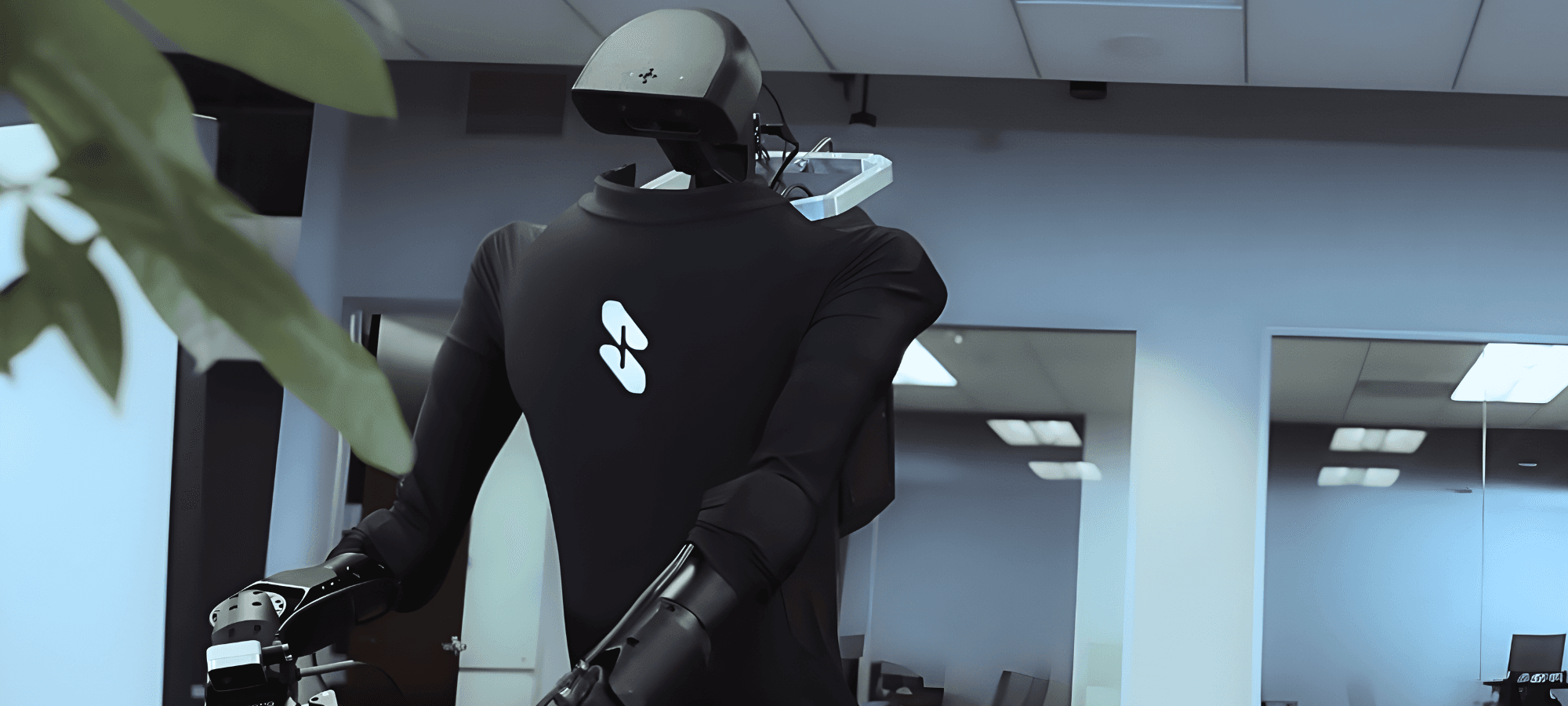
Skild AI, founded by two Carnegie Mellon robotics professors, is building a universal foundation model called the Skild Brain designed to power diverse robot bodies across industries without per-robot reprogramming. The article covers its architecture, training approach, and rapid rise toward a potential $4 billion valuation.
Skild AI is one of the few companies in the humanoid race aiming to power every robot, not just build one. Its flagship platform, the Skild Brain, is a universal intelligence layer designed to run on almost any robot body, humanoid, quadruped, or industrial arm. Backed by world-class AI researchers and top-tier investors, Skild is positioning itself as the “Android of robotics,” licensing its brain across industries to meet the growing demand for adaptable, human-capable automation.
Skild AI was founded in 2023 in Pittsburgh by Deepak Pathak and Abhinav Gupta, two Carnegie Mellon University professors with deep roots in robotics and machine learning. For more than a decade, their work at CMU’s Robotics Institute explored how robots could learn through self-supervision, curiosity-driven exploration, and large-scale simulation, methods that moved away from hand-coded instructions toward adaptable, general-purpose intelligence.
The turning point came from recognizing a bottleneck in robotics: hardware was advancing quickly, but every new robot still required years of bespoke programming. Pathak and Gupta saw an opportunity to create a single “foundation model” for Physical Intelligence, an AI brain that could transfer skills across different robot bodies and environments, much like a human can learn to ride a bike and then drive a car without starting from zero.
This idea became the Skild Brain, a model designed to integrate perception, language, and motor control into one unified system. Instead of building their own humanoid, Skild AI focused entirely on the cognition layer, training in massive simulated worlds, ingesting human demonstration videos, and refining skills through real-world deployments. By mid-2024, the concept had attracted global attention, and hundreds of millions in funding, to accelerate its development.
The Skild Brain is a large-scale foundation model for robotics, engineered to run on a wide range of embodiments: from humanoids and quadrupeds to wheeled platforms and articulated arms. It uses a two-tier control structure: a low-frequency, high-level action planner feeds into a high-frequency, low-level motor controller that outputs precise joint movements and torques.
This architecture allows robots to perform a diverse set of skills out of the box: walking on uneven terrain, climbing stairs, recovering from unexpected collisions or pushes, grasping irregular objects in cluttered spaces, and applying precise, human-safe force during manipulation. The model can also be conditioned on high-level language or visual instructions, letting an operator tell a robot to “move the blue box to the shelf” without manually programming every step.
The Skild Brain is trained using a three-part data strategy: (1) large-scale simulated environments for foundational pre-training, (2) internet-scale human video data (videos of human actions) also for pre-training, and (3) targeted real-world data fed back from deployed robots to refine and improve performance. This multi-source approach helps Skild AI build what it terms a system with “physical common sense”, the ability to perform everyday physically grounded tasks robustly, in contrast to models that only handle narrow, semantic pick-and-place actions.
Every Skild-powered robot streams performance and environment data back into the training loop, enabling continuous improvement across the entire network. A quadruped learning to navigate icy ground, for example, can indirectly improve a humanoid’s ability to handle slippery factory floors. Over time, this shared learning infrastructure aims to give robots a level of adaptability and skill transfer comparable to human generalization.
To deliver a brain that never stops learning, Skild AI is investing heavily in compute and deployment infrastructure. Through its partnership with Hewlett Packard Enterprise, NVIDIA, and STN, the company is building a dedicated “AI-factory”, a private, high-performance cloud designed for continuous model training, large-scale simulation, and low-latency inference. This setup allows robots in the field to receive real-time updates, turning every deployment into both a worker and a teacher for the Skild Brain.
Investor interest is keeping pace with this technical push. According to the Financial Times, SoftBank Group is in early talks to lead a new funding round that could lift Skild AI’s valuation to nearly $4 billion, an indicator that the market sees not just the technology, but the scale of its potential, as a cornerstone of the emerging physical AI economy.
Skild AI is one of the first companies to deliver a true foundation model for robotics, an intelligence layer that can learn, adapt, and scale across different robot bodies. By making this “brain” shared, continuously updated, and accessible to manufacturers and operators, Skild lowers the barrier to entry for advanced physical AI, allowing even smaller players to deploy highly capable machines without building AI from scratch.
Its initial focus on sectors like warehousing, inspection, and construction is strategic: these are industries where acute labor shortages and repetitive, physically demanding tasks create strong incentives for automation.
