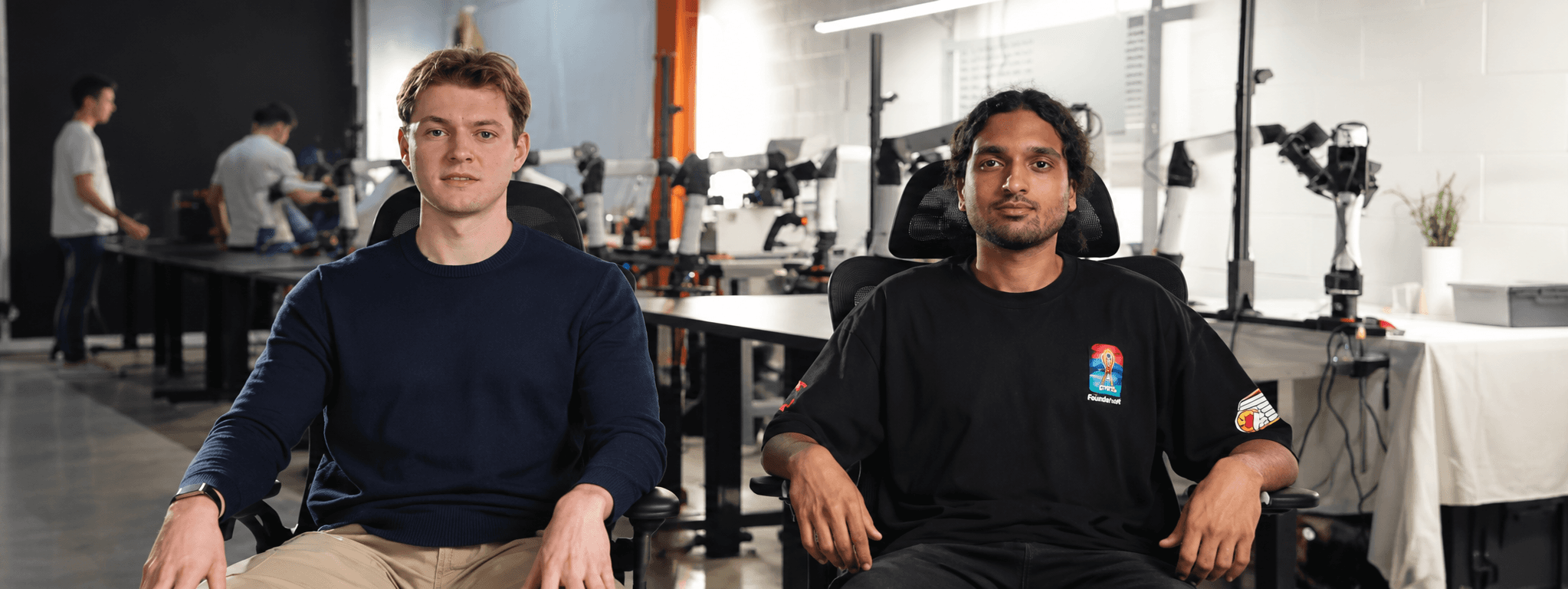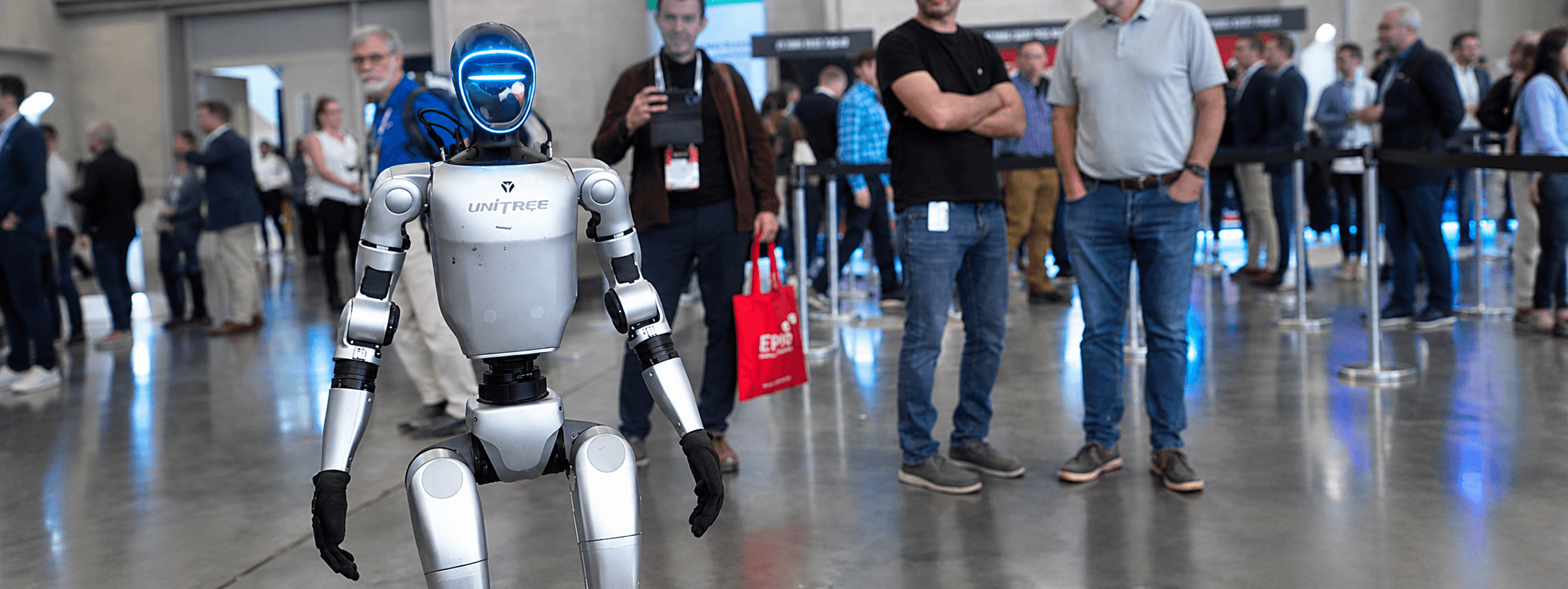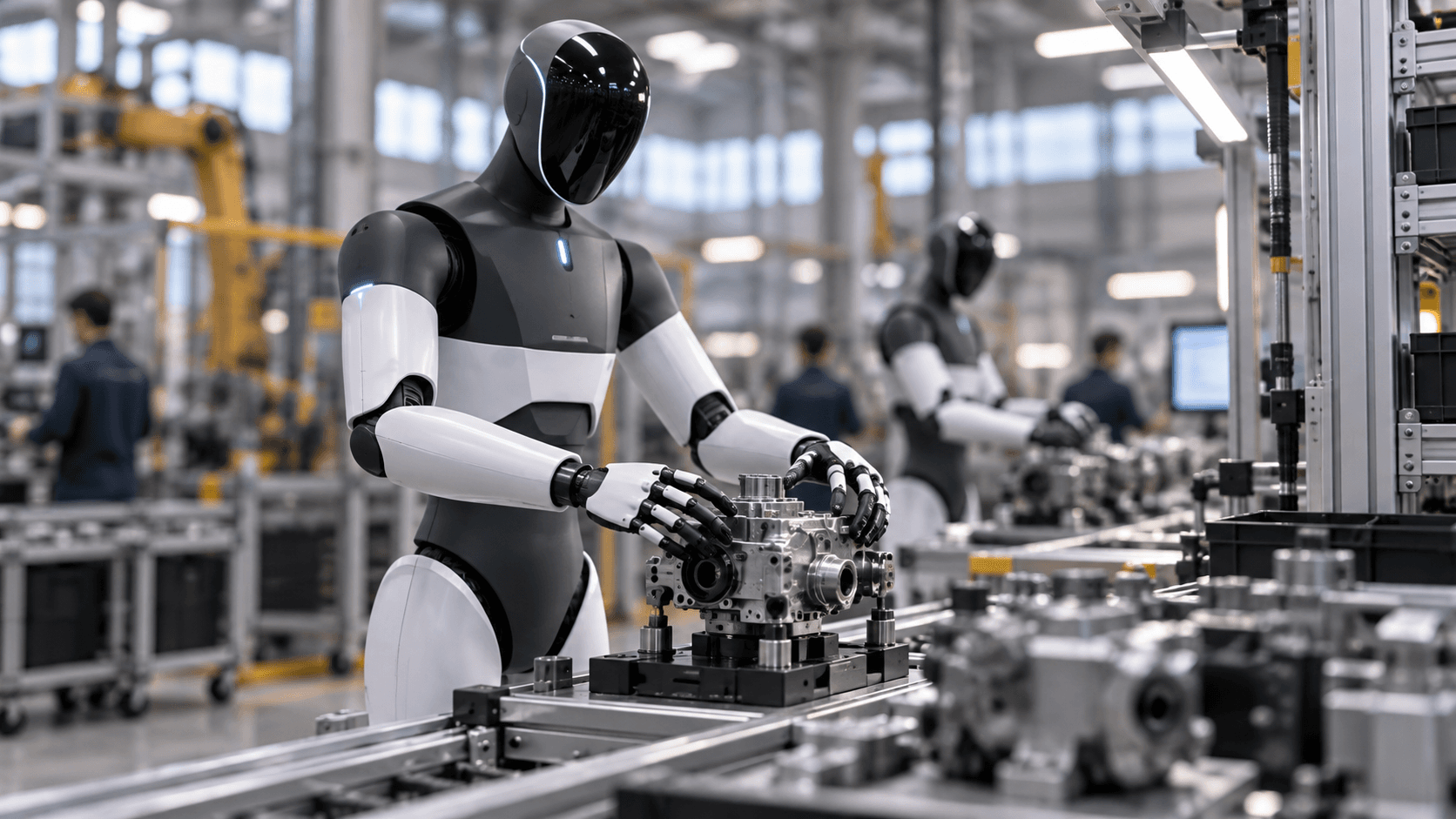

HIVE Robots and Danfoss Power Solutions are testing humanoid robots on industrial assembly lines, with the partnership focusing on one of robotics’ hardest challenges: reliable five-finger grasping.
Humanoid robots are getting another opportunity to prove themselves inside a real industrial environment.
Danish robotics company HIVE Robots has partnered with Danfoss Power Solutions to test how humanoid robots could supplement human workers on manufacturing lines.
The collaboration will focus particularly on five-finger robotic grasping, exploring whether humanoid machines can manipulate the same tools, components and objects already handled by workers without factories needing to redesign their entire environment around automation.
Why Robot Hands Matter
Walking robots tend to attract attention, but locomotion is only part of what makes a humanoid useful.
Inside a factory, the ability to reliably pick up, position and manipulate objects may be considerably more important.
HIVE describes dexterous grasping as a core focus of its development work. The company is working with five-finger robotic hands because human workplaces are already filled with tools, parts, containers and controls designed around the human hand.
This is one of the main arguments behind humanoid industrial robots.
Traditional automation can perform individual tasks extremely efficiently, but it often requires dedicated machinery, fixtures and carefully structured workspaces.
A sufficiently capable humanoid could potentially move into an existing human workstation and interact with equipment that is already there.
That flexibility is also what makes the problem difficult.
A robot must understand how much force to apply, where to place its fingers and how to adjust when an object moves, slips or appears in a slightly different position.
Testing Humanoids in Real Manufacturing
The Danfoss partnership gives HIVE an opportunity to develop those capabilities around actual industrial requirements rather than laboratory demonstrations.
Danfoss Power Solutions operates within advanced industrial manufacturing, giving the robotics company access to production tasks where humanoid systems can be evaluated alongside established automation and human workers.
According to HIVE, the project will investigate how humanoids can supplement operators on assembly lines, rather than simply treating the machines as direct replacements for workers.
That distinction reflects a broader shift in humanoid robotics.
Many early deployments are concentrating on repetitive, physically demanding or difficult-to-staff tasks where robots can work alongside existing teams.
The objective is increasingly less about demonstrating that a robot can imitate a human and more about proving that it can perform a useful task reliably enough to justify deployment.
HIVE Is Building Around Real-World Deployments
Danfoss is not HIVE’s first industrial partner.
The Danish company has previously worked with pump manufacturer Grundfos on humanoid robot skills for production and logistics environments.
HIVE has also entered a multi-year partnership with Danish retailer føtex to test humanoid robots for supermarket shelf replenishment. Those trials are designed around nighttime operation, when stores are closed and robots can work in a more controlled environment.
The company is therefore developing humanoid applications across two environments that are particularly difficult for conventional fixed automation: factories with human-designed workstations and retail stores built around human movement.
HIVE says its corporate development model combines robots, engineering support and testing infrastructure with specific tasks supplied by industry partners.
That allows robot capabilities to be developed around real jobs instead of generic demonstrations.
Europe Is Building Its Own Physical AI Ecosystem
The partnership is also another example of growing humanoid robotics activity in Europe.
While much of the attention around humanoids currently centers on companies in the United States and China, European manufacturers are increasingly experimenting with the technology inside existing industrial operations.
HIVE says its ambition is to build a European company focused on AI-powered physical work and humanoid deployments across the region.
Its strategy also highlights an important opportunity for smaller robotics companies.
They may not need to manufacture every component or develop every humanoid platform themselves.
Instead, companies can build the intelligence, manipulation systems, deployment infrastructure and services required to turn available humanoid hardware into useful workers for specific industries.
The Real Test Is Reliability
Five-finger hands could eventually give humanoid robots remarkable flexibility.
But having fingers is very different from possessing human-level dexterity.
Industrial customers will care less about whether a robot can successfully grasp an object during a demonstration and more about whether it can repeat that action hundreds or thousands of times without creating delays.
That means reliability, recovery from mistakes, safety and speed will determine whether dexterous humanoids can compete economically with both human workers and conventional automation.
The HIVE–Danfoss partnership provides another environment where those questions can be tested.
And that may ultimately be where the humanoid robotics race is decided—not on a stage, but on ordinary factory floors where robots need to perform the same physical jobs, every day, without the environment being redesigned for them.