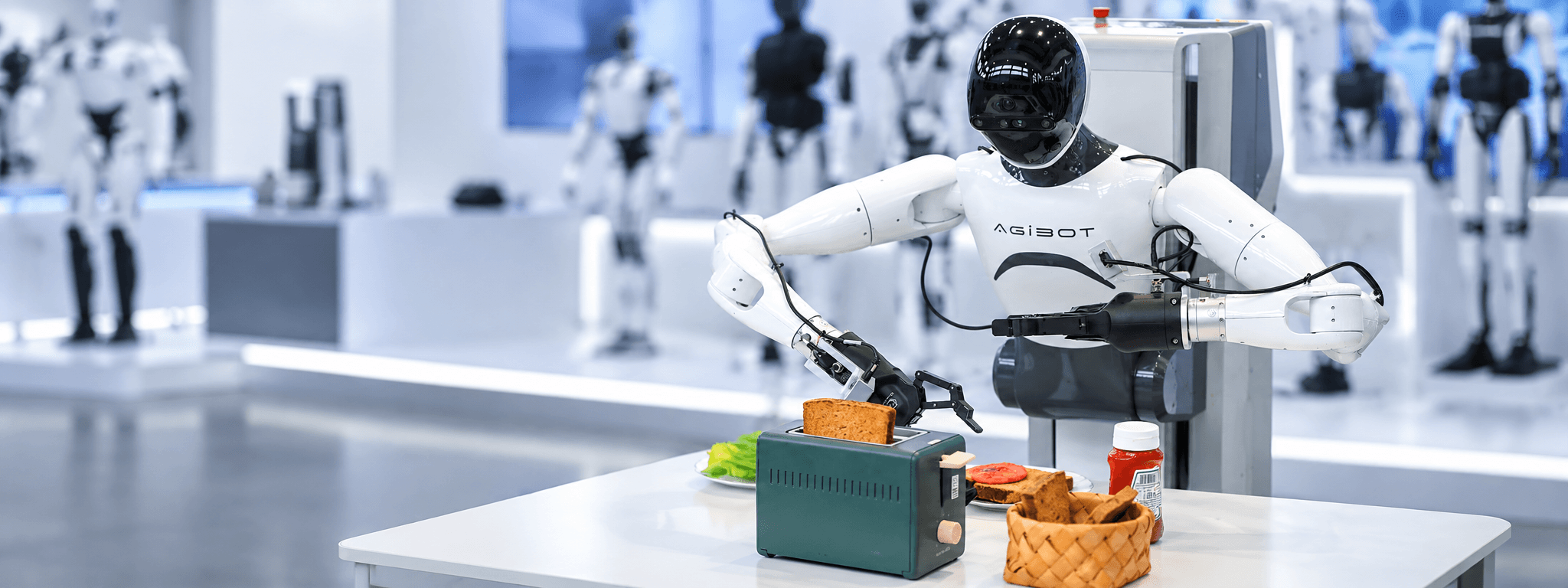

Chinese humanoid robotics manufacturer AGIBOT has unveiled a third-generation hardware architecture and new Physical AI models designed to bring movement, manipulation and human interaction into a more integrated robot platform. Presented at the company’s Innovation Day in Shanghai on October 29, the announcements also included an industrial robot, an operating system and a proposed way to measure how much useful work deployed robots perform.
The new AHA3 architecture combines the hardware foundations for locomotion, task execution and interaction. AGIBOT says the platform uses integrated computing, motor-drive technology and high-speed connectivity to reduce the complexity of coordinating these capabilities. It also introduced liquid-cooled joints for sustained operation, IP67-rated joint components and a family of dexterous hands intended for different manipulation tasks.
On the software side, AGIBOT debuted GO-3 Preview, an embodied AI foundation model built around what it calls a World Reasoning Action Model. The system is intended to let robots reason about tasks, predict the consequences of movements and adapt their actions when conditions change. The company demonstrated zero-shot and few-shot task execution and reported leading results on the RoboDojo, RoboTwin and RoboColiseum benchmarks. Those rankings are company-reported, and the announcement did not provide enough comparative data to establish performance across commercial deployments.
AGIBOT also showcased WITA-Omni 1.0, a model combining visual perception, speech, dialogue, facial expressions and physical movement. It is designed to coordinate conversation and action in real time, particularly for robots working around people.
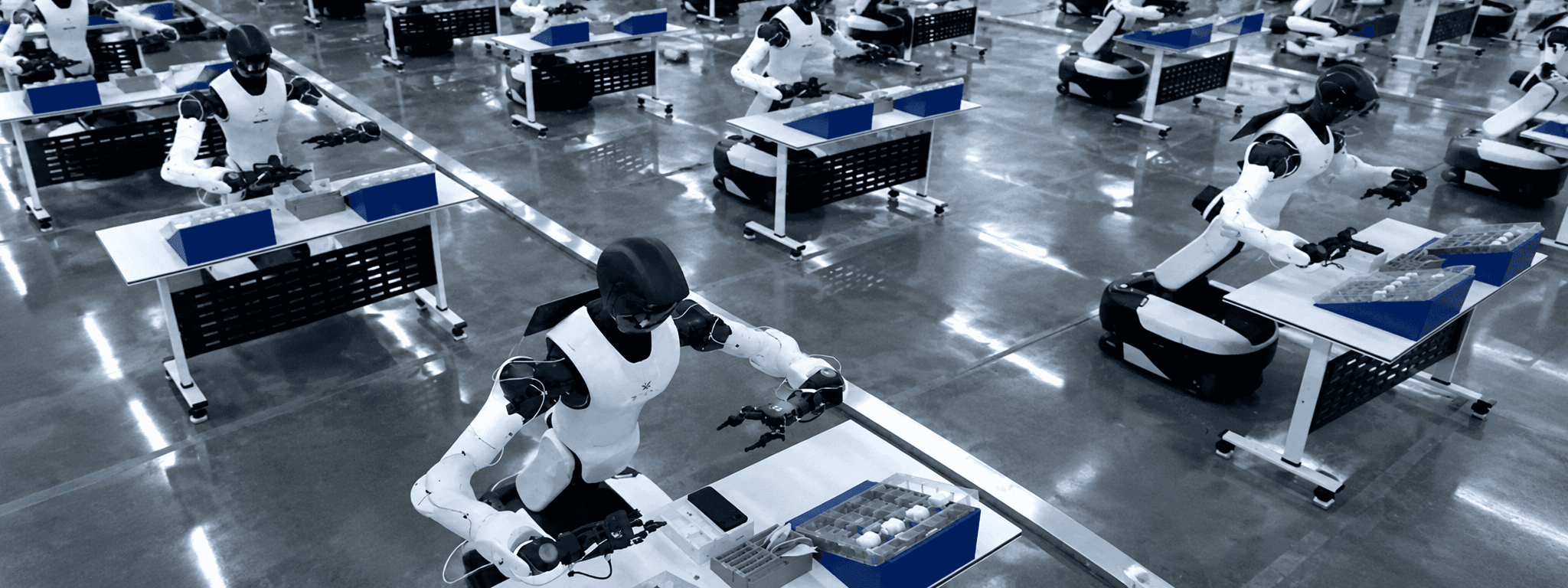
The hardware announcements included the formal presentation of G2 Max, a wheeled industrial robot with 21 degrees of freedom, a combined dual-arm handling capacity of up to 40 kilograms and an adjustable working height of 0.1 to 2.5 meters. AGIBOT highlighted applications for its G2 family in electronics production, semiconductor operations and machine tending, including work at manufacturer Longcheer.
A separate release, Link-U OS 1.0, is being trialled with selected partners, with open sourcing planned by the end of 2026. AGIBOT also proposed Worken, a productivity measure calculated from active robot numbers, autonomous operating hours and task output efficiency. It remains a proposed framework rather than an established industry standard.
Together, the releases reflect AGIBOT’s effort to connect robot hardware, AI models and operating data as it moves from demonstrations toward repeatable industrial and commercial deployments.