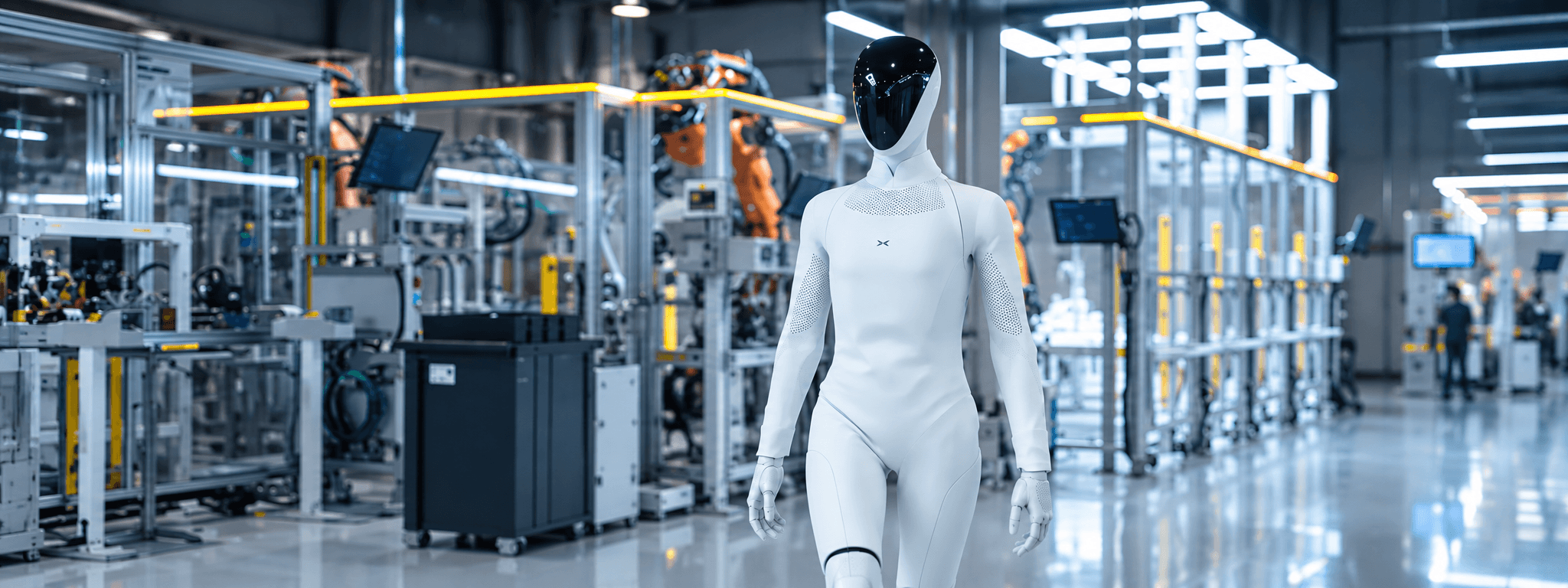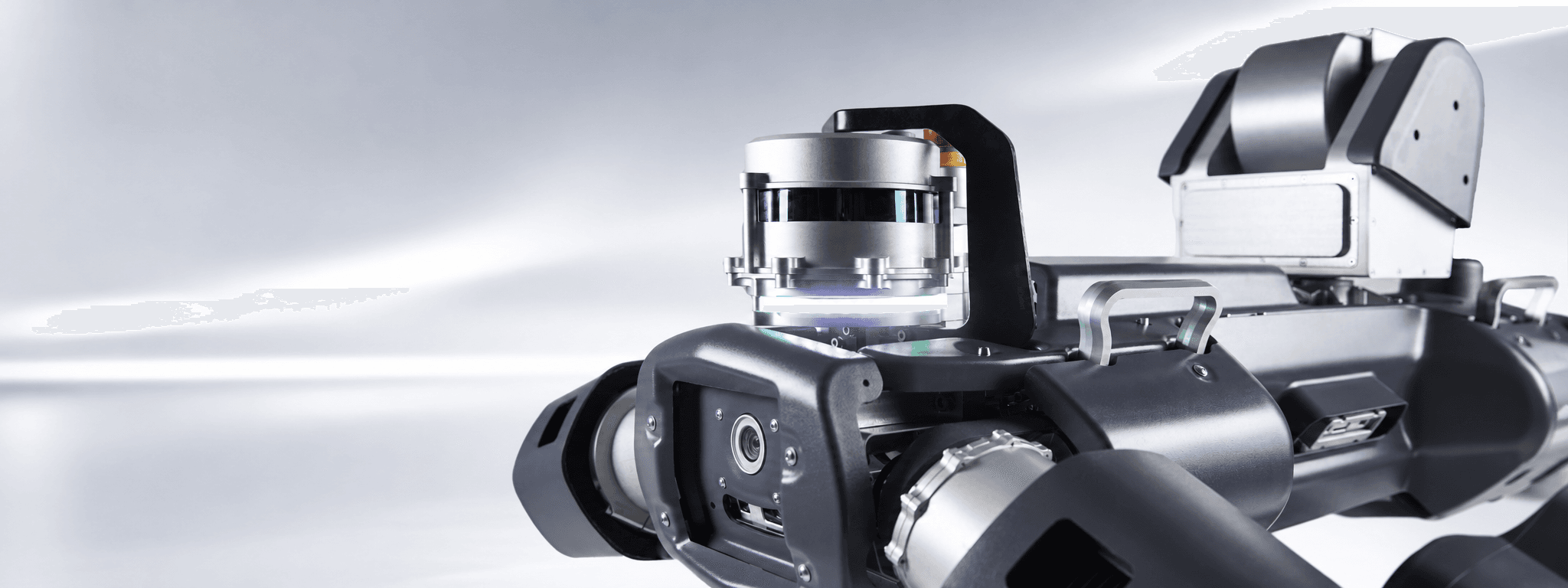

Paris-based Bleu Robotics has raised €5 million in pre-seed funding to develop software that teaches humanoid and other industrial robots new factory tasks from a handful of demonstrations. The round was co-led by Contrarian Ventures and OVNI Capital, as the startup seeks to reduce robot deployment from a months-long integration project to less than an hour.
Bleu Robotics is developing a hardware-agnostic learning system that allows an operator to demonstrate a task directly at a workstation instead of collecting large training datasets or writing task-specific code. Its approach focuses on identifying the objective and constraints behind a demonstration, then generating a control policy that can reproduce the task as objects and conditions change.
The company’s first model, Bleu_0.1, uses few-shot imitation learning. According to technical material published by Bleu Robotics earlier this year, it can learn selected tasks from fewer than ten demonstrations and run on robots that support the Robot Operating System, including industrial arms and humanoid platforms such as Unitree’s G1. The software is aimed particularly at factories with frequent product changeovers, where traditional automation may be costly to reconfigure.
Bleu reports a 98% success rate on selected ManiSkill3 simulation benchmark tasks with fewer than ten demonstrations, compared with more training examples required by the diffusion-policy baseline it tested. In a separate multi-step simulated task, the company reports 99% success. These are company-reported results from specified evaluations, not an independently established success rate across production environments.
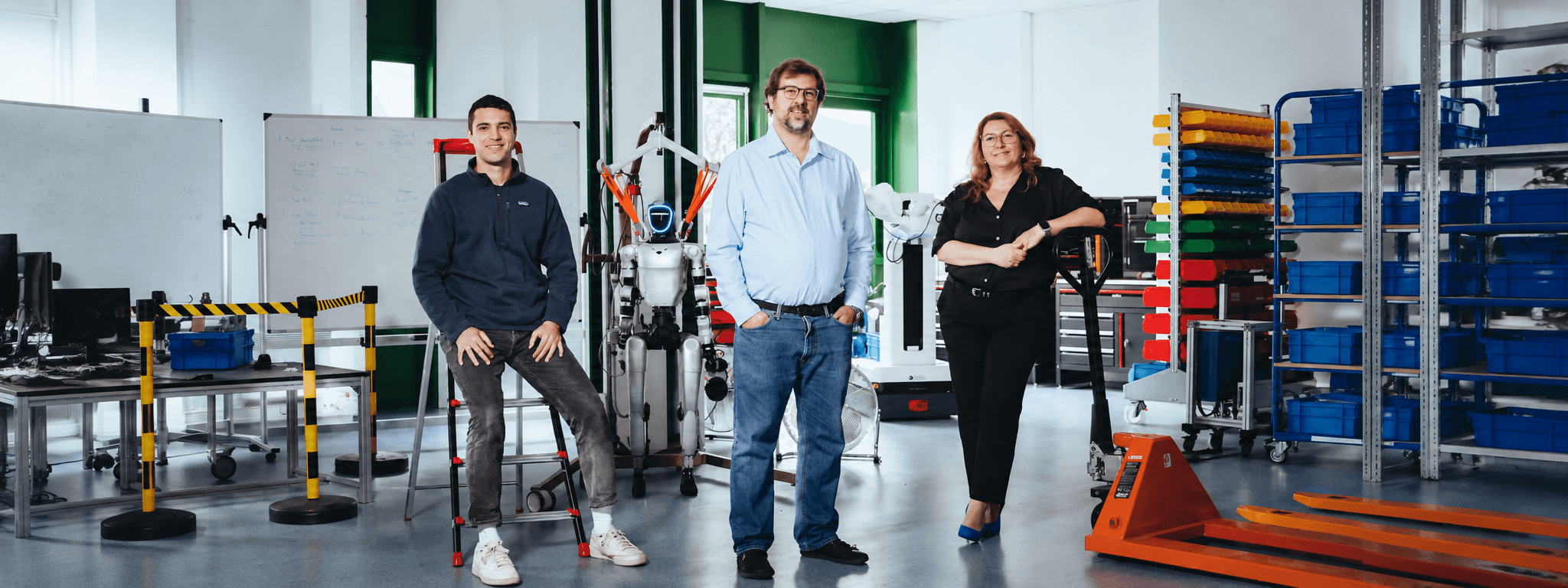
The startup was co-founded by Benoît Berkoukchi, who previously managed automotive assembly-line teams at Renault, and robotics researchers Jean-Baptiste Mouret and Serena Ivaldi. Its work draws on research in robot learning and adaptive control, with an emphasis on translating laboratory methods into factory operations.
Bleu Robotics says initial industrial deployments are underway, including work with automotive manufacturers and hygiene-paper producer WEPA. It has not disclosed the number of robots deployed, contract values or independently measured performance at those customer sites. The newly announced funding will support development of its software and industrial rollout.