PROTOTYPE
North



Sharpa develops high performance robotic hands with advanced tactile sensing. SharpaWave won CES 2026 Innovation Award with 22 DOF at human scale.
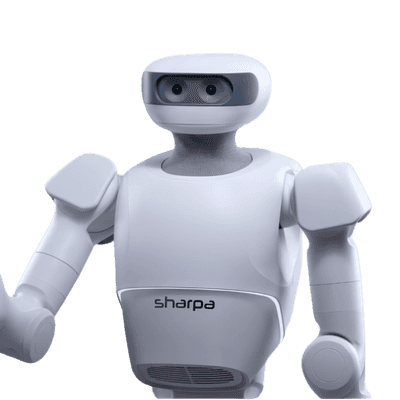
Sharpa is a Singapore-based robotics company developing dexterous manipulation systems and humanoid robots centered on tactile intelligence. Founded in 2024, the company focuses on enabling robots to perform fine manipulation by combining touch, vision, and AI rather than relying on vision alone. Its first product, Sharpa Wave, is a high-performance dexterous robotic hand designed for precision grasping and tactile sensing. Building on that foundation, the company expanded into North, a full-body humanoid robot, while developing CraftNet, a proprietary vision, tactile, language, and action model stack that allows robots to learn complex manipulation skills through multimodal interaction.
Platform maturity, autonomy stack, and flagship-system specifications in one view.
A concise view of platform maturity and deployment footprint.
Published operating specifications for the lead system.
At NVIDIA GTC 2026, Sharpa said Wave had demonstrated in-hand manipulation skills trained in Isaac Lab and transferred into the real world, while North and CraftNet were also shown as part of the full stack. Sharpa also said it had joined NVIDIA Inception and that Wave had been adopted by NVIDIA GEAR for research in data-driven robot learning.
Sharpa says it was founded in 2024 as an AI robotics company focused on ultra-high-performance robots and core components for future general-purpose robotic applications. The companys structure already spanned Singapore headquarters, a Mountain View business center, and Shanghai manufacturing R&D.
According to Sharpa, Wave was introduced in May 2025 as a 1:1 human-scale dexterous hand with 22 active degrees of freedom and a proprietary tactile array. The company says the hand entered mass production and began shipping in October 2025, giving Sharpa a commercial hardware foothold before the broader humanoid push.
On January 19, 2026, Sharpa said its newly debuted North humanoid played autonomous ping-pong rallies, assembled windmills, dealt cards, and demonstrated robot photography at CES 2026. The company used the same moment to introduce CraftNet, its vision-tactile-language-action model for fine manipulation, showing how Wave, North, and the learning stack fit together.
At NVIDIA GTC 2026, Sharpa said Wave had demonstrated in-hand manipulation skills trained in Isaac Lab and transferred into the real world, while North and CraftNet were also shown as part of the full stack. Sharpa also said it had joined NVIDIA Inception and that Wave had been adopted by NVIDIA GEAR for research in data-driven robot learning.
Sharpa is taking a manipulation-first route into general-purpose robotics. Rather than leading with a generic humanoid pitch, it built a high-performance hand and tactile-learning stack first, then used that foundation to move up toward a full-body robot and an integrated autonomy story.