Prototype
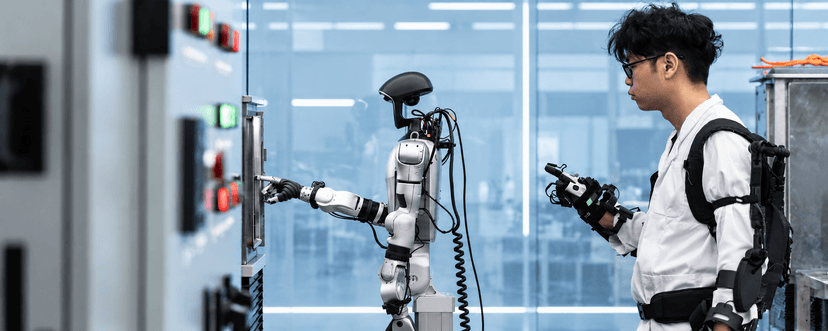
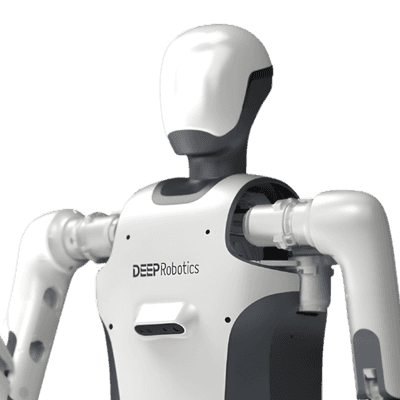
DR01
Embodied intelligence explorer designed for industrial automation and advanced robotics research.
H:170 cm
W:80 kg
D:12
S:over 1.6 m/s
L:N/A
B:N/A


Advancing intelligent mobility from industry-leading quadrupeds to next-generation humanoid robots.
DEEP Robotics is a robotics company headquartered in Hangzhou, China, founded in 2017 by researchers from Zhejiang University. The company is a global leader in quadruped robotics, developing autonomous robots for industrial inspection, emergency response, public safety, and hazardous environments. Its systems combine advanced locomotion, autonomous navigation, and AI-powered perception to operate where traditional wheeled robots cannot. Its flagship Jueying quadruped series is deployed across industries including energy, mining, infrastructure inspection, and disaster response. Building on its expertise in dynamic locomotion and embodied AI, DEEP Robotics expanded into humanoid robotics in 2024 with the introduction of the DR01 bipedal platform, extending its technology into general-purpose robotic applications.
Platform maturity, autonomy stack, and flagship-system specifications in one view.
A concise view of platform maturity and deployment footprint.
Capabilities and model layers highlighted by the company.
Published operating specifications for the lead system.
In December 2025, DEEP secured over 500 million yuan (~$70 million) in Series C funding. The company restructured as a joint-stock company in preparation for a potential IPO.
DEEP Robotics was founded in 2017 by Zhu Qiuguo and Li Chao, doctorate holders from Zhejiang University, inspired by Boston Dynamics' progress in legged locomotion.
The company built its reputation on the Jueying series, including the industrial-grade X20 launched in 2021 for power inspections, emergency rescues, and hazardous terrain. It closed Series A in 2020 and Series B in 2022.
In August 2024, DEEP unveiled the DR01 humanoid at the World Robot Conference in Beijing, 1.7m tall, walking at 1.6+ m/s, navigating stairs and slopes autonomously.
In December 2025, DEEP secured over 500 million yuan (~$70 million) in Series C funding. The company restructured as a joint-stock company in preparation for a potential IPO.