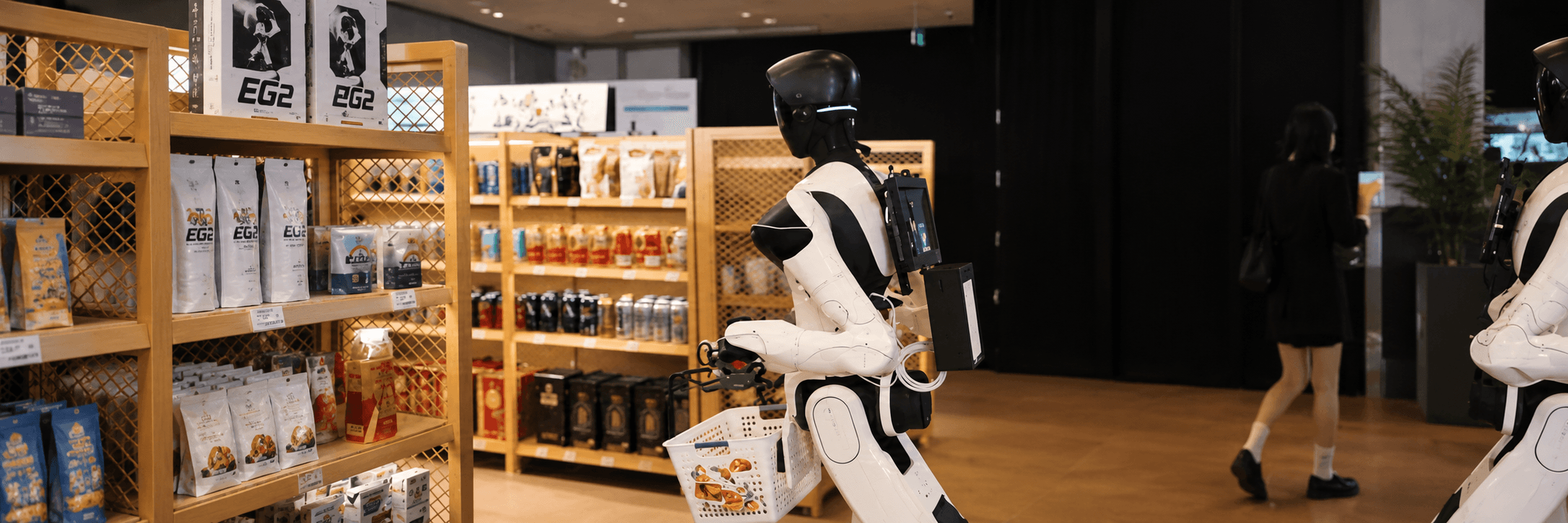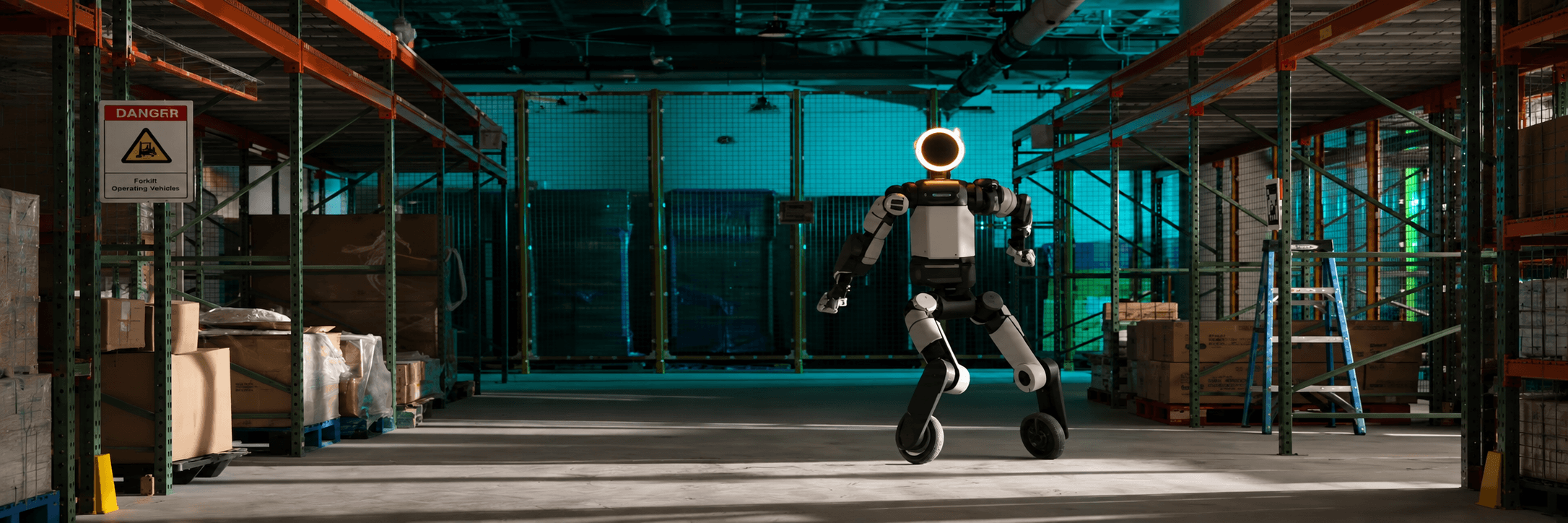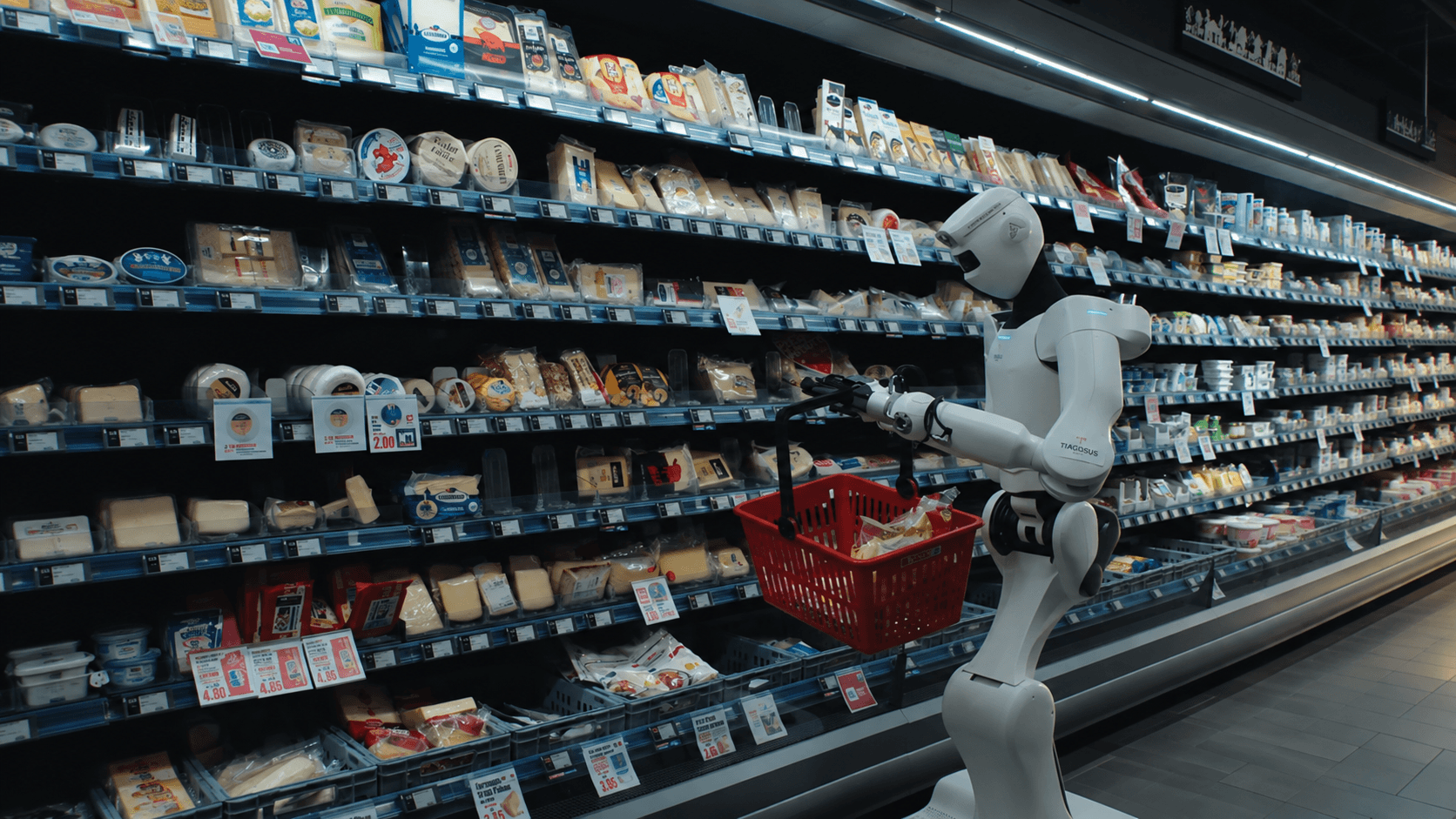

A Swiss robotics startup wants humanoid robots to take over two of the most labor-intensive jobs in supermarkets: restocking shelves overnight and picking online grocery orders during opening hours. Theseus Robotics introduced its approach publicly on November 7, presenting a wheeled, dual-arm system intended to work inside existing stores without requiring changes to their layout.
The company is part of Y Combinator’s Fall 2026 batch and operates from Zurich, with San Francisco also listed on its website. Its founders are CEO Samarth Malhotra, CTO Kristof Floch and chief product officer Ádám Weinhardt-Kovács, according to Y Combinator’s company profile.
Theseus describes its focus as automating the final stretch of retail fulfilment, from products held in a store’s backroom to the shelves and shopping baskets customers use. The same robotic platform is intended to replenish stock after closing and collect items for e-commerce orders during the day. Stock rotation and shelf-level inventory information are also part of its proposed service.
Unlike conventional warehouse automation, which often relies on purpose-built facilities, the startup is pitching a system that can navigate ordinary supermarket aisles and handle existing shelving. Its wheeled configuration prioritizes mobility on flat retail floors, while two robotic arms are intended to perform product-handling tasks.
The November 7 launch announcement describes the intended workflows, but it does not establish a large-scale commercial rollout. Secondary reports refer to a robot named Theo and a claimed handling rate of up to 400 items per hour. That performance figure has not been independently validated in sustained customer operations, and the company has not disclosed a standardized benchmark or detailed operating conditions.
Retailer pilots have been reported as planned for 2027. The startup has not publicly specified pricing, confirmed the number of customer sites, or published reliability data for uninterrupted overnight operation.
Theseus is entering a field where shelf scanning has become more established than physically moving merchandise. Its proposed system targets that remaining manual work, but the extent of its autonomy and its performance in busy, changing store environments will need to be demonstrated through customer deployments.