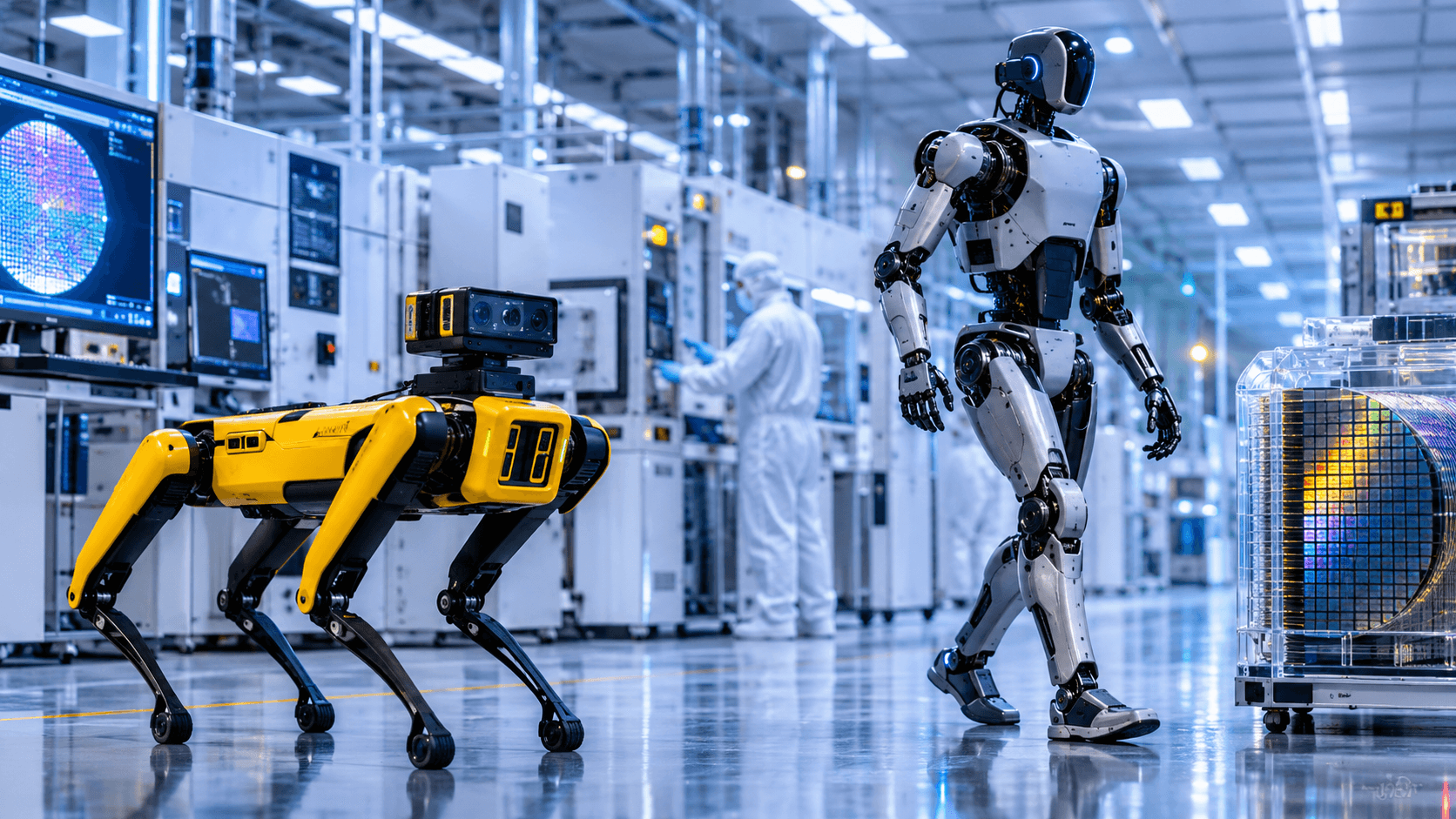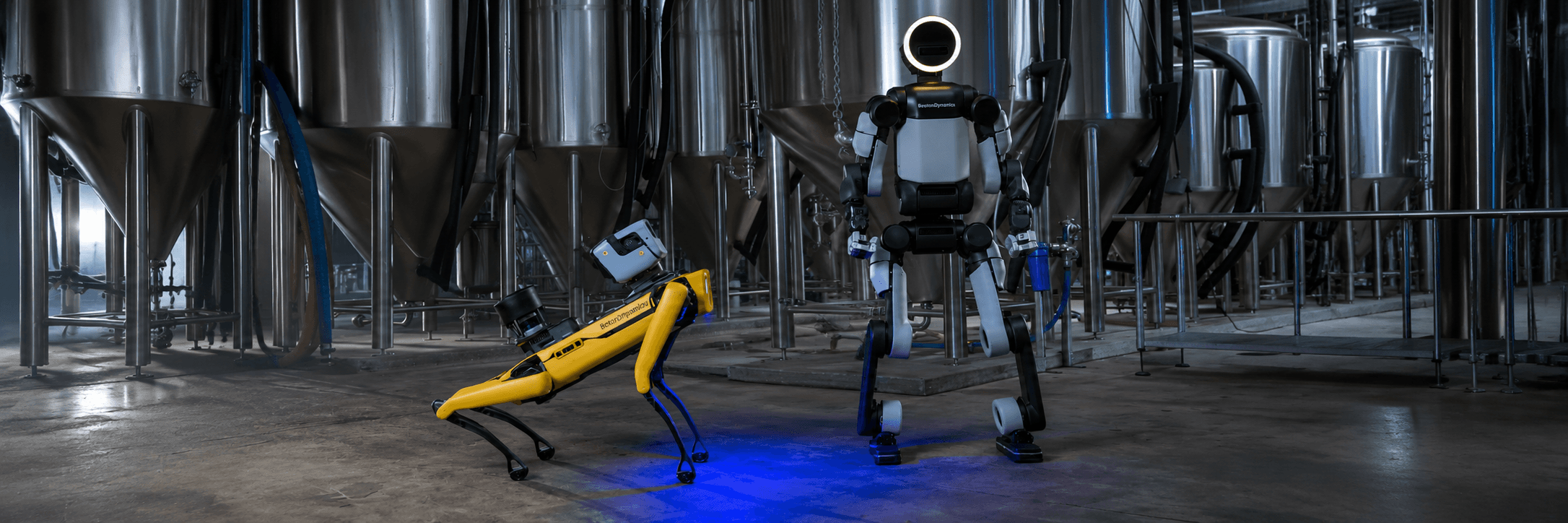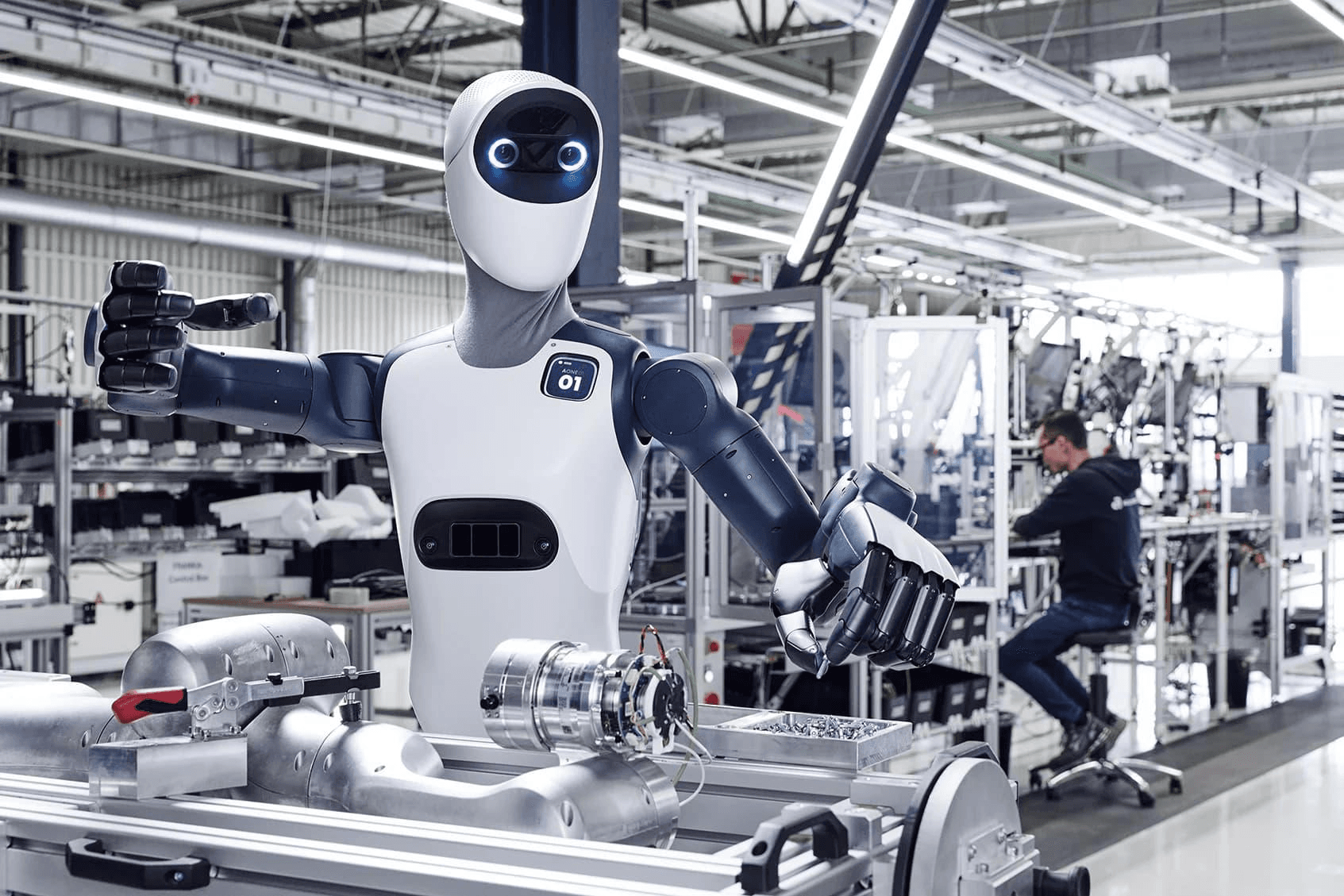

For years, the easiest way to get attention in humanoid robotics was to publish an impressive demonstration.
A robot walking across uneven ground, sorting objects, folding clothes or performing a choreographed routine was enough to show that the technology was progressing.
That bar is changing quickly.
The robotics news cycle this week has been dominated by a very different set of numbers: production capacity, deployment targets, funding rounds, recurring revenue, factory performance and commercial contracts.
The question is increasingly no longer “Can the robot do it?”
It is becoming:
“Can the company deploy thousands of them economically and make them useful every day?”
That transition—from demonstration to industrialization—is becoming one of the defining themes of robotics heading into 2027.
Humanoids Are Entering the Production Race
One of the clearest signals came from a new J.P. Morgan outlook published this week.
The bank estimates that annual U.S. humanoid robot production could reach roughly 300,000 to 400,000 units by 2030, rising toward approximately 1.5 million units by 2035.
The forecast is being driven by growing interest from manufacturing, logistics and warehousing companies looking to automate repetitive physical work.
Those figures remain projections rather than guaranteed production numbers, but they show how dramatically expectations around humanoids have changed.
The industry is no longer being modeled purely as an experimental robotics category.
It is increasingly being modeled as a manufacturing industry.
And that creates an entirely different set of challenges.
J.P. Morgan identified several potential bottlenecks—including robotic hands, actuators, AI systems and production capacity itself. The firm estimates the market for important components such as motors, actuators and machine-vision systems could approach $30 billion by 2035.
That means some of the biggest opportunities in humanoid robotics may not initially sit with the companies building complete robots.
The companies supplying their joints, sensors, cameras, motors, batteries and computing systems could become just as important.
Agile Robots Raises $500 Million to Scale Physical AI
Capital is already moving toward companies trying to solve that production problem.
Germany-based Agile Robots announced this week that it raised $500 million in Series F financing at an $8.5 billion valuation.
SoftBank led the round, with NVIDIA, Hitachi and other investors participating. The financing brings the company’s total invested capital to approximately $2 billion.
What makes the announcement interesting isn’t simply the valuation.
Agile Robots already says it has deployed more than 20,000 industrial robotic solutions across industries including automotive, electronics and logistics.
Earlier this year, the company also opened a production facility near Munich capable of producing as many as 10,000 legged and wheeled humanoid robots annually.
The latest capital will support additional manufacturing capacity and expansion into the United States.
That points toward one of the biggest changes happening across Physical AI.
Robotics companies are beginning to build infrastructure for volume, rather than only laboratories for research.
A company capable of building an excellent humanoid prototype is one thing.
A company capable of repeatedly manufacturing thousands of reliable machines, servicing them and deploying them into customer operations is a very different business.
GXO and Apptronik Put Apollo on a Path Toward 1,000 Robots
Perhaps the clearest commercial signal this week came from logistics giant GXO and humanoid developer Apptronik.
On November 12, the companies announced an expanded partnership involving Apptronik’s Apollo humanoid.
Beginning in 2027, Apollo will undergo additional trials in live warehouse environments across tasks including picking, moving cases and totes, packing and sortation. The robots will be evaluated against defined productivity, safety and operational KPIs.
If those deployments meet the required benchmarks, GXO and Apptronik intend to work toward a potential global rollout of up to 1,000 Apollo robots over four years, with initial deployment expected in North America in late 2027.
The planned commercial structure is also notable.
Rather than requiring customers to simply purchase humanoids outright, the companies expect to use a Robotics-as-a-Service, or RaaS, model.
For robotics adoption, that could be significant.
A warehouse operator may be much more comfortable paying for robotic capacity as an operating expense than making a large upfront purchase of unfamiliar machines.
It also shifts part of the responsibility for uptime, maintenance and technology upgrades toward the robotics provider.
In other words, the winning humanoid business model may eventually resemble cloud computing more than traditional industrial equipment.
Customers may care less about owning the robot itself and more about buying reliable robotic labor.
Physical AI Is Moving Into Heavy Industry
The humanoid race gets most of the headlines, but another major robotics story this week shows that Physical AI doesn’t necessarily need a human-shaped body.
Path Robotics announced a $300 million Series E financing at a $2.45 billion valuation on November 10.
The company focuses heavily on autonomous welding and manufacturing systems and says its annual recurring revenue has increased 17-fold over the past 18 months as deployments expand across industrial customers.
Path’s strategy is particularly interesting because welding represents exactly the kind of work where robotics can create immediate economic value.
It is physically demanding, requires substantial skill and is difficult to automate in environments where every workpiece isn’t perfectly identical.
Path is also pushing its technology into industries such as shipbuilding, where the size and complexity of structures make traditional fixed robotic cells difficult to use.
The broader implication is important.
The future of robotics may not be dominated by a single robot shape.
Humanoids may work particularly well in environments originally designed around people, while specialized mobile robots, quadrupeds and robotic arms dominate tasks where a human body isn’t necessary.
The common layer across them is increasingly Physical AI—machines that can perceive their surroundings, adapt to variation and perform useful work without every movement being manually programmed.
ASUS Takes a Different Approach: Start With One Real Job
One of the most interesting announcements of the week came from an unexpected robotics company: ASUS.
On November 13, ASUS detailed the development of Gallop, its first humanoid robotics platform.
But instead of beginning with a general-purpose robot demonstration, ASUS is starting with a very specific factory workstation.
Gallop is learning to pack motherboard accessories inside an ASUS group electronics manufacturing facility.
The task involves 15 small components and takes roughly 20 seconds per motherboard. ASUS says its target is for the robot to reach 99.5% task success within the same 20-second window expected from a human worker.
That approach says a lot about where robotics development may be heading.
The robot doesn’t need to immediately perform hundreds of jobs.
First, it needs to perform one economically useful job extremely reliably.
ASUS says Gallop learns partly by observing experienced workers, practicing variations in simulation and receiving guidance through VR-based teleoperation. Data generated while the robot works can then feed back into additional training.
Customer pilots are planned for 2027, with broader market availability targeted for the second half of 2028.
The company’s philosophy is refreshingly practical.
A demonstration proves that a robot can perform a task once.
A factory requires the robot to perform that task correctly every day.
That difference may eventually separate successful robotics companies from impressive research projects.
The Robotics Market Is Starting to Mature
Taken together, this week’s developments reveal something larger than any individual funding round or deployment announcement.
Robotics is beginning to develop the characteristics of a real industrial ecosystem.
There are robot manufacturers.
There are AI-model developers.
There are component suppliers.
There are companies generating training data.
There are factories being constructed specifically to produce robots.
There are customers establishing operational KPIs.
There are subscription-style business models emerging.
And there is increasingly large-scale institutional capital willing to fund the companies trying to connect all of those pieces.
The next stage will therefore be considerably less forgiving than the demonstration era.
A humanoid that works beautifully for five minutes on camera may still fail commercially if it is expensive to manufacture, difficult to maintain or unreliable during an eight-hour shift.
Companies will increasingly have to prove uptime, safety, productivity, cost savings and return on investment.
That is ultimately healthy for the sector.
The robotics industry doesn’t need more proof that impressive machines can be built.
It now needs proof that those machines can become productive infrastructure.
And as of November 2026, that race appears to be accelerating.