Key Takeaways
- Advertising robots bring vehicle launches and offers to visitors instead of relying only on fixed signage.
- Interactive model information helps shoppers narrow their choices before requesting a drive.
- Test-drive enquiries need a clear next step, such as a staffed handoff or connected booking workflow.
- Sales consultants remain essential for confirming appointments, answering complex questions, and closing sales.
- Dealerships should measure enquiries, confirmed appointments, and completed drives separately.
Introduction
A busy Saturday at a dealership explains why Advertising Robots for Automobile Showrooms are drawing attention. A family arrives while one consultant explains financing, another accompanies a test drive, and a third speaks with a returning customer. The family notices a new SUV but cannot immediately find someone to explain its variants. After browsing, they leave without requesting a drive.
The problem isn’t a lack of interest. It is the gap between a visitor becoming curious and someone helping that visitor take the next step. Interactive, mobile advertising can keep information and offers within reach while consultants focus on conversations needing their expertise.
The aim isn’t to automate the entire car purchase. It is to help shoppers move from curiosity to a specific enquiry and make it easier for employees to follow up. For dealership owners, the question is simple: how many visitors showed genuine interest in a vehicle but left without asking for a test drive?
That missing step deserves attention before any new advertising investment.
Why Do Car Showrooms Miss Potential Test-Drive Enquiries?
Showrooms can attract visitors yet struggle to turn footfall into enquiries. Customers have different budgets, compare models, and need answers before committing to a test drive. During busy periods, consultants cannot engage everyone at once.
In its India CX Report 2025, KPMG identifies pre-purchase assessment as an important part of brand perception and ease of taking a test drive as a key purchase-experience factor.
Early engagement matters. Useful model information and clear next steps can encourage an enquiry. Companies such as Kody Robots, an Indian robotic company, develop autonomous systems that can support these routine showroom interactions alongside employees.
How Do Advertising Robots for Automobile Showrooms Generate Test-Drive Enquiries?
The process connects advertising, vehicle discovery, and enquiry collection.
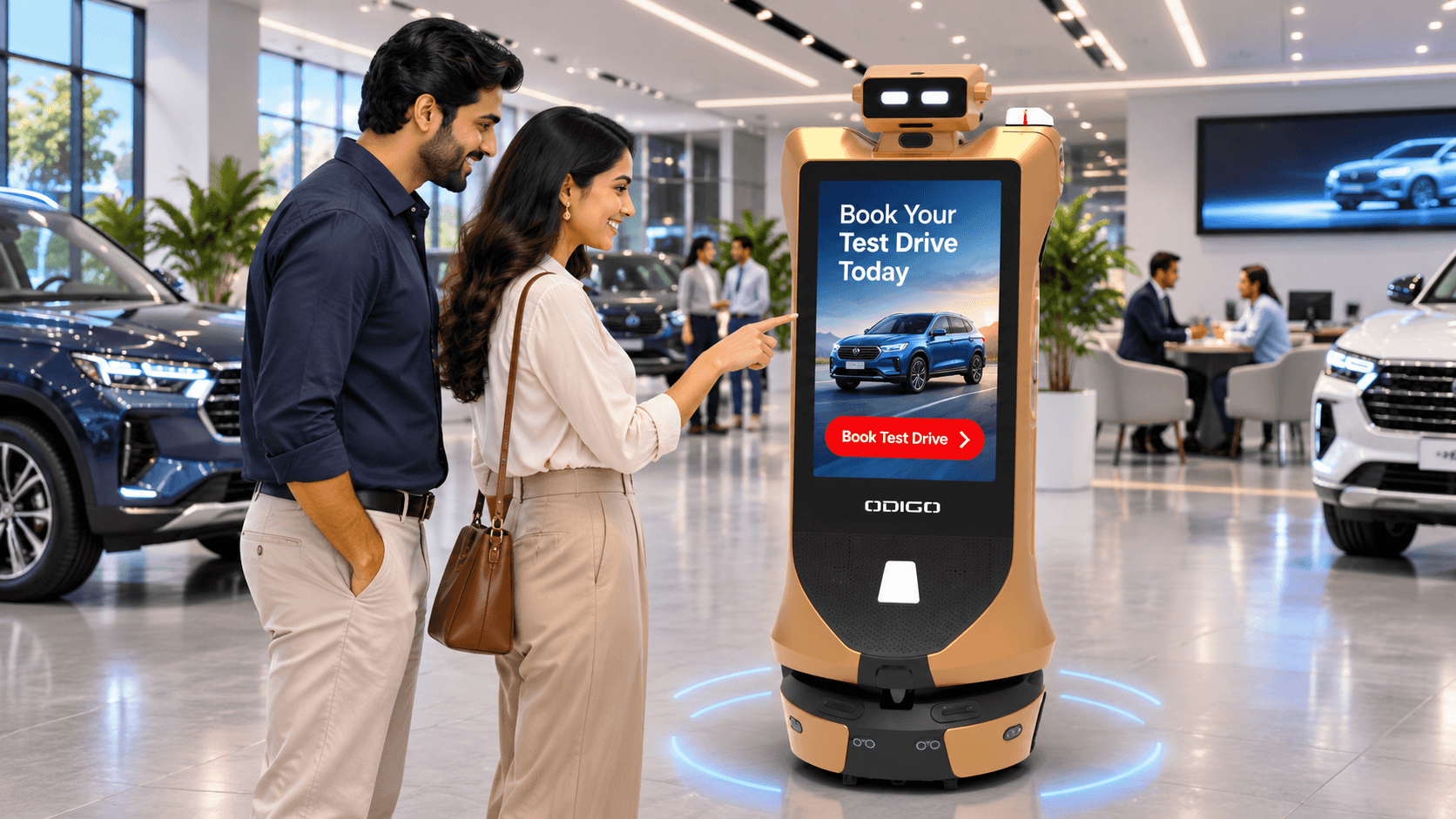
First, attract attention. A mobile advertising robot displays launch videos, exchange offers, and featured models in approved showroom zones. Unlike fixed signage, it can carry campaigns across the floor.
Next, answer buying questions. Interactive robots for car showrooms can present vehicle features, variants, and available promotional details. For example, an electric vehicle shopper may review range and charging information before speaking to a consultant.
Then, invite an action. A clear “Request a Test Drive” prompt can direct an interested visitor to a salesperson, a QR-linked form, or a booking process configured by the dealership. The advertising screen itself should not be mistaken for a confirmed appointment.
Finally, hand over the enquiry. With an appropriate lead-capture and customer relationship management (CRM) setup, the sales team can receive the visitor’s chosen model, contact details, and requested follow-up. Staff check availability and confirm appointments.
That’s how advertising robots generate test-drive enquiries: they simplify the move from vehicle discovery to expressed interest.
How Do Robots Help Automobile Showrooms Attract Customers?
At the entrance, an advertising robot can introduce the latest campaign while visitors decide where to go. Near a featured car, interactive screens can explain important features and encourage questions.
In waiting areas, accompanying visitors may notice upgrades or second-vehicle options. During launches, approved messages remain visible without interrupting consultants’ demonstrations.
Such smart advertising solutions for car dealerships work best with current offers, vehicle availability, and accurate campaign information.
What Should Dealers Measure to Know Whether It Works?
More screen views do not automatically mean more test drives. Dealerships should distinguish between campaign delivery, visitor interactions, test-drive requests, confirmed appointments, and completed drives.
Track the share of interactions becoming enquiries and the share of enquiries becoming confirmed drives. Compare pilot results against similar days and visitor levels.
Customer assistance robots for automobile showrooms deliver the most useful business information when staff can see where enquiries progress and where they stop. Use the findings to adjust campaigns, placement, and follow-up.
Conclusion: Make Every Interested Visit Easier to Act On
The biggest benefit of advertising robots in car dealerships isn’t simply more noticeable advertising. It is helping visitors progress from vehicle discovery to a test-drive conversation.
Connect interactive content, enquiry collection, and human follow-up to make better use of existing footfall.