
The products were unveiled during a joint launch event with FF EAI Robotics in October, alongside new development tools intended to make Physical AI experimentation more accessible.
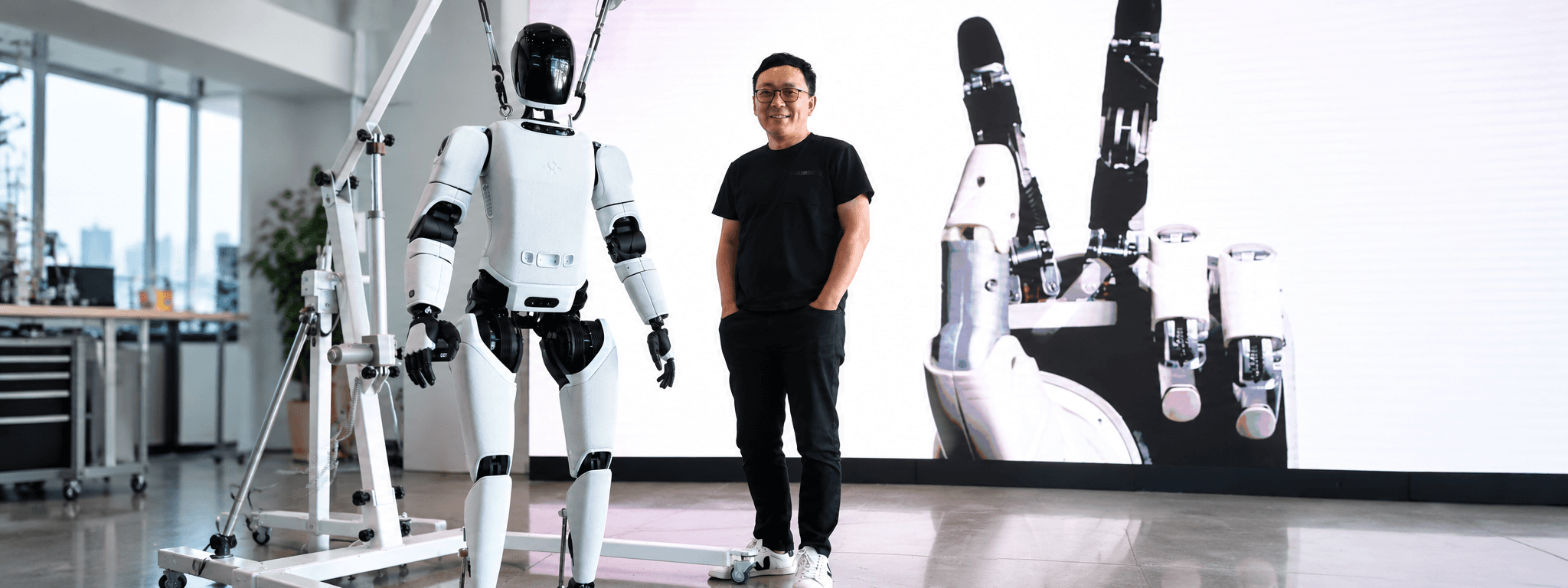
FF Nova is a compact bipedal humanoid with 20 degrees of freedom, capable of walking, turning, gesturing and recovering after a fall.
Its hardware includes LiDAR, depth sensing, wide-angle cameras and a microphone array. The robot can operate on two legs or use a detachable wheeled base for navigation.
Faraday Future is positioning Nova as a development platform rather than a finished household assistant.
It supports ROS 2, an open software development kit and simulation-to-real workflows that allow developers to train robotic behaviours before transferring them to physical hardware.
The company has also introduced a reinforcement-learning developer programme using NVIDIA Isaac technologies.
Nova’s initial release is limited to 100 units for invited developers and educational institutions. Faraday Future says the first 20 units are ready for immediate delivery, although completed shipments have not been independently confirmed.
The smaller Nova Mini takes a different approach.
Standing 34.9 centimetres tall and weighing approximately 940 grams, the educational humanoid features 17 joints and supports programmable movements, voice commands and block-based coding.
It is designed for children and teenagers learning robotics through hands-on experimentation.
The $299 robot can also be paired with a $499 educational curriculum covering programming, motion control and introductory Physical AI concepts.
Both products arrive as Faraday Future reorganizes its robotics operations through a proposed $200 million transaction with FF EAI Robotics.