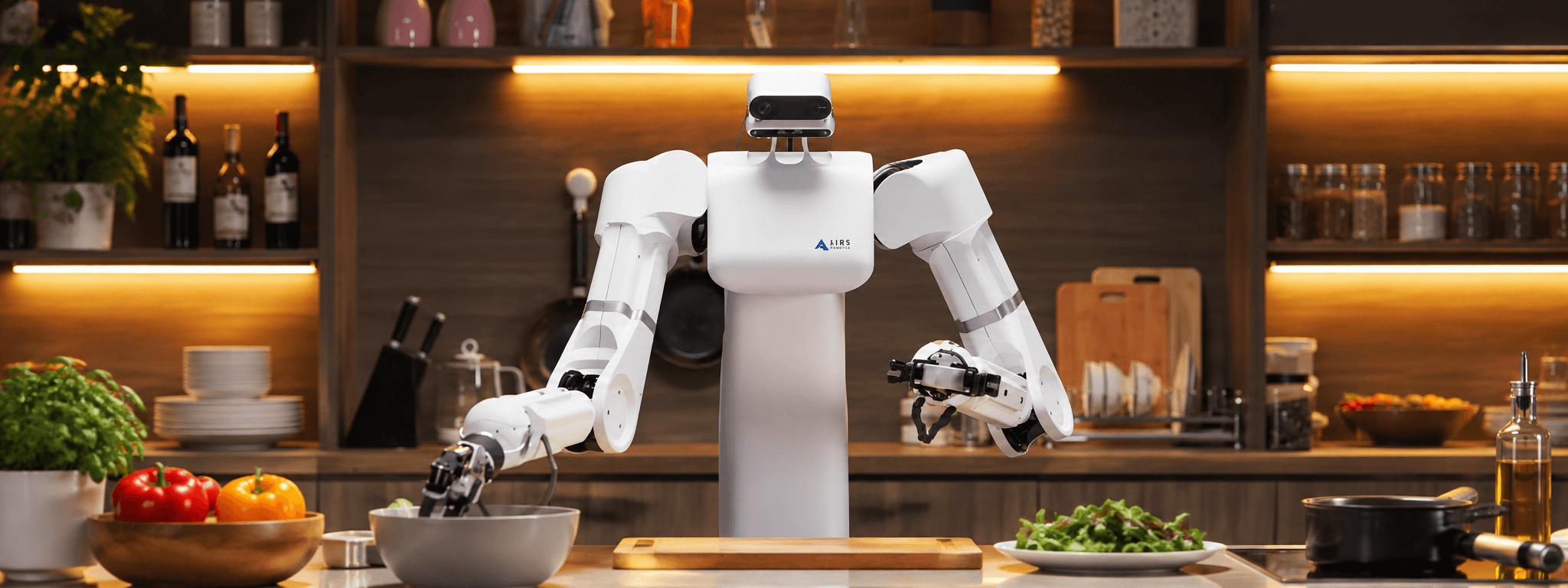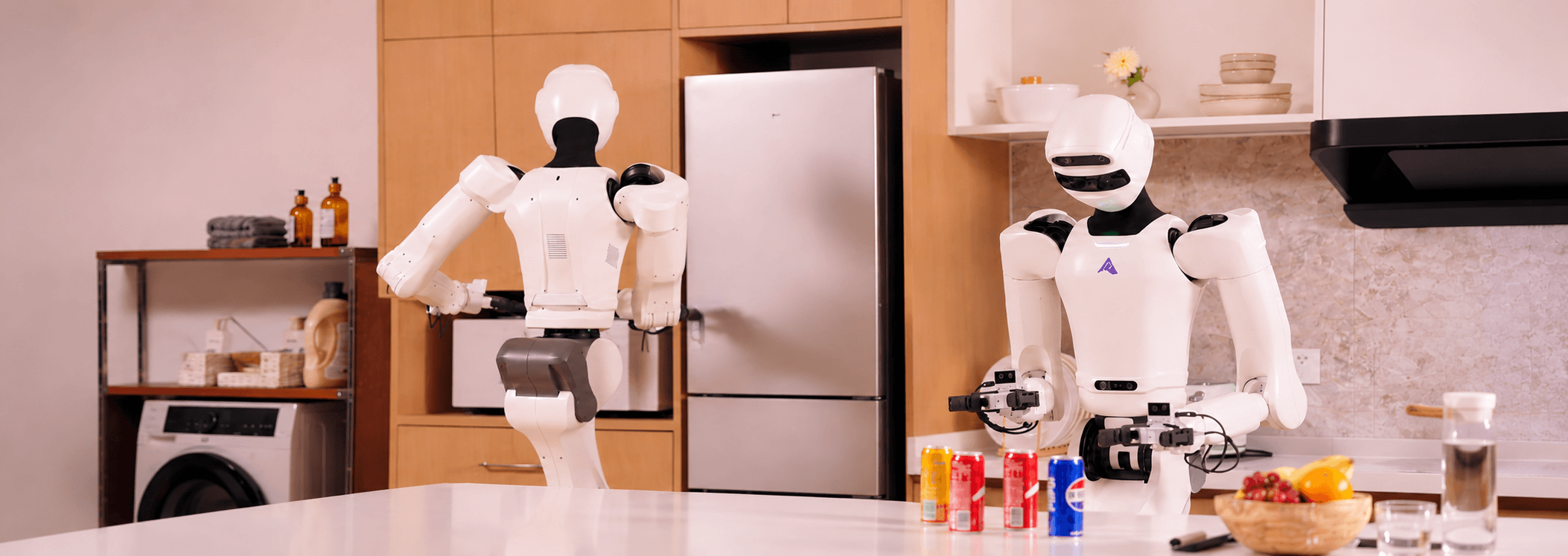

Chinese embodied AI developer Astribot unveiled CoMind on November 13, a framework designed to help robots coordinate physical tasks by sharing information that is relevant to their partners’ next actions. The release follows a research preprint published on November 9 under the title Be My Eye: Learning to See Beyond a Robot’s Own Perspective.
CoMind addresses partial observability, a problem that arises when one robot cannot see an object or a stage of a task that another robot can observe. Rather than transmitting entire camera feeds, the system encodes observations and task instructions into compact representations that can be exchanged between robots.
The approach uses two training stages. The first develops representations that preserve information about task objectives and progress. The second integrates those representations into a pretrained vision-language-action policy, allowing each robot to combine its own observations with information received from its partner when generating movements.
In company-reported experiments, two robots separated by a partition completed a coordinated pen retrieval task with a 100% success rate using CoMind, compared with zero success when no information was exchanged. In a separate occluded object-placement test, accuracy increased from 38.9% without sharing to 72.2% using an alternative context-transfer method and 88.9% with CoMind. The company reported an approximately 80% reduction in communication volume compared with the higher-volume sharing approach.
Astribot also demonstrated collaborative carton assembly, refrigerator restocking, quilt folding and dumbbell assembly. The work builds on the company’s Lumo series of robot foundation models and its cable-driven S1 robot platform.
The reported results come from controlled experiments and company demonstrations, rather than independent commercial deployments. Astribot has not established equivalent performance across larger fleets or robots from different manufacturers.
Sources: Astribot