
Xiaomi has reported a new milestone for its humanoid robotics program, with its second-generation CyberOne completing an eight-hour production-line trial at the company’s electric vehicle factory. The demonstration marks a longer stretch of factory work than Xiaomi had previously disclosed and offers a more demanding test of whether general-purpose robots can operate within the rhythm of automotive manufacturing.
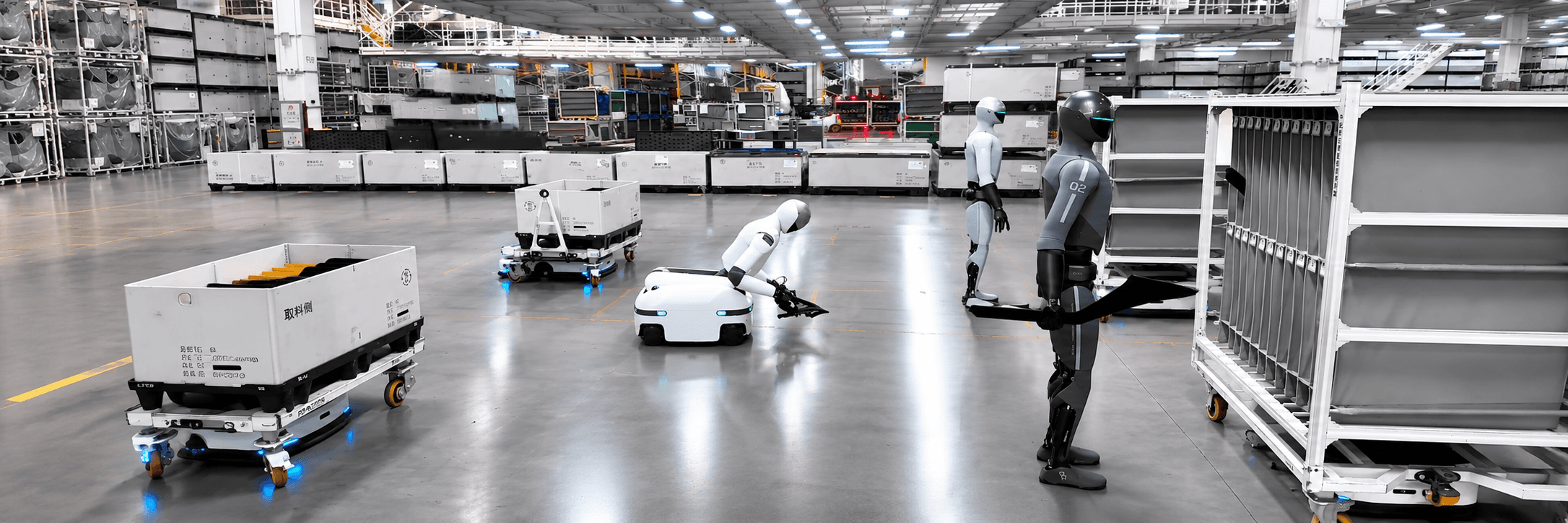
The company disclosed the trial on November 3 during the World Internet Conference in Wuzhen, China. Its humanoid worked at a center-console side-panel sorting station in the vehicle assembly plant, picking up irregularly shaped interior components and placing them in the required order for production. Xiaomi said the robot sustained the assignment for a full working shift while coordinating with the plant’s logistics systems and correcting errors during operation.
The task is more complex than repeatedly moving identical parts between fixed positions. Components can arrive in different orientations, and the robot must adjust its handling while keeping pace with the production sequence. The trial also involved coordination with autonomous mobile robots delivering materials to the station. Xiaomi described the result as an initial validation of production-line capabilities rather than a completed commercial deployment.
The announcement builds on earlier factory tests. In March, Xiaomi reported a three-hour autonomous trial involving fastener installation, while subsequent work expanded into material handling and sorting. The latest demonstration suggests progress in operating duration and integration with existing factory workflows, although Xiaomi has not disclosed independently audited reliability figures, operating costs or a timetable for wider deployment.
Xiaomi is one of several automotive manufacturers using their own factories to test humanoids under real production constraints. The significance of an eight-hour shift lies less in the duration alone than in whether robots can maintain consistent performance, recover from mistakes and justify their cost over repeated shifts.