
The Robot Maintenance Economy: The Business Opportunity Beyond the Sale
Category: Industry Analysis Focus: Robotics servicing, recurring revenue, fleet management, and commercial adoption
Short Description: Selling a robot is only the beginning of its commercial lifecycle. As businesses deploy more automated machines, maintenance, software updates, spare parts, and fleet management could become major recurring businesses in the robotics industry.
The Business Doesn’t End When a Robot Is Delivered
The robotics industry has traditionally focused on developing machines, improving capabilities, and increasing production. But as robots move into factories, warehouses, hospitals, and commercial facilities, another business opportunity is becoming increasingly important: keeping those machines operational.
A robot that stops working can interrupt an entire production process. For businesses, downtime means lost productivity, delayed orders, and additional operating costs.
This makes maintenance more than a technical requirement. It becomes part of the economic value that robotics companies must deliver.
The next stage of industry growth may therefore depend not only on how many robots manufacturers sell, but also on how effectively they support those robots throughout their operating lives.
Recurring Revenue Could Change Robotics Business Models
Traditional hardware sales generate revenue when a customer purchases equipment. Service-based models create opportunities to earn revenue continuously through maintenance contracts, software subscriptions, remote monitoring, upgrades, and replacement components.
This is one reason Robotics-as-a-Service (RaaS) is attracting attention.
Rather than purchasing expensive equipment upfront, businesses can access robotic systems through subscription or usage-based arrangements. The provider may handle installation, maintenance, software, and technical support.
The International Federation of Robotics has reported growing adoption of these flexible models. Its World Robotics 2025 report found that the RaaS fleet grew 31% in 2024, reflecting demand for more accessible automation arrangements.
For robotics developers, recurring contracts can potentially create more predictable revenue. For customers, they can reduce upfront investment and transfer some operational responsibilities to the provider.
Fleet Management Becomes More Important at Scale
Managing one robot is relatively straightforward. Managing hundreds or thousands across different facilities is a much bigger challenge.
Businesses need systems that can monitor robot performance, coordinate tasks, identify failures, manage software versions, and provide operational visibility.
This creates opportunities for companies developing fleet-management platforms and robotics operations software.
Predictive maintenance is another important area. By analyzing sensor readings, operating hours, temperature, vibration, and other performance indicators, software can help identify potential equipment problems before they cause unexpected downtime.
The goal is to move from repairing machines after they fail toward identifying problems before they interrupt operations.
As robotic fleets become larger and more complex, these software capabilities could become essential infrastructure.
A New Opportunity for Specialized Robotics Companies
The maintenance economy also creates opportunities beyond major robot manufacturers.
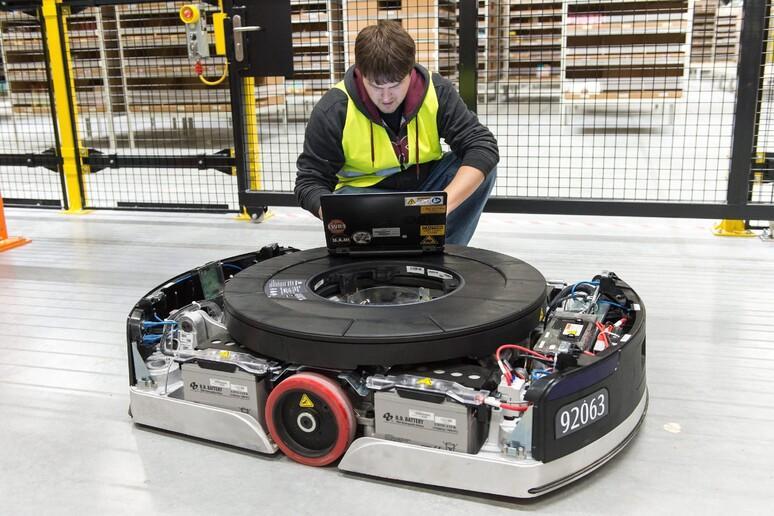
Independent service providers could specialize in inspections, component replacement, calibration, integration, and technical support. Software companies could offer monitoring platforms, while component suppliers could benefit from demand for replacement motors, batteries, sensors, and actuators.
This creates a broader commercial ecosystem around every deployed robot.
For smaller robotics businesses, specializing in one part of this ecosystem may be more realistic than competing directly with established manufacturers.
A company that becomes highly effective at maintaining a particular class of industrial robots, for example, could develop valuable customer relationships without having to manufacture the machines itself.
The Challenge: Reliability Must Come First
There is an important limitation to this opportunity.
Recurring service revenue only becomes attractive when customers believe the equipment is reliable and the service delivers measurable value.
Frequent repairs, expensive replacement parts, slow technical support, and complicated software integrations can undermine customer confidence.
Humanoid robotics faces an additional challenge because its mechanical systems and manipulation capabilities are still developing. More complex machines may require more specialized maintenance and support.
The companies that succeed will need to demonstrate dependable performance, accessible spare parts, trained technicians, and clear service agreements.
Market Perspective: The Real Value May Be in the Installed Fleet
The robotics industry is moving toward a broader commercial model in which hardware, software, and services are increasingly interconnected.
The International Federation of Robotics reported that global professional service robot shipments increased 24% to nearly 250,000 units in 2025. Transportation and logistics remained the largest application segment, with approximately 117,500 units sold.
These deployments represent more than equipment sales. Each installed robot creates potential demand for software, servicing, upgrades, integration, and long-term operational support.
As adoption expands, the installed base itself could become a valuable commercial asset.
Final Perspective: Selling Robots Is the First Revenue Opportunity
The long-term robotics market will not be built exclusively around manufacturers competing to produce the most advanced machines.
It will also depend on the businesses that make those machines useful, reliable, connected, and economically sustainable.
Maintenance, fleet management, software, and technical support may not attract the same attention as humanoid demonstrations or major hardware launches. But they address a fundamental requirement of commercial automation: robots must keep working after the headlines disappear.
The next major robotics business opportunity may not be selling more robots. It may be building the services that keep an entire generation of robots running.