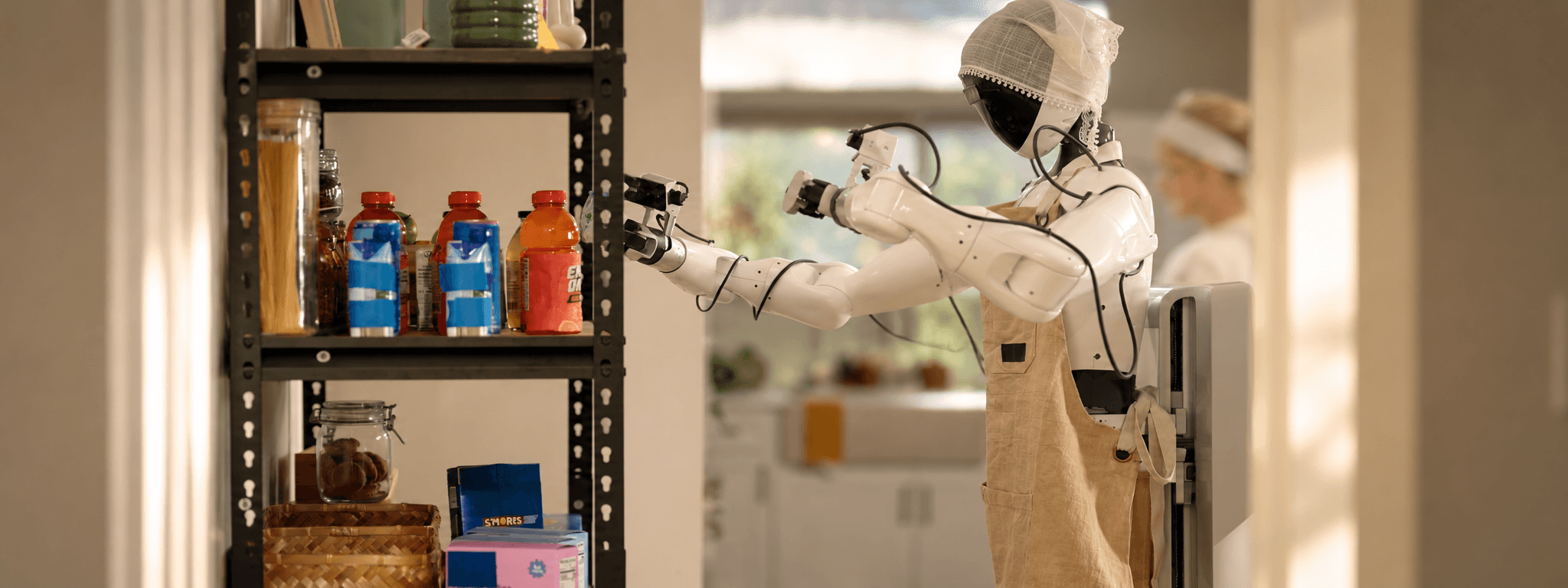

Announced on October 8, the system combines the company’s Causal World Model with its Causality-guided Robot Agent, bringing two previously separate research capabilities together in a robot operating in a household environment.
Unlike robotic systems that primarily map visual observations directly to actions, CRIS-0 maintains a representation of its environment and the relationships between objects, actions and outcomes. This allows the robot to anticipate what should happen, compare those predictions with actual results and decide whether to retry an action or change its plan.
In one demonstration, the robot performed a coffee preparation task involving pouring and grinding beans. When researchers deliberately disrupted the process, CRIS-0 recognized the change and replanned its actions in an average of two seconds.
The company also demonstrated a microwave scenario in which the system detected a safety risk and responded within an average of 0.2 seconds.
In personalized pick-and-place trials involving ambiguous instructions, Aether reported a 90% task success rate.
All three performance figures are company-reported and have not been independently validated.
The system uses a combination of learned manipulation policies, computer vision, navigation and causal reasoning to complete multi-step tasks.
According to Aether, CRIS-0 was developed using approximately 20,000 hours of pretraining data, followed by hours of robot-specific fine-tuning. The company has not disclosed the exact amount of fine-tuning data or the number of trials behind its reported performance figures.
The approach is intended to reduce the need for extensive task-specific robot demonstrations while improving the ability to recover from unexpected situations.
Aether acknowledges that contact-rich manipulation and generalization to unfamiliar environments remain significant technical challenges.